
The Neuroscience of IFS Psychotherapy 🧠
Your Brain Already Knows How to Heal. It's Just Waiting for Permission. (12min Read)

TL;DR Summary:
Memory is reconstruction, not playback — rebuilt every time through the lens of your current emotional state
Trauma files the past as present danger — your nervous system can’t tell the difference between then and now
“Parts” aren’t spiritual — they’re competing neural networks running old survival programs
“Self” is a biological state, not a personality — it only becomes available when your nervous system feels safe enough to open the gate
You can’t force Self — IFS uses unblending, not suppression, to create the conditions for it to emerge
Healing happens through memory reconsolidation — old wounds can be re-encoded when accessed from a regulated state
You’re not broken. You’re organized around a wound. And your brain already knows how to heal it.
Can You Trust Your Memories?
“What if I told you half your childhood memories might be… made up?”
Not exaggerated. Not slightly distorted.
Made. Up.
Let’s not ease into this.
Let’s go straight to the uncomfortable truth…
Your brain is not a recording device. It’s a reconstruction engine.
And once you really understand that, you start seeing trauma, identity, and even healing in a completely different way.

Today, we’re diving into the neuroscience of the type of psychotherapy I’m trained in, Internal Family Systems Psychotherapy.
Before we get into why IFS works though, you need to understand something unsettling about your own mind.
Every memory you have is a reconstruction.
Not a playback. A rebuild, assembled fresh each time you recall it, stitched together from fragments by a brain that fills in the gaps with guesses, expectations, and emotional context.
These reconstructions are far less reliable than you’d imagine as well.
Wait… How Unreliable Are We Talking, Cody?
Very, dear reader.
Classic research by Elizabeth Loftus showed that 25–35% of people could be convinced they’d been lost in a shopping mall as a child, complete with vivid, emotionally real details, even though it never happened.
Not just “yeah, maybe.”
They’ll add in details. Emotions. Sensory fragments.
They’ll feel it.
Other studies? Researchers have implanted entire false crime memories in up to 70% of participants using nothing but suggestion and guided recall.

Your brain isn’t broken. It’s doing exactly what it evolved to do: keeping your story coherent, even when the data is incomplete.
Think of every memory like a Wikipedia page. Editable. Collaborative. Updated by context, emotion, and who’s “writing” it in any given moment.
So no—this isn’t rare.
This is baseline human cognition.
This matters enormously when we talk about trauma and therapy because what you’re carrying isn’t necessarily a perfect record of what happened to you.
It’s the version your nervous system encoded in the state it was in when the wound occurred.
Panicked. Overwhelmed. Alone. Young.
And every time you remember it, your brain rewrites it slightly, in the emotional context of right now.
So, What Is Memory, Then?
Here’s the part most people never get taught:
Memory is not storage. Memory is editing.
Every time you recall something, your brain:
Pulls fragments from the neocortex and hippocampus
Fills in gaps using prediction (prefrontal cortex)
Re-encodes it slightly differently
Meaning:
You don’t remember the original memory. You remember the last version you reconstructed.

But, “Why would the brain do something this… unreliable?” You might ask…
Because accuracy was never the goal.
Coherence was!
Your brain isn’t trying to preserve truth.
It’s trying to preserve a story that makes sense.
A stable identity. A predictable world. A narrative you can function inside.
And to do that… It will literally bend reality if necessary.
Still don’t believe me? Let’s play a game…
Quick Memory Test
Read this list:
Pillow
Dream
Night
Blanket
Nap
Rest
Snooze
Doze
Snore
Yawn
…
Now answer honestly: Was the word “sleep” on that list?
Don’t look back at the list, just go with the first answer that pops into your head.
If your brain confidently said yes… That’s not a glitch.
That’s your brain doing exactly what it’s designed to do: Fill in meaning, not facts.
So, What Does This Have to Do with Trauma?
Great question… Everything.
Because trauma isn’t just about what happened and it’s not just a bad memory.
It’s a disruption in how your brain processes reality, time, and encodes meaning under stress.

Under normal conditions, your prefrontal cortex, the rational, contextualizing part of your brain, helps stamp experiences with a timestamp.
That happened then. This is now. It provides perspective.
Under threat, that system goes offline. The amygdala takes over, the brain’s alarm system, fast and non-verbal, and experiences get encoded without that contextual timestamp.
They get filed as present tense. Immediate. Still happening.
This is why a particular tone of voice, a certain look across a room, or a pattern of behavior in a relationship doesn’t just remind you of the past, it becomes the past.
This is so important to understand.
Your nervous system can’t tell the difference.
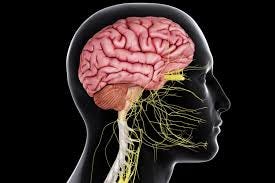
It’s not irrational. It’s precisely calibrated to a threat that no longer exists.
The hippocampus, which is responsible for memory consolidation, is also directly suppressed by cortisol, the stress hormone your body floods itself with during overwhelming experiences.
This is part of why traumatic memories are often fragmented, non-linear, or stored somatically, rather than in narrative form.
You can’t always tell the story because the story was never coherently encoded in the first place.
What did get encoded was the feeling. The body response. The survival strategy that got you through it.
Result?
You don’t store a clean, narrative memory.
You store fragments:
Sensations
Emotional tones
Implicit beliefs (“I’m not safe,” “I’m too much,” “I’m alone”)
And later…
Your brain stitches those fragments into a story that feels true.
Even if it’s incomplete. Even if it’s distorted. Even if it’s unfair to you.
And this is precisely where most people get healing trauma wrong.

They think healing means: “Figure out what actually happened.”
But neuroscience suggests something different…
Your system doesn’t respond to historical accuracy. It responds to perceived reality.
If your nervous system believes something is true…
It behaves as if it is.
So, what’s this got to do with IFS, Cody?
Glad you asked.
Internal Family Systems therapy — IFS — works because it matches exactly how this trauma architecture is built.
This isn’t a metaphor. It’s neuroscience.
Enter the Parts
This is where things get really interesting.
IFS doesn’t try to “correct” your memories.
It works with the parts of you that formed around them.
Because from a neuroscience perspective:
Different emotional states = different neural networks
Different neural networks = different “parts” of self
So when someone says: “Part of me knows I’m safe… but another part panics.”
That’s not a metaphor.
That’s competing memory networks firing simultaneously.
I should mention that this is cutting-edge neuroscience and research.
I’m simplifying this to make it easier to understand, but realize it’s much more complex, and we have SO MUCH more to learn about how all of this works…
That being said, IFS, developed by Dr. Richard Schwartz, proposes that the psyche is made up of multiple sub-personalities — or parts — rather than a single unified self.
And if that sounds a little out there, neuroscience supports this.
Your brain is modular.
Different neural systems handle different functions, such as memory, threat detection, reward, social bonding, impulse regulation, and they don’t always agree.
The part of your brain that recognizes danger doesn’t always consult the part that reasons.
The part that craves connection doesn’t wait for the part that predicts rejection to catch up.

When you act in ways that feel out of character, snapping at someone you love, shutting down in the middle of a difficult conversation, choosing the same unavailable person again, it’s often because one of these systems has taken over, running an old survival program that made perfect sense once, in a different context.
IFS calls these protective parts.
And it distinguishes between two types, which we’ve talked about before:
Managers are proactive protectors, the parts that work hard to keep you in control, performing, achieving, staying ahead of potential pain. The perfectionist. The people-pleaser. The hypervigilant one who reads every room before entering it.
Firefighters are reactive protectors, the parts that activate when pain breaks through anyway. Dissociation. Binge behavior. Rage. Numbing. They don’t care about consequences; they care about making the feeling stop.
Both of these protective types of parts exist to protect something deeper: the exiles.
The young, wounded parts of you that carry the original pain, the shame, the grief, the terror, that your nervous system decided was too much to hold consciously.
So it buried them. Locked them away. And built an entire protective system around keeping them there.
This isn’t pathology. This is genius, in the context of a brain trying to survive.
If you’d like to go deeper on this aspect of IFS, I suggest you check out this blog:
Today, I’m going to be sticking to the neuroscience behind the process, not the process or words themselves.
Why IFS Works (Neuroscientifically Speaking)
Here’s where it gets important.
Most of us approach our inner pain the way we approach enemies: suppress it, defeat it, outgrow it, or intellectualize it into submission.
We try to argue with the part of us that’s terrified. We shame the part that acts out. We override the part that shuts down.
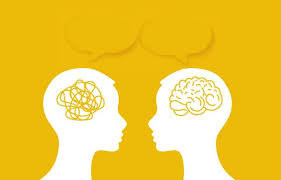
And the research is clear on what happens when you do that.
Suppression doesn’t reduce emotional activation. It increases it.
Studies on thought suppression, the famous “don’t think about a white bear” experiments, consistently show that what you resist, your brain amplifies.
Suppressing emotion requires cognitive effort, keeps the nervous system dysregulated, and often results in the suppressed material coming out sideways.
IFS does something radically different. It doesn’t fight the parts.
It approaches them.
And it does this through what Schwartz calls Self, the calm, curious, compassionate presence he argues exists beneath all the parts.
Before you dismiss that as spiritual language, let’s talk about what’s actually happening in your brain when Self is, and isn’t, available to you.
The Self is a Physiological State
There’s an emerging framework in cognitive neuroscience called the TGTS model (Thought Generator, Thought Selector), which proposes something interesting: reflection isn’t a constant.
It’s a gated resource.
Your brain continuously generates thought content like memories, predictions, associations, and fears.
But the ability to actually pause, compare, and choose among those thoughts?
That requires something the researchers call “PreForm,” which is thought to be a biologically contingent window that only opens under specific conditions.
PreForm is not a metaphor.
It represents coordinated activation across your salience network, your central executive network, and your default mode network, the three neural networks that govern whether you’re reacting or reflecting.
And it has a gatekeeper: your nervous system state.
When your autonomic nervous system is dysregulated, when you’re flooded with emotion, threatened, inflamed, or exhausted, PreForm closes.
The reflective system doesn’t degrade. It disappears.
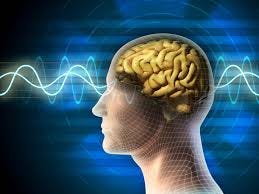
Your brain bypasses deliberation entirely and defaults to automatic execution: the loudest, most survival-tagged response wins.
You don’t choose to react. Your system and your parts simply have no other option.
This is why you can know exactly what you’re doing, watch yourself do it anyway, and feel powerless to stop it.
You weren’t lacking willpower. PreForm was closed.
Here’s Where IFS Gets Interesting
The Thought Selector, the part of the system that, when PreForm is open, can evaluate, pause, redirect, or choose a new response, maps almost precisely onto what IFS calls Self.
Not as a permanent entity sitting somewhere in your mind, but as a functional state: the neurological window in which you have genuine agency over what happens next.
When your nervous system enters a regulated window, when the threat alarm quiets, when cortisol drops, when your heart rate variability increases and parasympathetic tone dominates, PreForm opens.
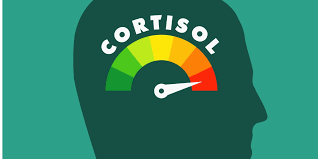
The prefrontal cortex comes back online. The executive network can hold competing options simultaneously. And instead of reacting, you can witness.
That witnessing capacity? That curiosity, that calm, that ability to say “I notice something in me is angry right now” rather than being the anger?
That’s not enlightenment. That’s biology. That’s your brain operating from a regulated state.
It’s what the body produces when it no longer needs to protect you from an imminent threat.
IFS creates exactly the conditions that make PreForm accessible.
Safety. Curiosity. Non-judgment. A slowing of the internal pace. Not because these are nice therapeutic values, but because they are the precise inputs the nervous system needs to shift out of threat mode and give the reflective system permission to function.
You aren’t summoning some mystical inner Self.
You’re regulating your nervous system to the point where Self becomes biologically available.
Big difference.
Why Forcing it, Doesn’t Work
You cannot bully your way into Self. You cannot intellectualize your way there.
You cannot decide, in the middle of a triggered moment, to just access your calm…
Because at that moment, the gate is closed, and the brain has no mechanism for the kind of deliberate, curious internal inquiry IFS requires.
This is where IFS diverges from a lot of standard therapeutic approaches in an important way.

Most regulation techniques, box breathing, cold water, grounding exercises, work by overriding or suppressing what the nervous system is doing.
And Schwartz pushes back on this, hard, I’ve seen him do this live in a training...
His concern isn’t that those techniques are useless. It’s that they can make parts feel dismissed.
You’re essentially telling your nervous system “stop that” which, to a protective part that organized its entire existence around keeping you safe, registers as more of the same: your experience is not welcome here.
What IFS uses instead is unblending. And the distinction matters.
Unblending isn’t about calming a part down or shutting it up.
It’s about creating just enough internal space between you and the part so that you’re no longer completely fused with it.
When you’re fully blended with a part, when you are the anxiety, the shame, the rage, there’s no observer.
There’s no one home to witness it. The gate can’t open because the Self isn’t separate enough from the flood to have any agency in it.
Unblending asks the part to step back slightly, not to leave, not to be quiet, but to allow the person to acknowledge it without becoming it.

“I notice something in me is terrified right now” instead of “I am terrified.”
That linguistic and experiential shift is small on the surface.
Neurologically, it’s enormous. It’s the difference between a system that is fully hijacked by a survival state and one that has just enough regulated space for the gate to begin to open.
The approach itself is a neurological event.
And it can only happen when Self is at least partially available, not summoned by willpower, but coaxed into existence through the one signal parts actually trust: being met rather than managed.
Self is Not a Destination; it’s a Permission Slip
And unblending is how you ask for it.
When you create that inch of space between you and the part, when you move from being the fear to noticing the fear, you aren’t just changing your language.
You’re shifting your nervous system’s read on the situation.
The threat signal dims. The amygdala loosens its grip. And the gate, that biologically contingent window where genuine reflection becomes possible, begins to open.
That’s the moment Self becomes available.

Not because you built it, earned it, or finally got your mindset right, but because your body was given just enough safety to stop running its survival program at full capacity.
Which is why the eight qualities of Self that IFS describes, curiosity, calm, compassion, clarity, confidence, creativity, courage, connectedness, aren’t virtues you’re supposed to develop through discipline.
They’re what the human brain naturally does when it stops spending all its resources surviving.
They’re not a standard to meet. They’re what’s left when the alarm finally goes quiet.
This reframes the work entirely.
You’re not trying to build Self. You’re building the conditions in which Self can show up, enough internal safety, enough relational steadiness, enough space between you and the flood for the system to register: I’m not in danger right now.
That’s the gate opening. That’s IFS.
And your nervous system already knows how to walk through it…
It just needs you to stop blocking the door.
IFS is like co-regulation at the internal level.
The same process that allows a dysregulated child to calm when held by a regulated caregiver.
You become your own regulated presence for the parts of you that never had one.
This Is How Healing Actually Happens
Ok, let’s bring this all together, baby!
Remember: every memory is a Wikipedia page. Editable. Reconstructed fresh each time you access it, colored by the emotional state you’re in when you recall it.
If you’re flooded, the memory gets re-filed as a present threat.
If you’re regulated, something different becomes possible.
Every time a memory is recalled, it enters a brief window of instability before being re-stored.

Neuroscientists call this memory reconsolidation. In that window, the memory is literally open to modification; new emotional context can be written into the file.
For most of your life, when a difficult memory surfaces, it comes up in the same state it was encoded: panicked, overwhelmed, alone.
So it gets re-filed the same way. The update just writes the same thing again, in bigger letters.
But here’s what changes inside IFS: when a protective part finally trusts Self enough to step back, when unblending creates that regulated window, and an old memory surfaces from within that state, the brain re-encodes it with new emotional context.
Not new facts. New meaning.
The sense of I am still in danger can shift to I survived something, and I am not there anymore.
This is not rewriting history. It’s updating the file.
And it’s why the sequence matters: Self has to be present, the part has to trust enough to unblend, and the memory has to be approached from a state of safety rather than threat.
Take any one of those conditions away, and the old encoding reinforces itself.
IFS isn’t magic. It’s architecture.
It builds the exact internal conditions, a regulated Self, a curious approach, a part that feels met rather than managed, that give the brain permission to revise what it stored about who you are and what the world is.
That’s the mechanism. That’s why it works.
And that’s why no amount of willpower or positive thinking gets you there, because the update has to happen at the biological level, in the body, in the nervous system, in the precise conditions where reconsolidation is possible!
Your brain already knows how to do this.
IFS just gives it the conditions to try.
What This Means for You
You’re not broken. You’re not weak. You’re not “too much” or “too damaged” or “too far gone.”
You’re organized, brilliantly, exhaustingly (is that a word?) organized, around a wound.
Your nervous system built an entire architecture to keep you alive when the pain was too big to hold.
The anxious attachment, the walls, the hypervigilance, the shutdown, those aren’t flaws.
They’re proof that some part of you refused to quit.
And here’s what lights me up about IFS, as someone who has spent years in the neuroscience of how the brain actually changes: this isn’t theory.
The mechanism is real. The memory reconsolidation is real. The gate is real. Self is real, not as a spiritual ideal, but as a measurable, biological state your brain is capable of right now.

That means healing isn’t about becoming someone new. It’s about creating the conditions for who you already are to come forward.
Your parts don’t need to be fixed. They need to be heard.
And the moment one of them feels safe enough to step back, even slightly, something opens.
Something that was always there, waiting for permission.
That’s the power of this work.
Not that it gives you new tools, but that it hands you back your own nervous system and says: you can work with this.
You were never as stuck as you felt. The door was never locked.
You just needed to stop fighting the part that was holding it closed, and ask it, gently, to let you through.
You’ve got this.
And as always… Live Heroically 🧠
Want to Work With Me? Here Are a Few Ways I Can Help You
Ready to stop understanding your patterns and actually change them? Becoming HER is a 63-Day program that heals heartbreak & prepares you for modern dating, using Neuroscience & Internal Family Systems. (If you’re seeing this, one of our cohorts is open currently!)
Going through a breakup? Check out She Rises. It’s a post-breakup protocol based on neuroscience to help you regulate your nervous system in the days and weeks right after a breakup.
Grab my new ebook: Exactly How to Become Emotionally Available: It’s a step-by-step guide for attracting and keeping the love you seek, built for the success but single among us!
Become a paid subscriber to the Mind, Brain, Body Lab Digest: You’ll get subscriber-only video posts, email replies, access to my entire blog archive, early access to new products, workshops & tools I create!
Supporting Research
Loftus, E. F., & Pickrell, J. E. (1995). The formation of false memories. Psychiatric Annals, 25(12), 720–725.
Shaw, J., & Porter, S. (2015). Constructing rich false memories of committing crime. Psychological Science, 26(3), 291–301.
McGaugh, J. L. (2000). Memory — a century of consolidation. Science, 287(5451), 248–251.
Nader, K., Schafe, G. E., & Le Doux, J. E. (2000). Fear memories require protein synthesis in the amygdala for reconsolidation after retrieval. Nature, 406, 722–726.
Ecker, B., Ticic, R., & Hulley, L. (2012). Unlocking the Emotional Brain: Eliminating Symptoms at Their Roots Through Memory Reconsolidation. Routledge.
Arnsten, A. F. T. (2009). Stress signalling pathways that impair prefrontal cortex structure and function. Nature Reviews Neuroscience, 10, 410–422.
Raichle, M. E. (2015). The brain’s default mode network. Annual Review of Neuroscience, 38, 433–447.
Menon, V. (2011). Large-scale brain networks and psychopathology: A unifying triple network model. Trends in Cognitive Sciences, 15(10), 483–506.
Schwartz, R. C. (2021). No Bad Parts: Healing Trauma and Restoring Wholeness with the Internal Family Systems Model. Sounds True.
Thayer, J. F., & Lane, R. D. (2000). A model of neurovisceral integration in emotion regulation and dysregulation. Journal of Affective Disorders, 61(3), 201–216.
Rigley, K. (2025). The TGTS Model: Reflection Requires Permission — A Biologically Constrained Model of Thought. Willows Preschool, London. ORCID: 0009-0008-8138-3133.
This article is educational in nature and not a substitute for therapy. If attachment wounds or relational patterns are impacting your well-being, working with a trauma-informed therapist can help your nervous system learn safety in connection.