
"Trusting Your Gut" Is Ruining Your Love Life. 🧠
The neuroscience of why "trust your gut" is some of the worst dating advice you've ever taken. (10 min read)

TL;DR Summary:
Your nervous system isn’t a truth-teller — it’s a prediction engine. And after trauma, those predictions get wildly inaccurate.
Neuroception (your body’s unconscious safety/threat detector) was built from your past — not the person sitting in front of you.
“Gut feelings” are not all created equal. Intuition, instinct, insight, and neuroception are four different things — and most women are confusing them constantly.
If your “gut” is vague, global, and panicky… that’s not intuition. That’s a misfire.
The fastest way to know which signal to trust is to learn how to unblend from your Parts (IFS) and lead from Self.
Your gut can become wise again. But first, your nervous system has to learn that safe is actually safe.
“Your Nervous System Doesn’t Lie”… Except When It Totally Does
You’ve heard it a thousand times: “The body never lies.”
It’s on every wellness podcast. Every therapist’s Instagram. Every yoga teacher’s playlist.
And honestly? It’s one of the most dangerous half-truths in the healing space right now.
Because here’s the thing no one wants to say out loud:
Your body absolutely lies.
Not on purpose. Not maliciously.

But it lies the same way a smoke detector “lies” when it goes off while you’re making toast based on outdated information, designed for a different situation, doing exactly what it was built to do.
That gut feeling you swear is intuition? Sometimes it’s the truth.
Sometimes it’s just your trauma talking in a louder voice.
And if you can’t tell the difference, you’re going to keep walking away from green flags, doubling down on red ones, and calling it “trusting yourself.”
Ask me how I know…
I’ve been there, people, trust me.
Let’s dive in.
So What’s Actually Going On Here?
The system we need to understand is called neuroception, a term coined by trauma researcher Dr. Stephen Porges.
It’s the unconscious surveillance system your body runs 24/7 to detect safety, danger, or something life-threatening in your environment.

Unlike perception, which is conscious and thoughtful, neuroception happens beneath awareness. You don’t choose it. You don’t even notice it most of the time.
But it’s quietly running the show. Your behavior, your “vibes,” your gut feelings, who feels safe to text back, who you ghost without knowing why.
Sounds trustworthy, right?
The only issue with blindly trusting it, though, is that neuroception is built from your past experience, not the present moment.
And your brain doesn’t passively “read” the world like a camera.
It actively predicts it.
Your Brain Is a Weather App, Not a Camera
Imagine your brain is less like a camera capturing reality… and more like a weather app trying to forecast it.
It doesn’t show you what is.
It gives you its best guess about what’s probably happening, based on past patterns plus current cues.

This is the essence of predictive processing theory in neuroscience; this is the idea that your brain runs on something called “Bayesian inference.”
This is an overly fancy term for a fairly simple concept, in my humble opinion: your brain is constantly updating its predictions based on new evidence.
The problem?
Trauma corrupts the prediction model.
If your past is full of environments where “safe” people weren’t actually safe, emotionally unavailable parents, partners who flipped on a dime, love that came with conditions, your brain now runs predictions based on that data set.
So, when a man shows up calm, consistent, and emotionally available?

Your nervous system doesn’t read that as “finally.”
It reads it as suspicious.
Boring. Off. Not him.
Read that again…
The smoke detector analogy from earlier is the cleanest way to picture this.
If your kitchen smoke detector goes off every time you make toast, you don’t assume your house is on fire.
You know the system is hypersensitive.
But when your nervous system does the same thing, panicking in safe situations, going numb around emotionally available men, telling you “something feels off” with the guy who’s actually showing up, it feels like a red alert you can’t question.

Trauma turns your neuroception into an overreactive smoke alarm.
Not because it’s broken. Because it was trying to protect you from the people who should have been safe and weren’t.
Your “gut feeling” might not be intuition.
It might be an echo of a wound you never fully processed.
A Quick Moment of Honesty (Because I Should)
Before anyone thinks I’m preaching from a mountaintop, I struggle with this too.
After my most recent breakup, I was scrolling and came across a TikTok of a couple on a couch.
The girlfriend was crying, the boyfriend was holding her, asking what was wrong. It was almost identical to the night my last relationship ended.
Within seconds, my chest was tight, my hands were shaking, tears in my eyes, full nervous system flood.

It was a TikTok. On a screen. About strangers.
But my neuroception didn’t know that. It just matched the pattern and pulled the alarm.
That’s what we’re working with. That’s how powerful, and how inaccurate, this system can be.
The work isn’t about silencing it. It’s about learning when to listen to it and when to lovingly tell it: thank you, I’ve got it from here.
But Cody, Didn’t You Say to Trust Our Gut?
Yes. And also, no.
I wrote a whole blog on the neuroscience of intuition where I broke down the difference between intuition, instinct, insight, and neuroception.
Let me clean it up here, because this is where most women get tangled.
Insight is what arrives after reflection. It feels clear, sometimes surprising, and calm. It comes when you’ve slowed down enough to actually see the pattern. “Oh. I keep dating men who need me to fix them.”
Intuition is fast, experience-based, and specific. It’s pattern recognition from a thousand previous data points. A nurse who knows a patient is crashing before the monitors say so. A woman who knows her friend is lying without quite knowing how. Intuition can be sharpened over time if your data set is clean.
Instinct is automatic, survival-based, and rigid. It doesn’t care about context. Hand recoils from the hot stove. Body braces when a door slams.
Neuroception runs underneath all of them, and it’s especially shaped by trauma. It doesn’t come with a label telling you when it’s right or wrong. It just feels true.


Here’s the cheat sheet:
If your “gut feeling” is clear, calm, and specific → likely intuition or insight.
If your “gut feeling” is vague, global, and panicky (”something is wrong but I can’t say what”) → likely a neuroceptive misfire.
If your “gut feeling” shows up the second a healthy man does something good, texts when he says he will, holds space without flinching, doesn’t pull away when you’re messy, that’s rarely intuition.
That’s a younger part of you saying: I don’t recognize this. So it must not be safe.
That’s not your truth. That’s your history.
So What Do You Do With a Lying Nervous System?
Great question, glad you asked, imaginary reader in my mind.
The number one tool I teach my clients, and use myself, is learning to detect and unblend from your Parts.
In IFS (Internal Family Systems) Psychotherapy, your Parts are the protective sub-personalities running your reactions.
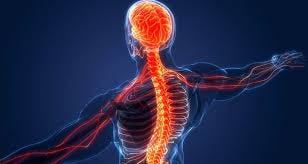
Your Protectors (Managers and Firefighters) are working overtime to keep you away from your Exiles, the younger, more vulnerable parts of you holding unresolved pain.
Fear of rejection. Fear of abandonment. Fear of being humiliated, betrayed, discarded, “too much.”
When a Part takes over, when it’s driving the bus, IFS calls that being blended.
You’ve felt this. You get so anxious about a text he hasn’t returned that you can’t focus on anything else.
You spiral into a “he doesn’t want me” story before your prefrontal cortex even has a chance to weigh in.
You feel certain, certain, that something is wrong, even though nothing has actually happened yet.
One of my clients describes it like slime being pushed into a carpet, it completely covers every fiber, and it’s nearly impossible to unstick.
That’s blending.

And the “gut feelings” that come from a blended Part are not your wisdom.
They’re your wound.
These are the signals you need to take a beat with, BEFORE you text him, before you cancel the date, before you decide he’s “off.”
How to Unblend From Your Parts (3 Steps)
Surprise, surprise, if you can become blended, you can also un-blend.
This is one of the top 3 tools in IFS, and once you learn it, your relationships will never be the same.
So, let’s get practical, baby!!
Step 1: Name It Without Shaming It
The shift is subtle but powerful. Move from “I am anxious” to “A PART of me is anxious.”
Try language like:
“A part of me is feeling panicked right now.”
“There’s a part that doesn’t trust this situation.”
“I notice a protective part that’s sure something bad is about to happen.”
These aren’t word games. It’s neuroscience.
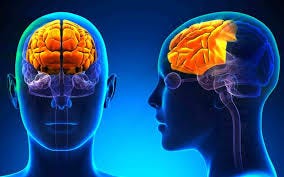
The moment you name a Part, you’re activating your prefrontal cortex and creating distance between your Self and the feeling.
You’re not fused anymore.
You’re you. The Part is a Part.
That’s not avoidance.
That’s perspective.
Step 2: Get Curious, Not Controlling
Once there’s space, get curious with the Part, like you’re getting to know a scared little girl or a hyper-vigilant bodyguard who’s been working a long, lonely shift.
Try asking:
“What are you afraid would happen if you didn’t sound the alarm right now?”
“How long have you been trying to protect me this way?”
“What do you want me to understand?”
“How old do you think I am right now?”
Most Parts react the way they do because they’re trying to keep you safe, using outdated information from a much younger you.
They don’t know you’re 34. They don’t know you can handle a hard conversation. They don’t know your nervous system has more capacity now.
They need you to update them.
Step 3: Ask for Some Space
If the Part is still flooding you, kindly ask it to step back so your Self can lead.
Try:
“Thank you for trying to help. Could you give me a little space to assess this?”
“I hear you. Could you step back just enough for me to see if this is actually dangerous, or if it just feels that way?”
You’re not exiling the Part. You’re not silencing it.
You’re inviting it to shift from protector to advisor.

Most Parts are relieved when Self shows up to lead.
They’ve been doing a job they were never meant to carry for this long.
What Being Self-Led Actually Feels Like
Once you’ve unblended, you’ll notice what was underneath the Part the whole time.
IFS calls it Self-energy. Dr. Aimie Apigian calls it calm aliveness. I just call it home.
It feels calm. Clear. Connected. Compassionate. Curious. Confident. Creative. Courageous.
IFS calls these the 8C’s of Self.
You’ll feel grounded but not flat. Open but not naïve. Aware but not afraid.
This is the only place worth making relationship decisions from.
Not from the Part that thinks every quiet text means abandonment.
Not from the Part that needs to over-function to feel safe.
Not from the Part that’s certain, the calm guy is “boring” because the chaotic one felt like “home.”
From Self.
Every time!
The best part is that this Self-energy is always with you.
You don’t have to build it or earn it. You just have to unblend enough to feel it again.
Why This Actually Rewires You Over Time
Here’s the part I love.
Every time you unblend and make a Self-led choice that contradicts your nervous system’s prediction, you trigger something called a prediction error.
Your brain expected danger. You stayed, and nothing bad happened.
Your brain expected him to disappear. He didn’t.
Your brain expected the calm to feel boring. It started to feel… safe.
These prediction errors are the actual mechanism of change.
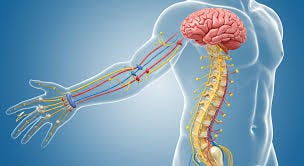
Through memory reconsolidation and extinction learning, your nervous system slowly, painstakingly updates its model.
The smoke detector recalibrates.
The “boring” guy starts to feel like home. Your window of tolerance widens.
This is how a “lying” nervous system learns to tell the truth again.
Not through more healing content. Not through more insight.
Through repeated experiences of choosing differently while staying connected to Self.
These reps may be small and unsexy, but they’re how actual intimacy gets built!
Your Gut Can Become Wise Again
Your nervous system isn’t your enemy.
It’s just been overworked, overwhelmed, and trying to protect you using outdated maps from places you don’t live anymore.
But the moment you learn to pause, unblend, and lead from Self, you start rewriting the rules.
You stop letting old fears run new relationships.
You interrupt the cycle of false alarms.
And you teach your nervous system something it desperately needs to learn: Safety can feel safe again.
This isn’t about never feeling fear.
It’s about learning which signals are wisdom and which are ghosts.
Because when your system is calm, and Self is in the lead, your gut does become wise.
Intuition sharpens. Insight deepens. You move through dating with clarity instead of reactivity.
You become the leader your nervous system has always been waiting for.
And that changes everything.
You’ve got this.
And until next time… Live Heroically 🧠
Want to Work With Me? Here Are a Few Ways I Can Help You
Becoming HER is a 63-Day program that heals heartbreak & prepares you for modern dating, using Neuroscience & Internal Family Systems. (If you’re seeing this, one of our cohorts is open currently!)
Going through a breakup? Check out She Rises. It’s a post-breakup protocol based on neuroscience to help you regulate your nervous system in the days and weeks right after a breakup.
Grab my new ebook: Exactly How to Become Emotionally Available: It’s a step-by-step guide for attracting and keeping the love you seek, built for the success but single among us!
Become a paid subscriber to the Mind, Brain, Body Lab Digest: You’ll get subscriber-only posts, email replies, access to my entire blog archive, early access to new products, workshops & tools I create!
Supporting Research
Barrett, L. F. (2017). How Emotions Are Made: The Secret Life of the Brain. Houghton Mifflin Harcourt.
Ecker, B., Ticic, R., & Hulley, L. (2012). Unlocking the Emotional Brain: Eliminating Symptoms at Their Roots Using Memory Reconsolidation. Routledge.
Friston, K. (2010). The free-energy principle: a unified brain theory? Nature Reviews Neuroscience, 11(2), 127–138.
Porges, S. W. (2011). The Polyvagal Theory: Neurophysiological Foundations of Emotions, Attachment, Communication, and Self-Regulation. Norton.
Schwartz, R. C. (2021). No Bad Parts: Healing Trauma and Restoring Wholeness with the Internal Family Systems Model. Sounds True.
Seth, A. K. (2013). Interoceptive inference, emotion, and the embodied self. Trends in Cognitive Sciences, 17(11), 565–573.
Siegel, D. J. (2012). The Developing Mind: How Relationships and the Brain Interact to Shape Who We Are. Guilford Press.
This article is educational in nature and not a substitute for therapy. If attachment wounds or relational trauma are impacting your well-being, working with a trauma therapist can help your nervous system relearn safety in connection.