

TL;DR Summary:
There’s a question almost every man asks on a date, and it tells you almost, nothing. The one that comes right after it tells you almost everything.
When a man hands you a five-step plan for your bad day, it usually isn’t for you. I’ll tell you exactly who it’s for.
Love-bombers skip one specific question. Every single time.
There’s a four-word question most men will never ask you, and the reason lives in his nervous system, not his vocabulary.
“Do you trust me?” sounds romantic. It’s actually a test. There’s a better question, and the tell is whether he asks it more than once.
If one of these questions made your stomach drop, that’s not a flaw in you. It’s something else, and it matters a LOT for your next relationship.
A two-column note on your phone can answer “is he emotionally available?” faster than three weeks of decoding his texts.
Quick Exercise Before We Start
Think about the last man you dated.
Now name three questions he asked you about how you felt.
Not what you do for work. Not where you grew up. Not your gym split.
How you felt.
Take your time. I’ll wait…

If you came up empty, that’s not unusual, but it may mean he’s not as emotionally available as you may hope.
He’s just... available.
If, however, he has asked you some version of the five questions below, you may have caught yourself a truly emotionally available one!
(And no, “You up?” is not on the list lol)
Anyone can perform warmth. Compliments are cheap. Good-morning texts are cheap.
A man running on charm can do both on autopilot while thinking about his fantasy football lineup.
Questions are harder to fake. A real question means he doesn’t control the answer, and the answer might ask something of him.
I’m a man. I know which of these questions cost us something to ask.
Oh, and in my work, I’ve watched a LOT of women spend months decoding what a man said when the answer was sitting in what he never asked.

So, today, we’re breaking down the five questions, what each one reveals about what’s going on inside him, and why most men avoid them!
And yes, you know there will be a tool at the end you can use after your very next date; I got you.
Let’s dive in!
Why Questions Are the Tell
The best lens for this comes from relationship researcher Harry Reis and his colleagues.
They call it perceived partner responsiveness: the felt sense that your partner understands you, values you, and cares about what you need.
It’s one of the most consistent threads running through intimacy research.
Look at that first word. Understands.
He can’t understand an inner world he never asks about.
And every question on this list requires him to tolerate something.

Boredom. Helplessness. Going slow. Shame. Embarrassment. Grief. Not knowing how to get it right.
That’s the real test hiding underneath the questions.
Emotional availability isn’t how much he talks about feelings.
It’s how much discomfort he can tolerate for the sake of knowing yours.
That’s capacity. And love is built on capacity, not potential.
Before we dive in, lemme be clear.
None of these are one-date verdicts.
Nervous men botch questions on first dates constantly (myself included).
You’re looking for a pattern, not a single miss. Big difference!
No convictions before the appetizers arrive, ladies. 😅
Question #1: “Wait, what happened next?”
This is one of my favorite questions; it peels the onion like no other.
Any man can ask “How was your day?” That one’s easy. It’s basically a greeting wearing a question mark.
The emotionally available man asks the second question. “Wait, what happened next?” “How’d that feel?” “What was that like for you?”

The first question is manners. The second question is curiosity.
What It Reveals
The first question runs on a social script. His brain can fire it off while half his attention is on the menu.
The follow-up can’t be scripted, because it depends on what you just said.
So, to ask it, he had to actually be listening.
There’s research on this too.
Karen Huang and colleagues at Harvard analyzed thousands of conversations, including real speed dates, and found that people who asked more questions were better liked.
Follow-up questions drove the effect.
A follow-up signals responsiveness. You feel heard because you were.
Crazy how that works…
Oh, and nobody sits down with me and says “he only asks surface-level questions.”
They say “he’s SO easy to talk to.” Then I ask what he asked about her, and there’s usually a long pause.

Easy to talk to sometimes means easy to talk at.
Ouch, I know... Sorry. Not sorry. :)
What to Watch For
He asks “how was your day?” and then pivots straight to his.
His follow-ups are only logistical. “What time was that?” “Which office?” Facts, never feelings.
His curiosity switches on for topics that involve him, sex, or plans, and switches off for everything else.
Wanna know something that’s totally fine?
A nervous first date where he over-talks.
We’ve allllll been there!
One bad night is noise. You’re watching dates three through six!
How to See It Early: The Unfinished Story
On date two or three, tell a small story with a feeling in it.
The coworker who took credit for your idea. The weird voicemail from your mom.
Stop at the feeling. Don’t explain it. Don’t rush to fill the silence.
Then watch: does he follow the thread, or does he grab the wheel and steer back to logistics or his own story?
Track the pattern over time!
Question #2: “Do you want me to listen, or do you want help?”
This one’s personal.
A lot of us men have a fix-it reflex.
You share something hard, and before you’ve finished the sentence, we’ve drafted a five-step plan and assigned you homework.
What It Reveals
Psychologist Daniel Batson spent years separating two feelings that look identical from the outside.
Empathic concern is feeling FOR someone, and it points you toward their needs.

Personal distress is feeling uncomfortable BECAUSE of someone’s pain, and it points you toward making your own discomfort stop.
The five-step plan is often the second one wearing the first one’s clothes.
When you’re hurting and he can’t fix it, he feels helpless.
Helplessness is miserable. A plan makes it go away... for him.
In IFS terms, that’s The Fixer stepping in to protect him from sitting in a feeling he doesn’t know how to hold.
And no, this isn’t some hardwired “male brain” thing. It’s learned.
Unfortunately, a lot of boys got taught that being useful is how you earn your place, and that sitting with feelings is what you do when you’ve run out of useful things to do.
The emotionally available man notices the reflex, pauses, and asks what you need.
Sometimes you’ll say “help, please!” Great. This question isn’t anti-fixing. It hands you the steering wheel.
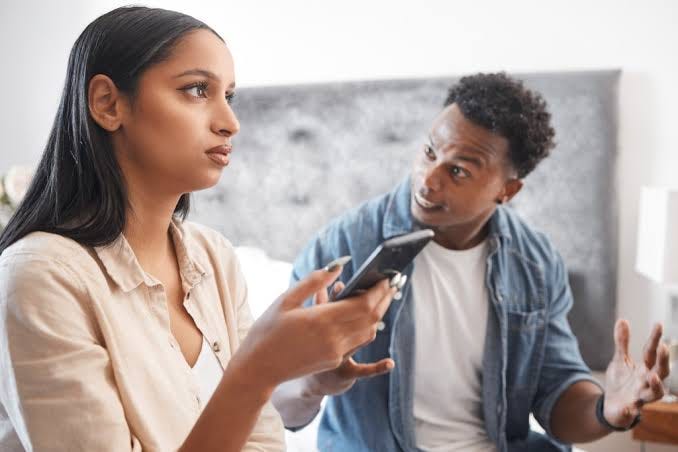
“He’s a problem-solver” is often the most generous description I hear for a man who can’t sit with your feelings long enough to actually hear them.
I struggled with this myself for years. I just couldn’t fathom what else I was supposed to do if I wasn’t fixing the problem.
It took me forever to realize listening, understanding, and validating your partner not only works better, but it’s also MUCH easier!
What to Watch For
Solutions inside the first minute, before he even knows what happened.
Irritation when you don’t take his advice. “So why’d you even tell me?”
Your problem somehow turns into a referendum on his competence.
It’s also totally fine if he defaults to fixing, then course-corrects the second you say “I just need you to listen.”
Defaults aren’t the problem. Refusing to update them is.
Question #3: “Is this pace okay for you?”
Love-bombers never ask this one. Ever.
They set the pace at 90 miles an hour, pick the destination, and call it chemistry.
Trip planning by date two. “I’ve never felt this way before” by date three.
Meeting his mom before you’ve figured out how to spell his last name.
Ok, maybe I’m exaggerating a bit...
You get my point though, how comfy you are with the pace was never considered!
What It Reveals
Early, intense romantic love lights up the brain’s reward system.
People newly and intensely in love show activation in dopamine-rich regions tied to reward and motivation.

Dopamine doesn’t encode safety. It encodes wanting. Novelty and intensity turn it up.
So when a man floors it, your brain gets a flood that feels like certainty. It’s momentum.
Intensity isn’t intimacy.
Love-bombing has its own small research literature now, and it tends to travel with narcissistic traits.
That doesn’t mean every fast-moving man is a narcissist. It means unilateral speed is worth your attention.
The available man checks in across ALL contexts: physical pace, emotional pace, how fast you’re meeting each other’s people, how soon you’re talking about the future.
Not because he’s timid. Because he wants you there by choice, not because you got swept away.
“We just clicked SO fast” is a sentence I’ve learned to listen closely to.
Not always a red flag, but it is often enough that my ears perk up.
What to Watch For
Future-faking early: trips, moving in, what you’d name your kids, all before he knows your middle name.
Sulking, guilt, or cooling off when you slow anything down.
Pressure dressed up as enthusiasm. “I just know what I want!”
How to See It Early: The Speed Bump
Slow ONE thing down on purpose. “I’d love to do that trip. Let’s revisit in a couple months.”
A secure man adjusts and stays warm.
A love-bomber escalates, sulks, or suddenly gets a lot less interested.
His reaction to one “not yet” tells you more than a month of “I can’t wait.”
Question #4: “Did I hurt you?”
This is the one most men will never ask.
And that’s because this question may lead to an answer that makes him the problem.
What It Reveals
June Tangney’s research on shame vs. guilt is the clearest map I know for this.
Brené Brown talks a lot about this as well.
Guilt says “I did something bad.” It points toward repair: apologize, fix it, do better.
Shame says “I am bad.” It points toward escape: defend, blame, hide.
Shame-prone people are often more likely to externalize blame and respond with anger, while guilt-prone people are more likely to take responsibility.
So if a man’s nervous system hears “you hurt me” as “you are bad,” he can’t tolerate the answer.

Which means he can’t risk asking the question.
He deflects. He defends. Or he disappears.
Unfortunately, he can’t repair what he can’t hear.
And repair is the whole game.
The healthiest couples aren’t the ones who never fight, they’re the ones who repair the fastest!
I’ve been on the other side of this one.
After my last breakup, when I was discarded, I remember writing in my journal that I didn’t think she’d ever come back and repair.
Not because she was a bad person. Because of the shame.
Any real apology would mean admitting she’d hurt someone, and her shame would translate that into “I’m a bad person.”
But good people can still hurt people. If you can’t hold both of those at once, you can’t own the second one.
So no, this isn’t a man thing. It’s a shame thing.
Plenty of men just got extra training in armoring it as “I’m not doing this right now.”
And if you’re reading this going “oof... that’s me when he brings something up,” good. Noticing it is the first rep.

“He’s just not great with conflict” is how I hear this described most.
Sometimes that’s all it is. Sometimes it means he can’t survive being wrong.
What to Watch For
Your hurt becomes his hurt. “So I’m the bad guy now?”
Apologies with a “but” stapled on, or “I’m sorry you feel that way.”
“You’re too sensitive.”
Coldness or silence after you raise something small.
Lemme be clear: getting defensive in the moment, then coming back later and owning it is repair.
Delayed repair still counts. Just watch for how long it takes and how often it happens.
Question #5: “What helps you feel safe with me?”
Notice what it’s NOT. It’s not “Do you trust me?”
“Do you trust me?” is a test. There’s one right answer, and if you give the wrong one, you’re the problem.
“What helps you feel safe with me?” is a blueprint request.
He’s not asking you to prove anything. He’s asking how to show up.
What It Reveals
Dr. Stephen Porges coined the term neuroception for the way your nervous system scans for safety and threat below conscious awareness.
And while parts of polyvagal theory are genuinely debated, the core idea holds up well: your body reads safety before your mind weighs in.
Bottomline? You can’t talk your body into feeling safe. It learns safety through repeated experience.

Which is why the tell isn’t that he asks once.
It’s that he asks again. And again. And actually uses what you told him.
Trust is a result, not a request.
A man who asks this once and never references your answer again was collecting a compliment, not information.
“He says all the right things” is the phrase I hear here.
My follow-up is always the same: Does he DO anything with what you tell him?
What to Watch For
“Do you trust me?” or “You should trust me,” early and often.
He asks once, then never acts on the answer.
Your answer gets used against you later. “You’re so needy about texting.”
How to See It Early: Go First
You don’t have to wait for him to ask.
Offer one small, concrete piece of the blueprint: “I feel safer when plans get confirmed the day before.”
Then do nothing.
Just watch whether he remembers two weeks later without a reminder.
The Uncomfortable Part (It’s About You)
I’mma say this gently.
If any of these made your stomach drop, like “I wouldn’t even know how to answer that,” that’s not a flaw.
Unfamiliar isn’t unsafe. It’s just new.
Your brain is a prediction machine.
It builds models from experience and flags anything that doesn’t match.
If the people you learned love from didn’t ask about your inner world, your brain’s model of love doesn’t include being asked.
So when a man finally does ask, the mismatch registers. And it can register as awkward. Weird. Too much. Even... boring.

I’ve written about this ad nauseam.
“There was just no spark” is the one I listen closest to.
Sometimes it’s true, and you genuinely weren’t attracted to him.
That’s real and valid, and you don’t owe anyone a fourth date.
But sometimes “no spark” means “no threat,” and your nervous system hasn’t learned the difference yet.
This is exactly what I meant in my YouTube video Secure Love WILL Trigger You.
Being seen can feel exposing before it feels good.
Which Part of You Answers When He Asks?
When a man asks “what was that like for you?” or any of the other questions from today, notice who answers.
Because often it isn’t you. It’s a part.
The Strong One says “I’m good! Anyway, how was YOUR day?”
The Fixer flips it right back to his problems, because holding space feels safer than being held.
The Overachiever delivers the polished, TED-talk version of your feelings with none of the actual feeling in it.
None of these parts are bad. They learned that being asked was dangerous, or pointless, or a setup.
They’re protecting you. They just haven’t gotten the memo that some questions come from someone who actually wants the answer.

It’s generally about now that people start to ask me, “Ok, Cody, so what do I do about this?”
Glad ya asked; it involves two columns :)
The Inner World Ratio
This is the 3-step tool you can use after your very next date.
Told you I got you!
Step 1: Open Two Columns
After your next date, open your notes app and create two columns.
Left: Facts. Every question he asked about the outside of your life. Job, city, gym, siblings, favorite taco spot.
Right: Inner World. Every question about the inside. How you felt, what you need, what matters to you, what something was like for you.
This is extremely important to do right after because your memory of a date is dominated by how it felt, and a good buzz drowns out the details.

Writing it down that night separates the data from the buzz before your brain edits the story.
Step 2: Run the Three-Date Read
If that right column is still empty after three dates, you don’t need to decode him.
You have your answer :)
If it’s small but growing, that’s a trajectory, and trajectories matter.
Some men are rusty, not closed. Look at his average, not his best moment. Who is he consistently?
If it’s empty though, stop running the decoding program.
There’s nothing to decode, and this isn’t your problem to solve.
You’re looking for a partner, not a project.
Step 3: Flip the Columns
Thought you’d get outta here without me turning the tables, huh?
Now it’s time to count YOUR questions about him.
If his right column is empty and yours is too, the problem might not be only him.
Emotional availability runs both ways.
Plenty of women who are incredible listeners are terrible askers, because asking means caring about the answer in a way that’s hard to walk back.
Watch What Happens When It Fills Up
Now, this is the most important part of the entire process…
And that’s because the real test isn’t finding a man who asks.
It’s what happens in YOU when one does.
If the right column fills up and a part of you gets bored, itchy, or suddenly very interested in the guy who takes two days to text back... that’s not intuition.

That’s the familiar pattern pulling a Part of you back in.
Ask that part what it’s afraid would happen if you let this one in? Ask it how old it thinks you are?
Then ask it to step back, and let your adult Self lead the charge this time; see if it would be cool with that!
Do this enough times, and you’ll stop calling breadcrumbs chemistry!
Stop Listening to What He Says
You’ve been listening to what men say.
That’s where the charm lives.
Start listening to what they ask.
That’s where the availability lives.
You don’t need to get better at reading between the lines.
You need two columns, three dates, and the willingness to believe what the data shows you.
Even when it’s boring.
Lowkey… ESPECIALLY when it’s boring.
A man who wants to have you will tell you a lot.
A man who wants to know you will ask.
You’ve got this, and until next time…
Live Heroically 🧠
Wrecked to Regulated in 63 Days
Start Here: She Rises Community.
Inside is a 63-day program of the exact things I did myself to go from wrecked to regulated using neuroscience.
Plus, You’ll Have Access To:
A 63-day program to go from wrecked to regulated
Live coaching calls with me every week
A team of IFS practitioners
Private workshops and masterclasses with therapists and scientists
1-on-1 sessions
A room full of women doing this beside you
If you’re ready to become emotionally available, develop secure attachment, and attract healthy potential partners, this is for you!
The first 7 days are free. Join below!
Supporting Research
Huang, K., Yeomans, M., Brooks, A. W., Minson, J., & Gino, F. (2017). It doesn’t hurt to ask: Question-asking increases liking. Journal of Personality and Social Psychology, 113(3), 430-452.
Reis, H. T., & Shaver, P. (1988). Intimacy as an interpersonal process. In S. Duck (Ed.), Handbook of personal relationships (pp. 367-389). Wiley.
Reis, H. T., Clark, M. S., & Holmes, J. G. (2004). Perceived partner responsiveness as an organizing construct in the study of intimacy and closeness. In D. J. Mashek & A. Aron (Eds.), Handbook of closeness and intimacy (pp. 201-225). Erlbaum.
Batson, C. D., Fultz, J., & Schoenrade, P. A. (1987). Distress and empathy: Two qualitatively distinct vicarious emotions with different motivational consequences. Journal of Personality, 55(1), 19-39.
Aron, A., Fisher, H., Mashek, D. J., Strong, G., Li, H., & Brown, L. L. (2005). Reward, motivation, and emotion systems associated with early-stage intense romantic love. Journal of Neurophysiology, 94(1), 327-337.
Strutzenberg, C. C., Wiersma-Mosley, J. D., Jozkowski, K. N., & Becnel, J. N. (2017). Love-bombing: A narcissistic approach to relationship formation. Discovery, The Student Journal of Dale Bumpers College of Agricultural, Food and Life Sciences, 18(1), 81-89.
Tangney, J. P., Wagner, P., Fletcher, C., & Gramzow, R. (1992). Shamed into anger? The relation of shame and guilt to anger and self-reported aggression. Journal of Personality and Social Psychology, 62(4), 669-675.
Tangney, J. P., & Dearing, R. L. (2002). Shame and guilt. Guilford Press.
Gottman, J. M., & Silver, N. (1999). The seven principles for making marriage work. Crown.
Porges, S. W. (2004). Neuroception: A subconscious system for detecting threats and safety. Zero to Three, 24(5), 19-24.
Zajonc, R. B. (1968). Attitudinal effects of mere exposure. Journal of Personality and Social Psychology, 9(2, Pt. 2), 1-27.
Friston, K. (2010). The free-energy principle: A unified brain theory? Nature Reviews Neuroscience, 11(2), 127-138.
Hazan, C., & Shaver, P. (1987). Romantic love conceptualized as an attachment process. Journal of Personality and Social Psychology, 52(3), 511-524.
Schwartz, R. C. (1995). Internal family systems therapy. Guilford Press.
Leave a Comment
Which of the five has a man actually asked you? Which one has never come up? Tell me below.
This article is educational in nature and not a substitute for therapy. If attachment wounds or relational trauma are impacting your well-being, working with a trauma therapist can help your nervous system relearn safety in connection.