
5 Reasons Avoidant's Disappear 🧠
It’s not because you were too much, it’s because intimacy activated everything they couldn’t face. (8min Read)

TL;DR Summary
Avoidants don’t disappear because you did something wrong
They disappear when closeness overwhelms their nervous system
Safety can feel like danger to an avoidant attachment system
Ghosting is often a shutdown response, not a decision
Shame — not indifference — is the emotional driver
Distance is how their body regulates
The right partner doesn’t vanish when it gets real — they stay and repair
The Questions Your Brain Keeps Asking
When an avoidant disappears, your mind immediately starts scanning for self-blame:
What did I do wrong?
Was I too emotional?
Did I ask for too much?
Should I have been easier to love?
But here’s the question we need to ask instead:
What happens inside an avoidant nervous system when intimacy deepens?
Because the answer to that question changes everything.

And something I’d like to make clear right away is that they didn’t disappear because:
You were too needy
You were too intense
You wanted too much
You moved too fast
They disappeared because being with you activated something inside them that they didn’t have the capacity to regulate.
And capacity, not chemistry, is what determines who stays.
Today, we’re breaking down the top 5 reasons their capacity disappears.
Let’s dive in.
Reason #1: Your Depth Exceeded Their Emotional Capacity
Depth feels like intimacy to someone secure.
To someone avoidant? Depth feels like pressure.
Not because depth is wrong, but because emotional depth requires:
Presence
Curiosity
Emotional follow-through
The ability to stay open while being seen
When you showed up with attunement and emotional engagement, it didn’t register as connection.

It registered as demand.
Not a conscious one, a nervous system one.
The Neuroscience Behind This
Avoidant attachment is often associated with:
Early experiences where closeness = overwhelm, intrusion, or loss of autonomy
A nervous system that learned self-reliance as safety
Reduced tolerance for sustained emotional arousal in relational contexts
So when intimacy increases, their system doesn’t say: “This feels good.”

It says: “This is too much. I can’t breathe.”
Your depth didn’t cause the collapse.
It revealed the ceiling. 🙂
Reason #2: Your Safety Triggered Their Vulnerability Fears
This one is brutal because it feels backwards.
You were consistent. You were emotionally available. You followed through.
And instead of soothing them…It exposed them.
Because real safety requires:
Staying when things are uncomfortable
Being emotionally responsive
Allowing yourself to be known
For someone whose nervous system equates closeness with loss of control, safety doesn’t feel calming.

It feels dangerous.
Imagine someone who grew up only swimming in shallow water.
Then suddenly, they’re standing at the edge of a clear, calm, deep lake.
Nothing is wrong with the lake.
But their body doesn’t know how to float.
So instead of relaxing, their muscles tense.
And eventually, they run.
Reason #3: They Hit Their Emotional Limit & Shut Down
This wasn’t a carefully thought-out decision.
This was a nervous system collapse.
When someone doesn’t have tools for closeness, they don’t communicate overwhelm.
They escape it.

Avoidant disappearance often follows this sequence:
Emotional arousal increases
Shame and fear spike
The prefrontal cortex goes offline
The nervous system seeks immediate relief
And the fastest relief?
Distance.
This is why it can feel so sudden.
Because once the shutdown happens, the system isn’t negotiating anymore.
It’s surviving.
Reason #4: Shame Made Communication Impossible
This is the part people misunderstand the most.
They didn’t leave because they didn’t care.
They left because caring confronted everything they believed they weren’t capable of being.

Shame doesn’t say: “Let’s talk this through.”
Shame says: “I need to get out before I’m exposed.”
What Shame Sounds Like Internally
I can’t give what they need
They’re going to realize I’m not enough
I’m failing at this
I’m going to disappoint them
And instead of risking that exposure… They disappear.
Reason #5: Distance Is Their Primary Regulation Strategy
For avoidants, space isn’t reflection.
It’s relief.
Silence is how their nervous system calms down. Withdrawal is how they reduce emotional load.

So when the connection deepened…
They didn’t lean in. They pulled away.
Not because you were unsafe.
But because closeness exceeded their regulatory capacity.
The Idealization → Deactivation → Disappearance Cycle
If you’ve ever thought: “But they were so present at the beginning…”
You’re not imagining things.
Here’s the cycle most avoidants run without realizing it.
Phase 1: Idealization
At first, intimacy feels intoxicating.
They’re present. They’re consistent. They’re engaged.
And even they are surprised by how good it feels.

Your nervous system starts exhaling. You start trusting.
Because they’re showing up.
Phase 2: Deactivation
Then something shifts.
Not because you did something wrong, but because intimacy crossed an internal threshold.
Now their thoughts sound like:
They’re amazing… I can’t keep up
They’re going to want more
They’re going to see I’m not enough
Love stops feeling like connection and starts feeling like an exam.

And often this shift isn’t even about the relationship.
Maybe their work stress quietly doubled. Maybe a parent got sick, or a friend died, or grief resurfaced in the background. Maybe they were already stretched thin financially, emotionally, or cognitively. Maybe something in their life demanded more capacity than they actually had.
And because avoidant systems don’t externalize overwhelm, they internalize it…
The relationship becomes the place where the pressure shows up.
Not because you caused it. But because closeness requires resources they no longer have access to.
So they do avoidant math:
If I create distance, I can stop the shame.
If I leave first, I can’t be rejected.
If I convince myself it’s “not right,” I don’t have to feel this fear.
Phase 3: Shame → Withdrawal → Rationalization → Disappearance
What happens next isn’t conscious or strategic.
It’s physiological.
By the time Phase 2 is in full swing, their nervous system isn’t just stressed, it’s over capacity.
The system starts asking one question only: “How do I make this feeling stop?”

Not:
How do I communicate this well?
How do I stay connected?
How do I regulate with another person?
But, where can I reduce the load the fastest?
And this is where shame enters the picture.
Because as overwhelm builds, so does the internal narrative:
I can’t give what they need.
I’m failing at this.
They’re going to realize I’m not enough.
This isn’t indifference.
This is relational shame, the kind that makes visibility feel intolerable.

So they begin to pull back. At first, it’s subtle.
Less emotional presence. Delayed responses. More distraction. More busyness. Less intimacy.
From the outside, it looks like fading interest.
From the inside, it feels like trying to breathe again.
But distance alone doesn’t fully resolve the shame, so the mind steps in to help.
This is where rationalization begins.

They start telling themselves a story that makes leaving feel necessary, even noble:
“I’m just not ready for a relationship.”
“You deserve better.”
“I don’t have the capacity.”
“I can’t be the partner you need.”
These aren’t objective truths.
They’re shame sentences.
What they really mean is: “Loving you confronts parts of me I cannot face.”
They sound like clarity.
But they’re actually self-protective translations of nervous system distress.

By the time disappearance happens, emotionally first, physically second,
it doesn’t feel like abandonment to them.
It feels like relief.
And that’s what makes it so devastating on the other side.
Why This Hurts So Much on the Other Side
From your side, it feels like emotional whiplash.
One day, you’re safe. The next day, you’re disposable.
Not because there was a fight. Not because something broke. But because the connection simply… disappeared.

Your nervous system doesn’t experience this as a breakup.
It experiences it as relational trauma, even if you’re securely attached.
When connection is present, consistent, warm, and real, your nervous system organizes around it.
You relax. You orient. You build expectations of continuity.
So when that connection is suddenly withdrawn, without warning or repair, your system doesn’t register choice.
It registers loss of footing. This is why it feels so disorienting.

Because what was taken wasn’t just the person.
It was:
Predictability
Emotional ground
A sense of “I know where I stand.”
Your brain immediately goes into threat processing.
Not because you’re anxious or insecure, but because sudden relational rupture activates deep survival circuitry:
Abandonment distress
Threat detection
Attachment panic
The amygdala lights up. The body goes into vigilance. The mind starts searching for meaning.
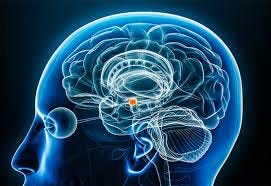
And here’s the part that’s hardest to explain unless you’ve lived it…
You’re not just grieving the relationship.
You’re trying to land somewhere after being released midair.
🙃
The Asymmetry Most People Miss
This is the part that often gets misunderstood.
An avoidant may experience disappearance as self-protection.
As:
Reducing overwhelm
Creating relief
Regaining internal control
And that experience is real.
But on the other side, the experience is entirely different.

They experience it as being dropped without a landing.
No warning. No handoff. No gradual descent.
Just a sudden loss of contact while still oriented toward connection.
Both experiences are real. But they are not equal in impact.
One nervous system is seeking relief. The other is left to absorb the shock.
And because the rupture was sudden and unexplained, the nervous system of the person who was left doesn’t get to complete the stress cycle.
It stays suspended, asking:
What happened?
What changed?
What did I miss?
That’s why it can take so long to recover. Even for people who are otherwise secure.
What looks like “overthinking” from the outside is actually a nervous system trying to re-establish safety after a sudden fall.
If you were left in this way, I want you to notice something important.
None of this has anything to do with your worth.
They didn’t leave because you were too much. They didn’t leave because they didn’t love you.
They left because being with you required a level of presence they couldn’t sustain.
That’s not a character flaw. But it is a capacity mismatch.
A Message for Avoidants
If you’re avoidant, your problem usually isn’t that you pick the wrong people.

It’s that when the relationship gets real, your nervous system interprets closeness as danger, and you call your panic clarity.
You don’t need a new partner. You need a new pattern.
What to Do Instead of Disappearing
If I may be so bold as to offer you an alternate route through the things you’re feeling, here’s a simple interrupt, before you torch the whole thing.
It’s very simple.
Pause, notice, and communicate these 3 things to your partner.
“I’m feeling the urge to pull away.”
“That urge is about me managing discomfort, not you being wrong.”
“Can we slow down for 72 hours while I regulate, without making permanent decisions?”
That’s what secure behavior looks like.

You don’t vanish. You communicate. You regulate. You repair.
I know it’s easier said than done, but if you wanna break the cycle, you’ve gotta do things you’ve never done before.
You got this.
The Bottom Line
Remember, this wasn’t about your worth.
This was about what being with you activated inside them.
This was about their nervous system, their attachment history, and the identity they built to survive intimacy.
They didn’t leave because you were too much or because they don’t love you.
They left because you required a level of presence they weren’t capable of sustaining.
The right person won’t disappear when it gets real.
They’ll have the capacity to stay.
And you don’t need to be less deep, less emotional, or less you to be loved.
You just need someone whose nervous system can meet you where you are.
Until next time… Live Heroically 🧠
Want to Work With Me? Here Are a Few Ways I Can Help You
Apply to Becoming HER, it’s the 63-day neuroscience-backed reset that helps you finally feel calm, confident, and ready for real love again. Applications for the next small cohort are open — but not for long.
Check out my FREE webinar on The ONE Skill That Attracts Secure Love Fast. If you’re smart, attractive, successful, and self-aware, but love still feels like a minefield, this is for you!
Grab my new ebook: Exactly How to Become Emotionally Available: It’s a step-by-step guide for attracting and keeping the love you seek, built for the success but single among us!
Become a paid subscriber to the Mind, Brain, Body Lab Digest: You’ll get subscriber-only video posts, email replies, access to my entire blog archive, early access to new products, workshops & tools I create!
Supporting Research
Attachment, Avoidance, & Emotional Deactivation
Bowlby, J. (1988). A secure base: Parent-child attachment and healthy human development. New York, NY: Basic Books.
Mikulincer, M., & Shaver, P. R. (2016). Attachment in adulthood: Structure, dynamics, and change (2nd ed.). New York, NY: Guilford Press.
Fraley, R. C., & Shaver, P. R. (2000). Adult romantic attachment: Theoretical developments, emerging controversies, and unanswered questions. Review of General Psychology, 4(2), 132–154.
Nervous System Load, Stress, & Shutdown
McEwen, B. S. (1998). Stress, adaptation, and disease: Allostasis and allostatic load. Annals of the New York Academy of Sciences, 840(1), 33–44.
Porges, S. W. (2011). The polyvagal theory: Neurophysiological foundations of emotions, attachment, communication, and self-regulation. New York, NY: Norton.
Schore, A. N. (2012). The science of the art of psychotherapy. New York, NY: Norton.
Shame, Withdrawal, & Relational Threat
Tangney, J. P., & Dearing, R. L. (2002). Shame and guilt. New York, NY: Guilford Press.
Leary, M. R. (2005). Sociometer theory and the pursuit of relational value. Journal of Personality, 73(3), 497–518.
Nathanson, D. L. (1992). Shame and pride: Affect, sex, and the birth of the self. New York, NY: Norton.
Attachment Rupture & Threat Processing
Eisenberger, N. I., & Lieberman, M. D. (2004). Why rejection hurts: A common neural alarm system for physical and social pain. Trends in Cognitive Sciences, 8(7), 294–300.
Coan, J. A., Schaefer, H. S., & Davidson, R. J. (2006). Lending a hand: Social regulation of the neural response to threat. Psychological Science, 17(12), 1032–1039.
This article is educational in nature and not a substitute for therapy. If attachment wounds or relational trauma are impacting your wellbeing, working with a trauma-informed therapist can help your nervous system relearn safety in connection.
The nervous system reframe in here is spot-on, esp. the bit about how "capacity, not chemistry, determines who stays." I've been on both sides of this in various relationships and I gotta say, it took me awhile to realize that my disappearing acts weren't strategic decisions but physiological panic dressed up as clarity. Framing it as a shutdown respons instead of indifference actually helps ppl understand what's happening without letting anyone off the hook for the impact.