
Disagreement Isn’t the Threat. (Avoiding It Is.) 🧠
The neuroscience of why disagreement is good for you, and how to productively disagree.

TL;DR Summary:
We didn’t get more peaceful. We got more afraid — and your nervous system has been treating disagreement like a threat ever since.
Your brain works harder when it disagrees than when it agrees. That’s not a problem. That’s a workout.
The peace you buy by swallowing your truth isn’t free. It’s borrowed harmony — and it compounds into emotional debt.
It’s not whether you fight. It’s how. Gottman’s research on this is almost annoyingly clear.
Disagreement done right doesn’t end with a winner. It ends with a third thing — a better idea neither of you walked in holding.
Here’s the three-step framework for getting there.
I Get in Trouble For This. A Lot.
I’m one of those people.
You say something, and my first instinct isn’t to nod along. It’s to tilt my head and go, “Wait… is that actually true?”
Not because I think you’re wrong. Because I genuinely want to find out if you’re right.
On the Big Five personality scale, I score low on agreeableness. Which, despite the name, doesn’t mean I’m a jerk.
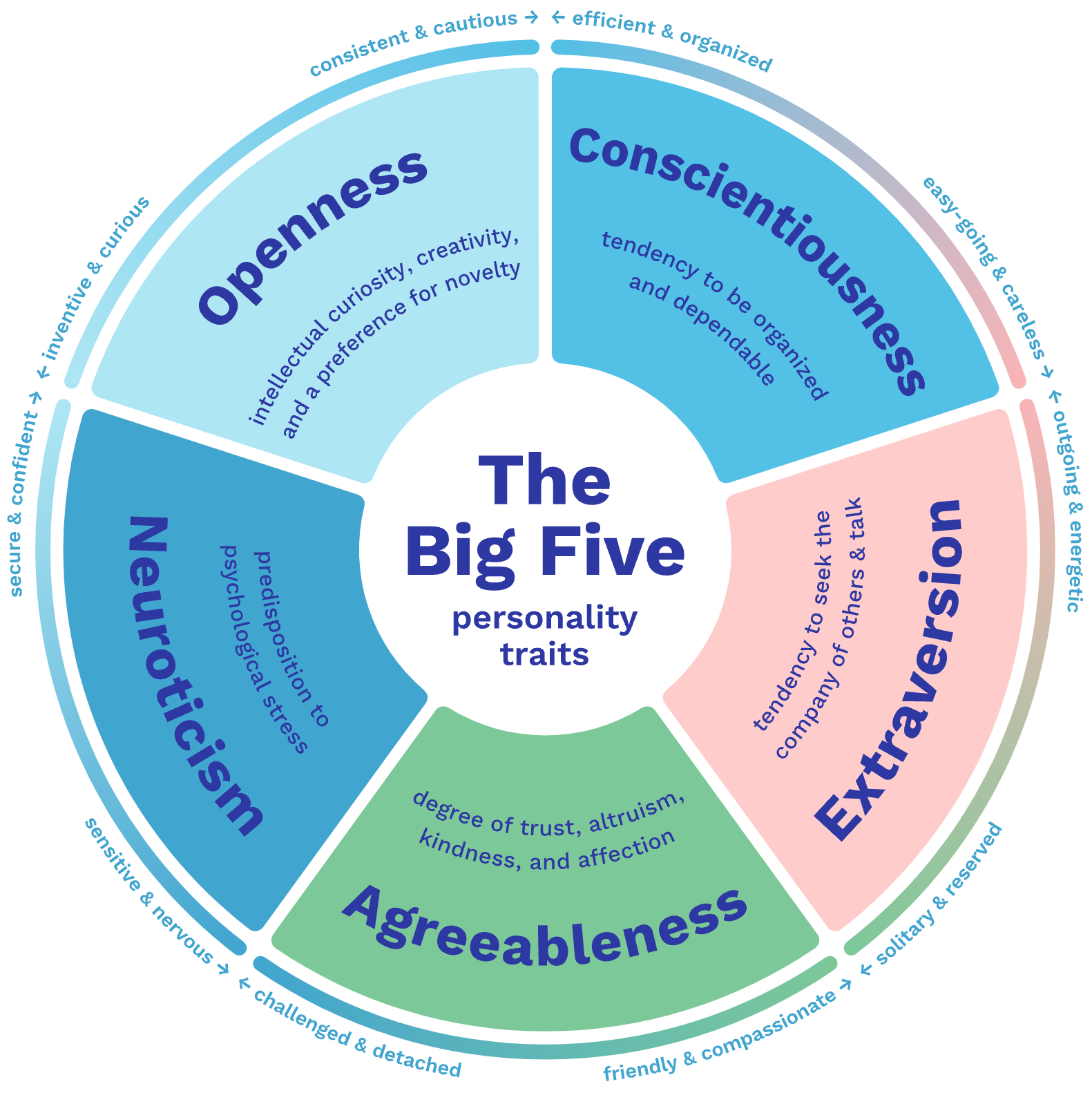
It means my default setting is to question, probe, test the logic, poke at the assumption… including my own. When someone tells me something, a part of me lights up and wants to take it apart to see how it works.
So, people often think I’m mad at them, or something.
False.
I’ve watched it happen in real time, though.
I ask three honest questions in a row and suddenly the energy shifts. They get defensive. Flustered. Sometimes a little hurt. They think we’re fighting.
We’re not fighting. I’m learning. I’m stress-testing my own thinking against yours.
And when it goes well, when the other person can stay in it with me, we almost always land somewhere better than either of us started. Sharper. More true.
I’ve been on dates where this is electric. Where she pushes back, I push back, and twenty minutes later we’ve built an idea neither of us walked in with.
And I’ve been on dates where my third question made someone visibly shut down, like I’d done something cruel by… being curious.

So I’ve had to learn the hard way that being right about disagreement. Being good isn’t enough.
How you do it is everything.
But before we get to how, let’s talk about why we got so scared of it in the first place.
We Didn’t Get More Peaceful. We Got More Afraid.
Somewhere in the last couple of decades, a quiet swap happened in our collective nervous system.
“You’re wrong” started to feel like “you’re bad.”
Disagreement stopped being a normal feature of two minds meeting and started feeling like a threat to your worth, your belonging, your safety.
And think about where most of us “practice” disagreement now. It’s not the dinner table. It’s the comment section.
Online, disagreement has exactly two settings: pile on, or get piled on.
There’s no version where two people who see it differently get curious and walk away friends.
The algorithm doesn’t reward that. It rewards the dunk.
So we learned, over thousands of tiny reps, that disagreement is dangerous, and that it ends in humiliation, not understanding.

So we adapted the way nervous systems always adapt: we picked a survival strategy.
Some of us avoid it (just keep it smooth, never rock the boat).
Some of us perform agreements we don’t feel.
And some of us go scorched-earth at the first whiff of being challenged.
What almost none of us learned is the thing in the middle, the actual skill of disagreeing well.
That muscle just… atrophied.
And if your early home run on “conflict means someone leaves” or “conflict means someone explodes,” you didn’t start at zero.
You started in debt, dude.
Your nervous system had a head start on reading disagreement as danger long before the internet finished the job.
So, what’s going on in your brain when you disagree with someone?!
Great question.
The Neuroscience of Disagreement
A team at Yale led by neuroscientist Joy Hirsch sat pairs of people down to talk and scanned both of their brains at the same time.
Sometimes the pairs talked about things they agreed on. Sometimes about things they didn’t.
When the two people agreed, their brains did something kind of beautiful: activity stayed calm and concentrated in the social and sensory areas, and the two brains actually started to sync up, mirroring each other.

Literal neural harmony.
When they disagreed, that synchrony broke. Activity jumped up into the frontal lobes, the prefrontal cortex, the part of you responsible for reasoning, planning, weighing evidence, higher-order thought.
The researchers found that disagreeing simply demands more of the brain than agreeing does. More regions. More resources. More effort.
Read that again, because it’s the whole point: disagreement is more cognitively demanding than agreement.
Your brain works harder when it disagrees.
Now, your nervous system, which is gloriously lazy and obsessed with keeping you safe, hates this.
Effort feels like a cost. Cost can feel like a threat. So when real disagreement shows up, your body can read “this is hard work” as “this is dangerous,” leak a little cortisol into the system, and nudge you toward the cheap exit: just agree, change the subject, or go cold.

HOWEVER, dear reader, “harder” is not the same as “worse.”
This is the part the avoidance crowd misses entirely.
That extra brain activity is a workout.
Decades of research by David and Roger Johnson on what they call constructive controversy found a specific chain reaction: you bump into a view that contradicts yours → you get uncertain → the uncertainty sparks genuine curiosity → you go hunting for more information and better perspectives → you come out with a sharper, more refined conclusion than you walked in with.
They found this kind of structured disagreement beats debate, beats just-agreeing, and beats going it alone for learning, for creativity, and for the quality of the final call!
Wild, right?!
So when I sit across from someone and start poking at an idea, my brain isn’t malfunctioning.

It’s doing one of the most effortful, growth-promoting things two brains can do together.
That’s not me being difficult. That’s me lifting weights with you, baby!
The catch, and it’s a big one, is that all of this only works while your prefrontal cortex stays online.
The second things turn hostile, sarcastic, contemptuous, threatening, the body flips out of “this is hard and interesting” into “this is dangerous.”
Cortisol spikes, the thinking brain goes quiet, the survival brain grabs the wheel.
Now you’re not reasoning. You’re defending. The brain is working harder, but it is no longer working better.
Same disagreement. Two completely different brains, depending entirely on whether your system feels safe.
Which is exactly why the how matters more than the what.
You don’t disagree with your mind. You disagree with your nervous system.
If you’ve been around here a while, you know I’m about to bring in parts. Let’s talk IFS!
When someone disagrees with you, you don’t experience it as a neutral data point.
A part of you experiences it. And depending on your history, a very specific part tends to show up:
The part that learned disagreement = abandonment. Someone pushes back and a young, anxious part panics: they’re pulling away, I have to fix this, I have to agree, I have to make it smooth again. So you fold. You abandon your own position to protect the connection.
The part that learned disagreement = a fight you have to win. Someone challenges you and a protector slams the door: I have to be right, I cannot be wrong here. So you argue to win instead of to understand.
The part that learned disagreement = the room is about to explode. So you go cold. You stonewall. You leave the conversation while your body’s still in the chair.
None of these parts are bad.

Every one of them is a brilliant little bodyguard that took the job when you were too young to protect yourself, and never got the memo that the war is over.
I’ll Out Myself Here
For a guy who’ll cheerfully debate the structure of reality with a stranger at a party, I have historically been terrible at one specific kind of disagreement: telling a partner what I actually need.
I can challenge an idea all day.
But sit me across from someone I love and ask me to say “hey, I’m not getting enough back here, and it’s not okay with me”?
A completely different part takes over. The nice-guy part. The one that decided a long time ago that the way to keep someone is to be easy, to ask for nothing, to keep the peace.

I’ve watched myself swallow a real need a hundred times to dodge one uncomfortable conversation, and then quietly resent that the need went unmet.
In my last relationship, I did exactly this. Over and over.
And here’s what I’ve started calling that move, because it deserves a name: borrowed harmony.
Borrowed harmony is the peace you get by swallowing your truth.
It feels like protecting the relationship. It feels generous, even.
But you didn’t create peace; you borrowed it against your future. And like anything borrowed, it comes due.
Every swallowed need, every “it’s fine” that wasn’t fine, every disagreement you skipped to keep things smooth doesn’t vanish. It goes on the tab.

That’s emotional debt. It compounds quietly, in the background, until the interest comes due as resentment, distance, or a breakup that “came out of nowhere” (it didn’t).
Borrowed harmony isn’t intimacy. It’s a loan. And the relationship is the one that pays.
I had to learn that the hard way, and it’s one of the most important things I’ve been working on in my own healing journey!
What the Healthiest Couples Actually Do
For over forty years, Dr. John Gottman has been bringing couples into a lab and watching them argue.
Thousands of them.
And from all that data, he can predict with eerie accuracy which couples will make it and which won’t.
You’d assume the couples who last are the ones who fight less, right? The calm ones. The “we never argue” ones.
Nope.
The couples who last, the ones Gottman calls the masters, often argue just as much as the ones who split. Conflict frequency barely predicts anything.
What predicts almost everything is how they fight.
The “disasters” let four specific things into the room: criticism (attacking the person, not the problem), contempt (the big one: sarcasm, eye-rolls, moral superiority), defensiveness, and stonewalling (going cold and checking out).

Those four are so corrosive Gottman named them the Four Horsemen.
The masters? They do something almost embarrassingly simple.
When a fight starts to slide off the rails, they repair. A joke. A hand on the arm. A “wait, I’m coming at you, let me start over.”
Gottman calls repair attempts the secret weapon of happy couples.
And they keep the overall ratio tilted toward warmth: somewhere around five positive moments for every negative one, even mid-fight.
So, the goal was never to stop disagreeing.
The goal is to disagree without contempt, and to repair fast when you slip.
The couple that never fights isn’t automatically healthy.
Sometimes that’s two people running borrowed harmony at scale… A relationship so afraid of friction that nobody’s actually in it.
Smooth on the surface, hollow underneath, quietly drowning in emotional debt.
Okay, Cody, I get it. Disagreement good, contempt bad, my nervous system is dramatic.
What do I DO about it???
So glad you asked, imaginary reader I talk to in my head as I write these things.
Exactly What To Do About It
Let’s get practical, baby.
The research out there hands you scattered tips like “stay calm,” “ask questions,” “use I-statements.”
All fine. But that’s a pile of parts, not a system. Here’s the system.
I call it The Third Thing Framework.
The name is the whole philosophy.
When disagreement goes wrong, it ends with a winner and a loser (or two losers).
When it goes right, it doesn’t end with your idea or their idea winning. It ends with a third thing, a better idea neither of you walked in holding, built from the collision of both.

Aristotle called it deliberate discourse. I call it the third thing. You’re not fighting each other. You’re both fighting toward whatever’s most true.
And before you file this under “relationship advice” — don’t.
This works with your sister, your coworker, your group chat, the friend who voted differently than you, your mom on the phone.
Anywhere two minds meet and don’t match.
Ight, three steps, let’s dive in.
Step 1: Set the Up-Front Contract & Regulate
Two moves, one job: make it safe before you touch the content.
The first I stole from sales training, of all places. In Sandler’s method, there’s a concept called the up-front contract: before any real conversation, both people agree on what it’s for and what you each want out of it.
No surprises.
With a partner it sounds like: “Hey, I’m not trying to win or make you wrong, I actually want to understand you and figure this out together. Is now a good time?”
With a coworker: “Can I push on this idea for a sec? Not because I don’t like it, because I want to pressure-test it with you.”
With your mom: “I want to talk about something, and I want us to stay on the same team while we do.”
Look at what that does. You’ve named the shared goal (which lowers defensiveness on the spot, the research backs this hard), you’ve told their nervous system this is not an ambush, and you’ve handed them a real choice about timing.
The second move is on you, not them: regulate before you engage.
Remember the neuroscience: productive disagreement lives in your prefrontal cortex, and that’s the first thing to go offline when you’re activated.
Gottman measured this; when people get flooded in a fight (pounding heart, tight chest, that hot wave), they lose access to the exact brain regions this whole thing requires.
So, if you’re past the point of no return, don’t power through, call a timeout, and name when you’re coming back (”I need twenty minutes, I’m not leaving this”).
An open loop with a return time is repair. A slammed door is abandonment. Same pause, totally different message.
You’re aiming for what Dr. Aimie Apigian calls calm aliveness, regulated and engaged.
Not numb. Not flooded. Online.
Step 2: Lead with a real question, then signal you mean it.
This is the step my fellow disagreeable people get wrong all the time (raises hand 🙋♂️).
There’s a world of difference between “Wait, why would you even think that?” and “Huh, what’s making you see it that way?”
Same curiosity. Opposite impact.
A genuine question gets you actual information (you might be wrong, exciting!) and tells the other person they’ve heard before they’ve been challenged.
Which research shows makes people dramatically more willing to hear you back. Curiosity before counterpoint. Always.

But here’s the trap for those of us who love to debate: we are receptive! We’ll happily update our view with better evidence, BUT we don’t signal it.
We just start poking. And the other person, who can’t read our minds, feels poked, not partnered. (This is the exact reason a coworker thinks you’re attacking their proposal when you’re actually trying to make it stronger.)
Researchers at Harvard and UBC (Minson, Yeomans, and crew) trained a model to detect what receptive language actually sounds like, and it’s built from three simple, learnable moves:
Acknowledgment: “I hear you, the part that bugged you was the timing, not the money.”
Hedging: “I might be wrong about this, but…” Hedging isn’t a weakness. It’s you signaling there’s room for both of you to be partly right.
Positive affect: “I’m really glad we’re talking about this.” A little warmth, on purpose.
Their findings were wild. People who opened with receptive language got fewer personal attacks back later.
You can lower the temperature of a disagreement before it heats up just by how you signal at the start.
So say the warm part out loud.
Don’t make them guess you’re on their side. Tell them.
Step 3: Repair fast. Repair often.
You will slip. Your tone will get an edge. That’s not failure, that’s two nervous systems doing a hard thing.
The masters aren’t the ones who never slip. They’re the ones who catch it and reach back.
“Hey, that came out sharper than I meant.”
“Can we rewind?”
“I’m getting defensive, give me a sec.”
A repair attempt is any move, even a goofy one, that stops the slide before it curdles into contempt. (Works on a friend mid-text-argument as well as it works on a partner across the kitchen.)

And land the plane on the relationship, not the scoreboard.
End on the connection, not the conclusion: “I love that we can do this, even when we don’t land in the same place.”
Because what you’re building, rep by rep, is proof, proof to both nervous systems that you two can disagree and the bond holds.
That’s how connection of any kind stops feeling fragile.
Productive Disagreements
If you take one thing from all of this, take this: a smooth relationship isn’t the goal.
The honest one is.
The fear that disagreement will cost you the connection is real, and it made sense once, but you’re older now, and you’re safe!
A partner you can disagree with, really disagree with, and still feel held by isn’t a threat to your security.
They’re the source of it.
The people who can stay in it with you, who push back, who let you push back, who repair when it gets messy… Those are your people!
Not the ones who never ruffle you. The ones who can handle being ruffled and choose to stay.
That’s not a conflict. That’s intimacy with the training wheels off!
So the next time someone sees it differently than you, don’t brace for a fight.
Don’t reach for the cheap peace, either.
Get curious. Stay in your body. Signal you’re on their side. And go build the thing neither of you could’ve reached alone.
Go find the third thing!
I believe in you! You’ve got this.
And as always, until next time… Live Heroically 🧠
Want to Work With Me? Here Are a Few Ways I Can Help You
Becoming HER is a 63-Day program that heals heartbreak & prepares you for modern dating, using Neuroscience & Internal Family Systems. (If you’re seeing this, one of our cohorts is open currently!)
Going through a breakup? Check out She Rises. It’s a post-breakup protocol based on neuroscience to help you regulate your nervous system in the days and weeks right after a breakup.
Grab my new ebook: Exactly How to Become Emotionally Available: It’s a step-by-step guide for attracting and keeping the love you seek, built for the success but single among us!
Become a paid subscriber to the Mind, Brain, Body Lab Digest: You’ll get subscriber-only posts, email replies, access to my entire blog archive, early access to new products, workshops & tools I create!
Supporting Research
Hirsch, J., Tiede, M., Zhang, X., Noah, J. A., Salama-Manteau, A., & Biriotti, M. (2021). Interpersonal agreement and disagreement during face-to-face dialogue: An fNIRS investigation. Frontiers in Human Neuroscience, 14, 606397. https://doi.org/10.3389/fnhum.2020.606397
Johnson, D. W., & Johnson, R. T. (2009). Energizing learning: The instructional power of conflict. Educational Researcher, 38(1), 37–51. https://doi.org/10.3102/0013189X08330540
Johnson, D. W. (2015). Constructive controversy: Theory, research, practice. Cambridge University Press.
Yeomans, M., Minson, J., Collins, H., Chen, F., & Gino, F. (2020). Conversational receptiveness: Improving engagement with opposing views. Organizational Behavior and Human Decision Processes, 160, 131–148. https://doi.org/10.1016/j.obhdp.2020.03.011
Minson, J. A., & Chen, F. S. (2022). Receptiveness to opposing views: Conceptualization and integrative review. Personality and Social Psychology Review, 26(2), 93–111.
Gottman, J. M., & Levenson, R. W. (1992). Marital processes predictive of later dissolution: Behavior, physiology, and health. Journal of Personality and Social Psychology, 63(2), 221–233.
Gottman, J. M., & Silver, N. (1999). The seven principles for making marriage work. Crown Publishers.
This article is educational in nature and not a substitute for therapy. If attachment wounds or relational trauma are impacting your well-being, working with a trauma therapist can help your nervous system relearn safety in connection.