

TL;DR Summary:
He told you he had no capacity. He did have capacity. Just not for the thing you were asking him to carry.
He might genuinely feel better right now. I’ll show you why that still doesn’t mean what you think it means.
There’s a reason he posts her all over Facebook when he never posted you once. It has almost nothing to do with her.
“I guess I was the practice round.” I hear this one constantly. It’s almost never true, and the real answer stings in a better way.
There’s a part of you checking his page every night. Research says it’s quietly slowing your recovery, and it’s not doing it to hurt you.
Every question you’ve been asking his feed has the same answer. And it was never gonna be on his feed.
The fix isn’t more insight about him. It’s becoming someone he’s never met.
How Did He Move On So Fast???
I get asked this in comments and DMs ALL the time.
Some version of it lands in my inbox basically every single week:
“He told me he couldn’t do a relationship right now. Two months later he’s in one.”
“He never posted me once. Not once. Now she’s his profile picture.”
“How is he already happy when I can barely get outta bed?”
“Was I just the practice round?”

Last week it was the hottest thread in my She Rises community.
A woman whose ex swore he had NO emotional capacity... was in a new relationship before two months were even up. Posting her all over Facebook. (A man who never posted her.)
Fourteen comments in, almost every woman in that thread had landed on one of two conclusions.
Either she was the problem.
Or the whole relationship was a lie.
Neither one is true, and I’m gonna show you why.
So today we’re breaking down five things a fast rebound actually means.
Then we’re getting into the part that isn’t about him at all, because ya’ll know I’m not letting you get outta here without some self-reflection and agency!!
Let’s dive in!
1. Month One Asks Nothing of Him
He’s in month one. Maybe month two of this “new relationship.”
And month one is the easiest stretch of any relationship ever invented.
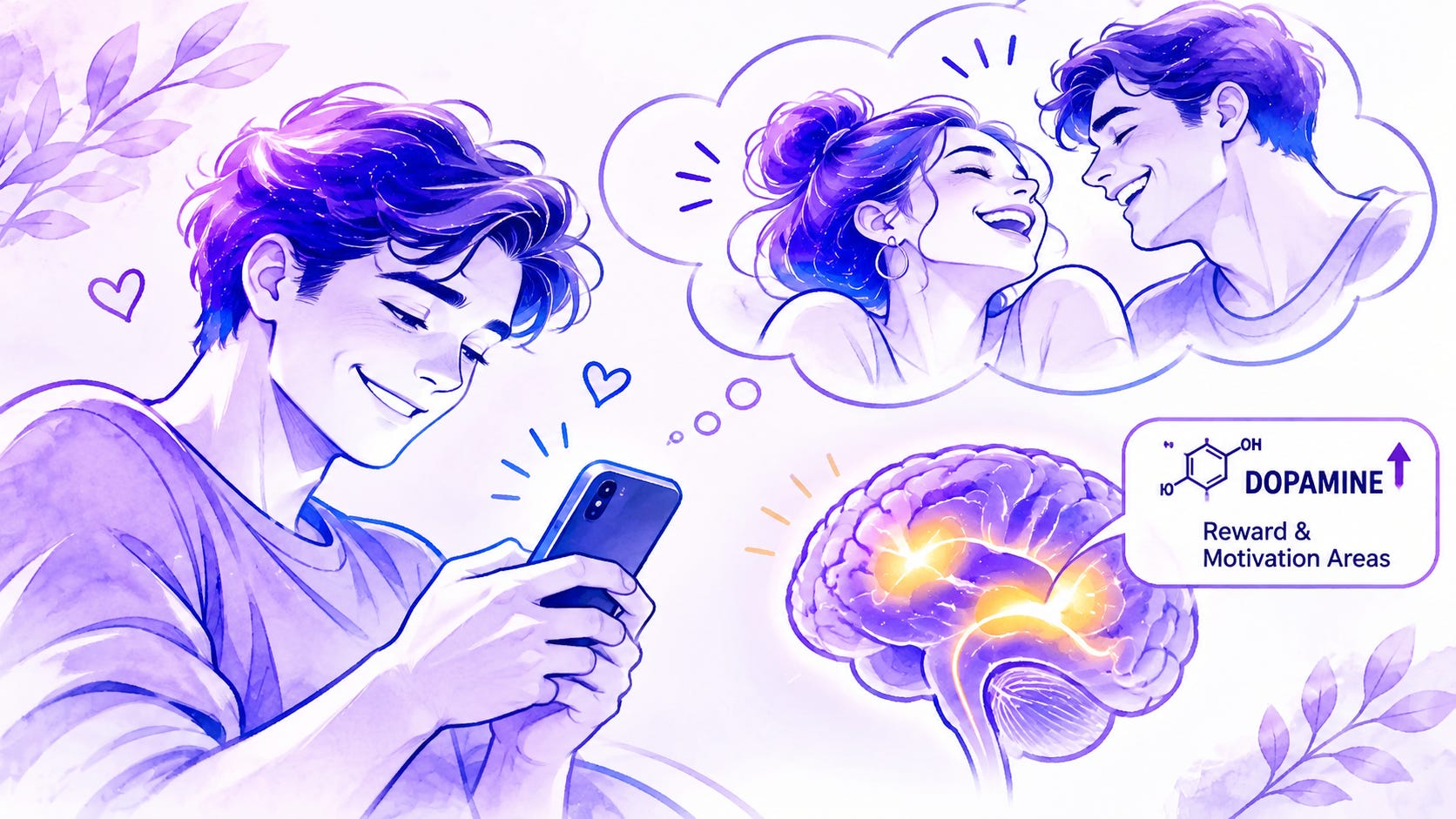
When researchers scanned people in the early, intense phase of romantic love, the regions that lit up were dopamine-rich reward and motivation areas.
That’s the everything-is-new, can’t-stop-texting, she-laughs-at-all-my-jokes phase.
And here’s what that phase doesn’t ask of anyone:
Showing up when you’re sick, grumpy, and kinda gross
Repairing after a real fight
Holding someone’s bad week without making it about yourself
Talking about the future in a way that actually costs something
Staying once the novelty wears off
Which means month one is the one part of a relationship where low capacity and high capacity look exactly the same.
Everyone’s great in month one. Literally everyone. (Even the guy who eventually forgets your birthday was great in month one.)
Capacity doesn’t show up at the start. It shows up under load.
So when you look at his new posts and think he’s finally become the guy who can do this... you’re watching a man do the part he was always able to do.
The Question You’re Really Asking
Underneath all of this, the question isn’t “is he happy?”
It’s “was I the reason he couldn’t?”
Hold onto that one. We’re coming back to it :)
2. He Might Actually Feel Better (That Still Isn’t Capacity)
Ight, this one might sting a bit, but I’ve gotta give you the science.
He might genuinely feel better right now.
I know, I know. Stay with me.
The popular story is that rebounds are a sad lil coping mechanism and they always crash. The research doesn’t really back that up, though.
In one of the only studies to actually follow people into rebound relationships, those in new relationships felt more confident in their desirability and more resolved about their ex.

And the faster they started the new relationship, the better they were doing psychologically.
So if you’ve been waiting for his new relationship to implode on schedule... I wouldn’t hold your breath.
But here’s what that research does NOT say.
It doesn’t say he grew. It says he FEELS better.
A new person can soothe a nervous system. Attention, touch, novelty, being wanted... all of that regulates.
It turns the volume down on the loneliness and the “am I even desirable” panic that a breakup cranks up.
That’s real relief. It’s just relief that comes from outside him.
Feeling better is regulation.
Capacity is what’s left once the new person stops being new.
Oh, and FYI… Relationships are built on the latter!
What You’re Actually Asking His Feed
“Did he heal faster because I mattered less?”
No. He may have found a faster way to stop hurting. That’s not the same as you mattering less, and it’s not the same as healing, either.
3. Being Posted Isn’t Being Chosen Better
This is the one that cuts deepest, right?
Not that he’s with someone. That he’s showing her.
You got the private version. She gets the tagged photos, the soft launch, the hard launch, the “my person” captions.
So your brain does the math: she’s worth showing, and I wasn’t.
While a valid and logical chain of reasoning, it’s flawed math.
Researchers have actually studied why people make their relationships visible online.
How much someone posts tracks their own needs far more than it tracks the relationship’s depth.
Anxiously attached people wanted their relationships more visible. Avoidant people kept theirs quieter. And on days when people felt more insecure about their partner’s feelings, they posted about the relationship MORE.
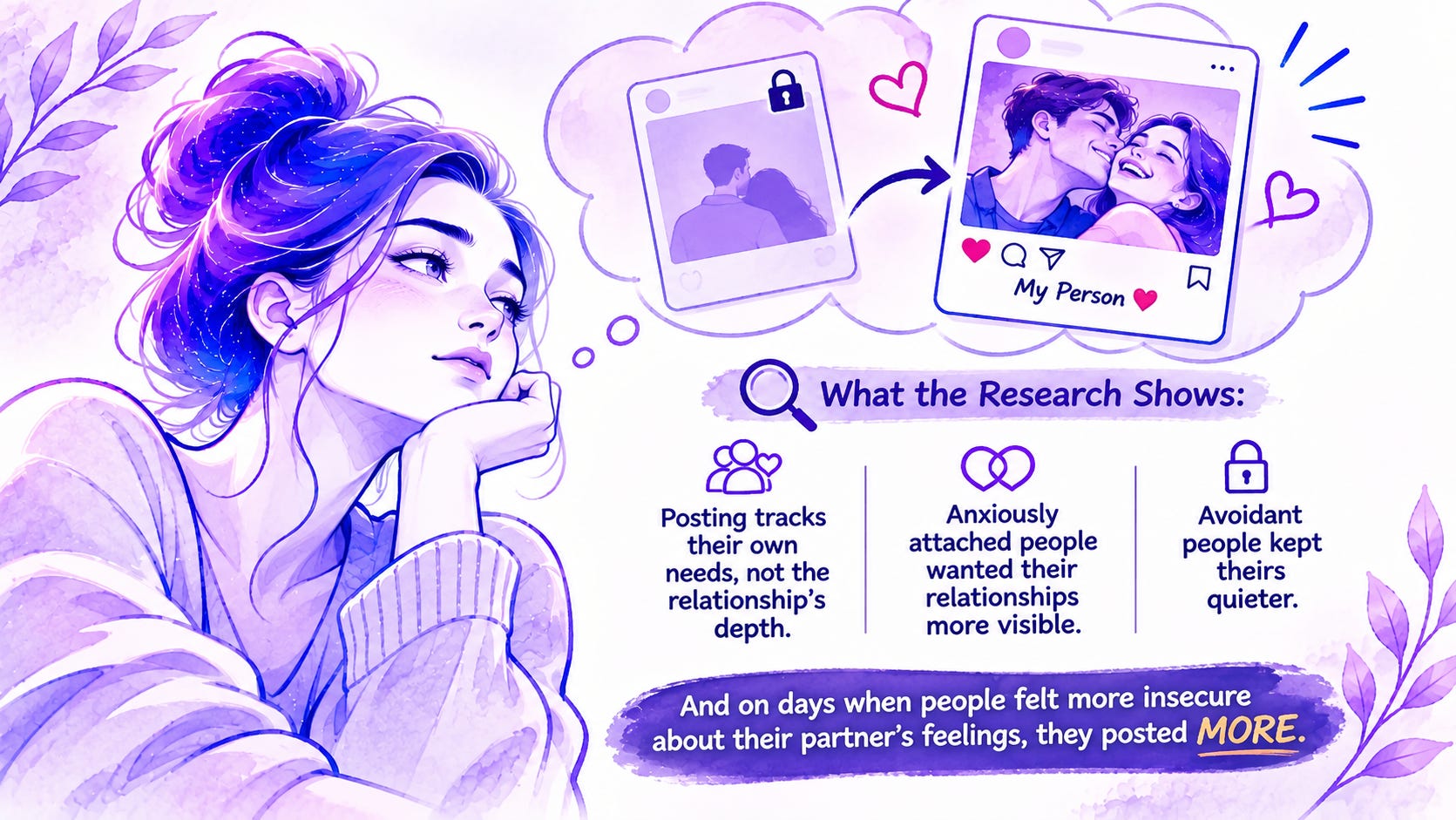
So, posting tells you about the poster, and less about the other person.
It tells you what he needs to be seen doing right now. It doesn’t tell you how well he’s choosing.
And no, I’m not saying “he’s posting because he’s insecure.” Maybe he’s thrilled.
Maybe he’s proving something to his friends.
Who knows, they’re not about you.
Notice none of these options are “she’s simply more lovable than you were.”
Peeps don’t walk into my session saying “his posting habits changed.” They say, “He’s proud of her. He hid me.”
Sometimes he did hide you. That’s real, and it’s a fair thing to be hurt by.
And sometimes he was a guy who didn’t post, and now he’s a guy in month one who does. Neither one is a ranking of women.
Being posted is not the same thing as being chosen.
The Real Question Underneath
“Why wasn’t I worth showing?”
You were. His feed was never the measuring stick.
Nothing outside of you gets to determine your worth, more on that later!
4. “No Capacity” Was Probably True (For What You Were Asking)
Here’s the line that keeps you up (myself included): “I don’t have the emotional capacity for a relationship right now.”
And then magically, weeks later, he does, and is in a new realtionship…
TF…
So he lied. Right???
Probably not. Or at least, not the way you think.
Capacity isn’t one number. It depends on the load.
Think about where your relationship was when it ended. It wasn’t month one. It was month eight, or year two.
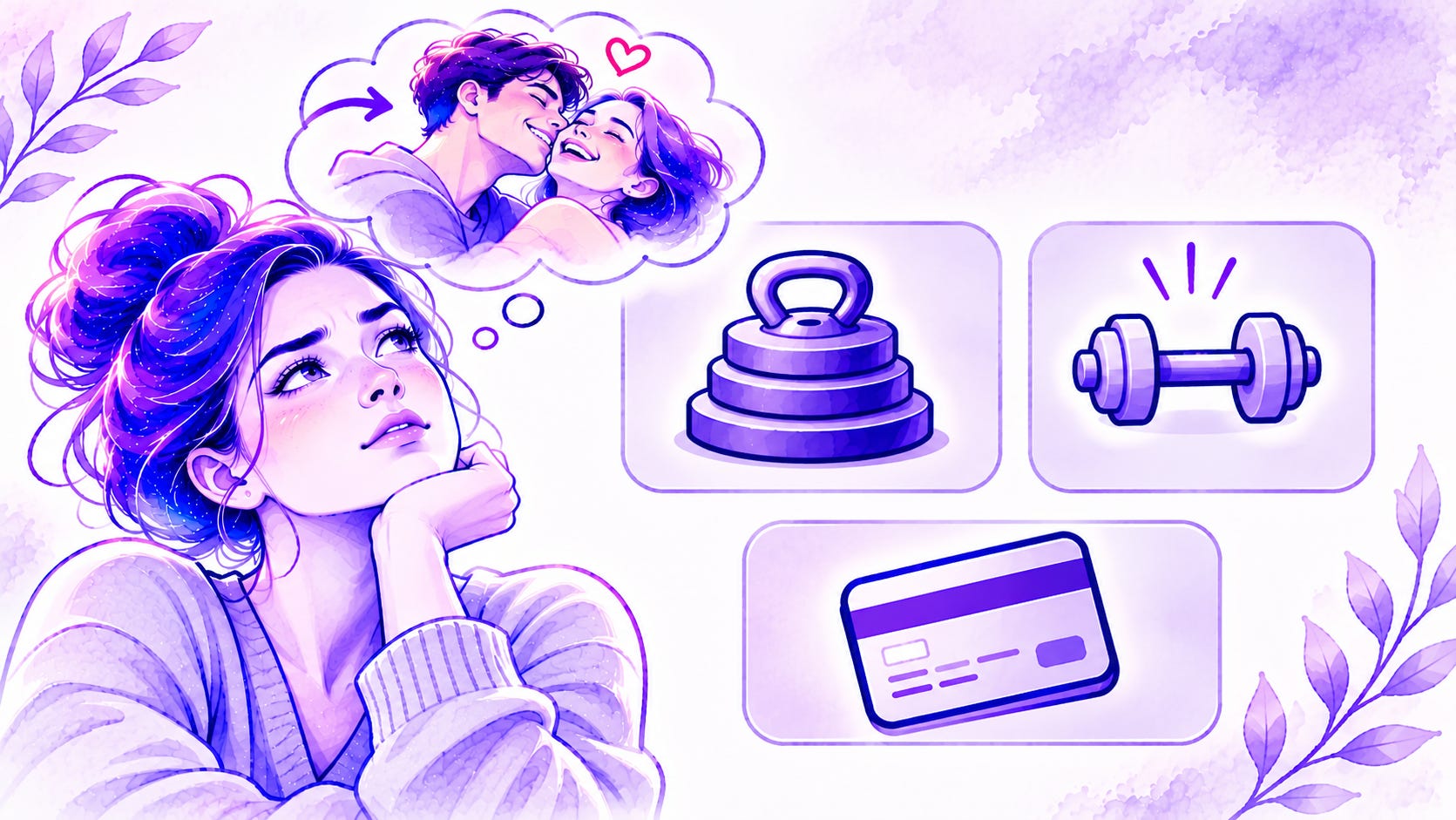
You’d hit the real stuff: needs, conflict, future talk, the Tuesday-night version of love that actually asks something of you.
That’s a heavy load. And what he told you was more or less accurate. He couldn’t carry it.
What he’s carrying now is month one. (See #1.) A load he’s always been able to lift.
This is what I call borrowed capacity: showing up beyond your true relational bandwidth while things stay light.
It works like an emotional credit card, and month one has a zero balance.
The bill comes later. Usually right around when the relationship starts asking for something real.
So the most likely truth isn’t “he had capacity for her and not for me.”
It’s capacity mismatch. His system couldn’t sustain what your relationship had become. It can sustain what hers is right now.
Which means your read on him wasn’t wrong. You don’t gotta go back and comb through your whole relationship looking for the moment you got fooled.
You didn’t get fooled. You got an honest answer with terrible timing.
5. You Weren’t the Practice Round
This is the one I said in that thread, and I wanna say it carefully, because it isn’t true for everyone.
For a lot of you, your relationship was the most real thing in his life.
It was the one with actual needs in it. Actual repair, actual future, actual you.
And for a nervous system that learned closeness is dangerous, the most real relationship is the hardest one to stay in.
That’s what avoidant deactivation does: as closeness deepens and needs show up, the system pulls back to protect itself.
So he may not have left because you weren’t enough. He may have left because it was too close to the real thing.

Then he walked into something where nothing is real yet, and his system finally got to exhale.
You weren’t the practice round. You were the real test.
Now, for some of you, that’s not your story. Maybe he just didn’t want it. Maybe it wasn’t right for him, and he knew before you did.
That hurts in a different way. But it still isn’t a verdict on your worth.
Someone not wanting a life with you tells you about fit. It doesn’t tell you about your value.
Those are two completely different measurements, and your brain keeps putting them on the same scale.
This Blog Was Never REALLY About Him
Now for my favorite part, because I’m guessing you clicked on this thinking it was a blog about decoding your ex.
Come on. You know me better than that by now. 😈
Go back and look at the questions under the first three:
Was I the reason he couldn’t?
Did he heal faster because I mattered less?
Why wasn’t I worth showing?
Notice anything?
Every single one is a question about you. And every single one, you’ve been asking his Insta to answer.
That’s the pattern. Not the rebound. Not the posting. This.
You’re processing the world OUTSIDE-IN.
You’re looking outside yourself for proof that you were loved, that you mattered, that you’re safe to be who you are. And when the proof stops coming from him directly, you go looking for it in the evidence he leaves behind.

His page. Her page. His Spotify. (Yes. I know about the Spotify.)
And lowkey, this is the same pattern that got a lot of you into that relationship in the first place.
Yep, I said it.
If being chosen is how you feel worthy, you’ll stay with someone who only chooses you sometimes for an outrageously long time…
Ask me how I know… 😑
Meet the Monitoring Part
Let’s bring in some IFS.
There’s a Part of you that I’m guessing you know really well.
I call it the Monitoring Part.
It’s the part that opens his profile at 11:47pm “just to see.” Then checks her tagged photos. Then zooms in on her face like it’s gonna find a clue.
And research says it’s quietly slowing you down.
In a study of 464 people, checking an ex’s Facebook was linked to more distress over the breakup, more longing for the ex, and less personal growth. That held even after accounting for offline contact, personality, and details of the breakup itself.
This is correlational, so it can’t prove the checking causes all that.
HOWEVER, the link was strong enough that this research helped inform Facebook's decision to build a feature to “see less of an ex”… Just sayin…
Before you get mad at this Monitoring Part, though, look at what it’s actually doing.
It’s not checking to torture you. It’s trying to get an answer.
It wants to know if you were enough. If you’re replaceable. If you’re safe to love again. Those are real, important questions.
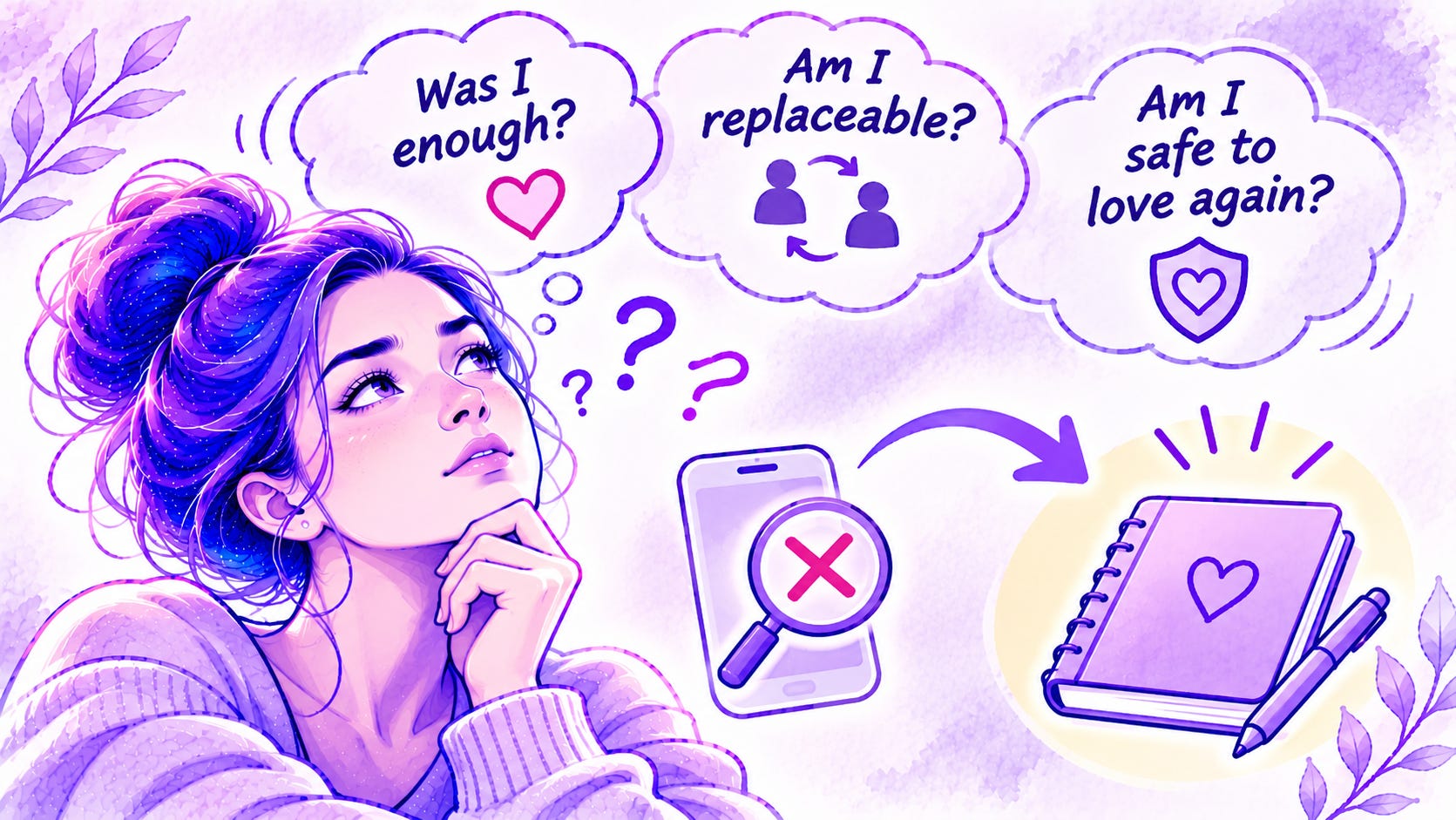
It’s just asking them in the one place that can’t answer them.
So the goal isn’t to shame it into stopping. It’s to give it a better place to look.
Becoming HER
“Ok, Cody, I get it. I’m outside-in. How do I flip it???”
Great question, one of my favorite questions to be asked, in fact!
So much so, I literally built a program to answer it called Becoming HER.
Here’s the condensed version.
It starts with one idea: you don’t get out of this by understanding him better. You get out of it by becoming someone new.
Not a more chill version of the woman checking his page. A different woman completely. One who doesn’t need his page to tell her who she is.
That identity shift happens through three realizations, and they stack. Each one only really lands once you’ve got the one before it.
Shift 1: Outside-In ➡️ Inside-Out
The woman you were in that relationship decided if she was okay based on how he was acting.
He texts back, she’s okay. He goes quiet, she’s not.
The woman you’re becoming checks in with herself first. Her worth isn’t a reaction to his behavior. It’s something she brings into the room with her.
Which turns being chosen externally from a lifeline into a bonus. Nice when it happens. Not required for her to be okay.

What would it be like if his new relationship was just... information? Not a ruling on you. Just something that happened in someone else’s life.
That’s what inside-out feels like.
Shift 2: CREATING Closure > > > Finding Closure
If you’re still outside-in, you’ll keep trying to get closure from him. An explanation. An apology. A sign he’s miserable. A sign she’s not as great as she looks.
That’s why the checking never closes anything. You’re looking for an ending on a page he controls.
Closure isn’t something you find. It’s something you create, by becoming someone the old story doesn’t fit anymore.
The research backs the identity piece here.
After a breakup, people’s sense of who they are gets genuinely blurrier, because so much of the self got woven into the relationship.
And that blurriness predicted how much distress people felt, beyond the other parts of the breakup.
So rebuilding who you are isn’t a side quest to getting over him. It IS getting over him, dude.
Shift 3: Action > > > Information
This is the layer where most smart women get stuck.
You can read this blog, nod along, agree with every word... and check his page tonight anyway.
Because information isn’t implementation.
If you wanna become a runner, what do you have to do?
Run. Right? Runners run!
You don’t become her by understanding her. You become her by doing what she does, over and over, until your nervous system believes it.
Identities create actions, and actions create identities. Which is the good news, because it means you don’t have to feel like her yet to start acting like her.
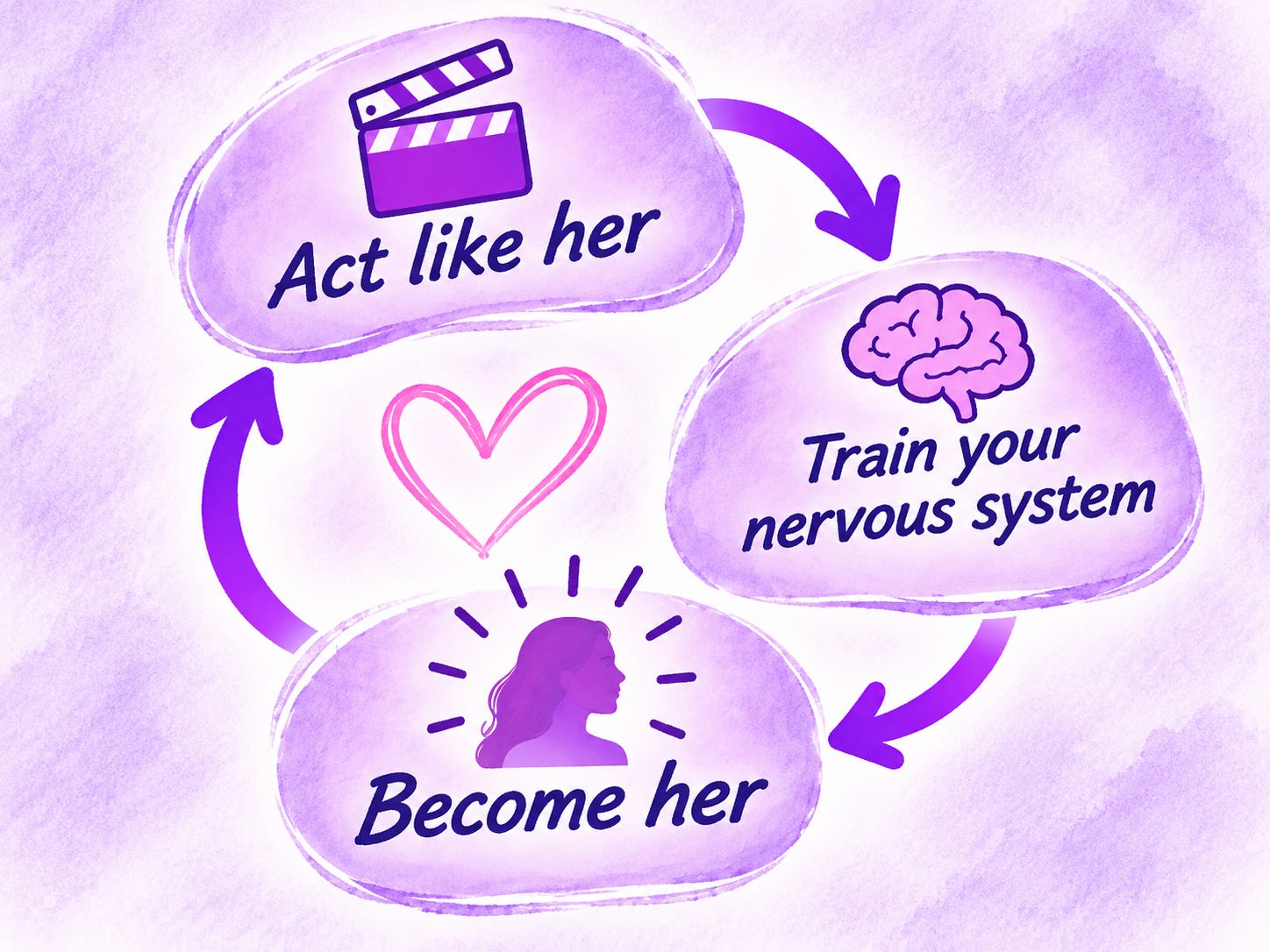
(Btw, our next Becoming HER cohort starts December 31st, which is a pretty good day to start becoming someone new, if I do say so myself.)
Lucky for you, I’m not gonna hide this inside the program; you don’t need it to start getting the reps below.
You can start tonight.
The Inside-Out Reset
Here’s a 4-step process for the next time the Monitoring Part reaches for your phone.
It’s simple, and it works because it’s a rep, not a realization.
Step 1: Catch the Question
Before you open his page, pause for one breath and ask: “What am I asking his feed to tell me about me?”
That’s it. You don’t even have to stop yet.
Most of the time, one of those three questions from earlier will be sitting right there.
The second you name it, you’ve moved from being inside the urge to watching it.
That tiny gap is where the new you starts!
Step 2: Find the Monitoring Part
Now go looking for it, the IFS way:
Find it in your body. Chest? Stomach? Jaw? Thumbs, lol? Don’t analyze it. Just locate it.
Unblend. Say internally: “A Part of me wants to check his page. That part isn’t all of me.”
Get curious, not corrective. Ask it: “What are you afraid would happen if we didn’t look?”
Listen for the quiet answer. It’s usually something like “that I’m replaceable” or “that I was never enough.”
And notice how old it feels when it answers. That tells you how long it’s been doing this job.
Step 3: Answer It From the Inside
Now give it what it was looking for on his page.
From your grown, present Self, tell it: “I get why you’re looking. His page can’t answer this. I can.”
Then say one identity line, out loud if you can stand it:
“I’m becoming a woman who knows her worth internally without checking someone else’s feed.”
Then do one thing she’d do, literally ask, “What would HER do?”

Text a friend. Go on the walk. Put the phone in another room and read for ten minutes. Make the tea.
Small. Boring. Done.
That’s the rep.
Step 4: Change the Environment
Last one, and it’s the one everyone skips.
Habits are heavily cued by context. Same couch, same time, same app open, and your brain fires the same 11:47pm scroll before you’ve even decided anything.
So make the check harder:
Mute him. Mute her. Not as revenge. As environment design.
Use the “see less” and archive features. (Again, they literally built those for this.)
Move the apps off your home screen for 30 days.
If it always happens at the same time, put something else in that slot on purpose. It helps if it’s something with another human.
You’re not doing this because you’re weak.
You’re doing it because this new identity you’re building needs to be planted inside an environment that supports its growth, not the old one that suffocated you.
His Page Was Never the Scoreboard
Him moving on fast was never data about your worth.
Your checking it, though? That was data. It showed you exactly where you’re still looking for safety: outside yourself.
Which is honestly great news, because that’s the part you get to change. His relationship isn’t.
He found someone new.
Your job is to become someone new.
You’ve got this.
And as always, until next time… Live Heroically 🧠
Wrecked to Regulated in 63 Days
Start Here: She Rises Community.
Inside is a 63-day program of the exact things I did myself to go from wrecked to regulated using neuroscience.
Plus, You’ll Have Access To:
A 63-day program to go from wrecked to regulated
Live coaching calls with me every week
A team of IFS practitioners
Private workshops and masterclasses with therapists and scientists
1-on-1 sessions
A room full of women doing this beside you
If you’re ready to become emotionally available, develop secure attachment, and attract healthy potential partners, this is for you!
The first 7 days are free. Join below!
Leave a Comment
Which do you get stuck in the most often? Lemme know below!
Supporting Research
Aron, A., Fisher, H., Mashek, D. J., Strong, G., Li, H., & Brown, L. L. (2005). Reward, motivation, and emotion systems associated with early-stage intense romantic love. Journal of Neurophysiology, 94(1), 327-337. https://doi.org/10.1152/jn.00838.2004
Brumbaugh, C. C., & Fraley, R. C. (2015). Too fast, too soon? An empirical investigation into rebound relationships. Journal of Social and Personal Relationships, 32(1), 99-118. https://doi.org/10.1177/0265407514525086
Spielmann, S. S., MacDonald, G., & Wilson, A. E. (2009). On the rebound: Focusing on someone new helps anxiously attached individuals let go of ex-partners. Personality and Social Psychology Bulletin, 35(10), 1382-1394. https://doi.org/10.1177/0146167209341580
Emery, L. F., Muise, A., Dix, E. L., & Le, B. (2014). Can you tell that I’m in a relationship? Attachment and relationship visibility on Facebook. Personality and Social Psychology Bulletin, 40(11), 1466-1479. https://doi.org/10.1177/0146167214549944
Marshall, T. C. (2012). Facebook surveillance of former romantic partners: Associations with postbreakup recovery and personal growth. Cyberpsychology, Behavior, and Social Networking, 15(10), 521-526. https://doi.org/10.1089/cyber.2012.0125
Mikulincer, M., & Shaver, P. R. (2016). Attachment in adulthood: Structure, dynamics, and change (2nd ed.). Guilford Press.
Slotter, E. B., Gardner, W. L., & Finkel, E. J. (2010). Who am I without you? The influence of romantic breakup on the self-concept. Personality and Social Psychology Bulletin, 36(2), 147-160. https://doi.org/10.1177/0146167209352250
Wood, W., & Rünger, D. (2016). Psychology of habit. Annual Review of Psychology, 67, 289-314. https://doi.org/10.1146/annurev-psych-122414-033417
Schwartz, R. C., & Sweezy, M. (2020). Internal Family Systems therapy (2nd ed.). Guilford Press.
This article is educational in nature and not a substitute for therapy. If attachment wounds or relational trauma are impacting your well-being, working with a trauma therapist can help your nervous system relearn safety in connection.