
The 5 Compliments I’d Stop Accepting (If I Were a Woman) 🧠
Praise isn’t a description. It’s reinforcement and it’s the fastest way one nervous system trains another.

TL;DR Summary
Praise isn’t a description of who you are. It’s a vote for who he wants more of — which means every compliment is quietly answering a question you never asked: more of what?
There’s one compliment on this list that men reliably hand out right before they go quiet. It sounds like admiration. It functions as permission.
One of these five is usually completely sincere — and still worth interrogating. I’ll tell you which one, and the single question that cracks it open.
The line between real praise and the other kind comes down to one question about who gets charged. There’s a four-second way to run it at the dinner table.
Most men saying these things aren’t scheming. That is not the good news you think it is — and it also changes what you should actually do about it.
There’s a Part of you that wants this list to be a verdict machine. I’m going to name her, and then I’m going to ask you not to hand her the gavel.
You didn’t shrink on purpose. And the way out isn’t suspicion — it’s something a whole lot less exhausting.
Praise Is Not a Description
I’ve got a degree in cognitive neuroscience, and I’m about to ruin compliments for you for roughly twelve minutes.
Sorry in advance. :/
Here’s the thing almost nobody says out loud: praise isn’t a description. It’s reinforcement.

When someone tells you what they love about you, they aren’t filing a neutral report on your character.
They’re doing something to you. Behavior that gets rewarded increases. That’s not a self-help idea; it’s one of the oldest, most boring, most replicated findings in all of psychology, and your brain runs it whether you consent or not.
You’ve gotta remember that social approval isn’t a metaphorical reward… It’s a literal one.
When you get praised, the same striatal reward circuitry that fires for money fires for being liked. Your brain files it under good, do that again, and it doesn’t ask your opinion first.
So when a man tells you what he loves about you, he isn’t describing you.
He’s telling you which version of you he’d like more of.
Which means the only question that actually matters is: more of what?
Let’s find out.
This Is Not a Search-and-Destroy List
Yes, I can, in fact, read your mind :)
Before you go re-read every text you’ve ever received with a highlighter and a grudge.
Let me be very clear: not one of these five is a red flag on its own. Not one.

Every single one of them can be said with total sincerity by a good man who has no idea what he’s reinforcing, because nobody ever taught him, because he inherited a script about what praise is supposed to sound like, and he’s just running it.
The compliment is never the data. What he does in the days after it is the data.
So for each of these, you’re getting three things: what to watch for after he says it, what’s actually a problem versus what’s completely fine, and one small thing to do about it.
No convictions in the first ten minutes, ladies.
Ok, back to our scheduled programming.
1. “You’re so low maintenance.”
This can sound like you’re easy to love, but it often means, “I never have to maintain you.”
Maintenance is what you do for things you intend to keep.
You maintain a house you plan to live in. You maintain a car you plan to drive for another decade. You do not maintain a rental you’re returning on Sunday.
So “low maintenance” isn’t necessarily a compliment about your standards. A lot of the time, it’s a compliment about the absence of them.

Low maintenance means low cost.
And low cost is not the same thing as high value.
Those are two completely different measurements, and we’ve been trained to hear them as one.
What to Watch For
Not a problem: A LOT of men say this and mean something honest and specific: that they came out of a relationship that felt like a full-time job with no days off, and peace feels like oxygen right now.
That’s gratitude for the absence of chaos, not gratitude for the absence of effort. And you can tell them apart, because a man who’s grateful for peace still asks what you need.

He notices you’re not asking for much and gets curious about it instead of relieved by it.
Problem: The timing. If “you’re so low maintenance” tends to show up right as you were working up to asking for something, that’s not praise.
That’s a ceiling being installed. Watch also for the flinch, the small flicker of disappointment when you do ask for something normal, like you just broke a rule you never agreed to.
What To Do
Ask him one question, once, and do not rescue him from the silence after it: “What would you say I need from you?”
A man who’s paying attention will name something. Maybe clumsily. Maybe a little wrong. But something.
A man who says “honestly, nothing, you’re so easy” has just told you he’s never had to find out.
And that’s not because you don’t need anything.
It’s because you’ve never charged him.
2. “You’re not like other girls.”
Sounds like you’re special, right?
It often means that you won’t ask for what THEY ask for, though…
This one is clever, and I don’t think most men know how clever it is.
It hands you status for free. And anything handed to you for free can be taken back for free.

Because now you have a role. And the price of the role is that you have to keep proving you deserve it.
So when you eventually want a text back inside of eight hours, or a defined thing, or a plan made more than four hours in advance, you’re not asking for a normal thing anymore.
You’re “breaking character.”
He gave you a costume, then made your needs a betrayal of it.
There’s also a quieter thing happening here too, which is kinda wild to see from the outside…
This compliment only works if other women are beneath you.
Which means your status depends on their diminishment.
Mmmmhmmmm, read that one again…
Which ALSO means the exact people most likely to look at your situation and say “babe. No.” are now people you’ve been subtly positioned against.
Yikes…
That’s an isolation mechanism, dude.
A soft one. But that’s what it is.
What to Watch For
Not a problem: Clumsy delivery, specific content. If you say “what do you mean?” and he comes back with an actual behavior, “you tell me what you’re thinking instead of making me guess, and I’ve never had that,” that’s a real compliment that came out in a bad wrapper.
And there’s good research behind this distinction: it’s specific, accurate perception of a partner that tracks with relationships going well, not sweeping global adoration.
Vague, grand praise is actually a worse sign than a small precise one.
Problem: It stays comparative, and it stays vague. He can’t tell you what he means, or every answer is just another version of “you’re not like them.”
Then watch what happens to that shiny status the first time you ask for something standard and boring.
What To Do
Very simple… Just ask: “What do you mean by that?”
Four words.
A man who means something real will name a behavior.
A man handing you a role will fumble it, double down on the comparison, or somehow make you feel rude for asking. (Classic)
Watch which one happens. That’s your answer.
3. “You’re so easy to talk to.”
…honestly? This one is usually completely sincere.
I put this one in the middle on purpose, because it breaks the pattern and I don’t want you thinking I’m cynical about everything. (I’m actually a very positive person)
This is often exactly what it sounds like. He means it. It’s lovely.
It’s still worth interrogating. Not because he’s lying, but because of what the sentence quietly measures.
So here’s your question:* Has he ever, once, been easy for you to talk to?*
Because co-regulation is supposed to run both directions. Two nervous systems taking turns being the steady one.
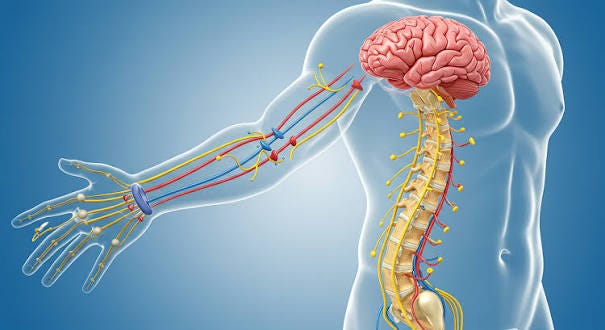
That’s the entire mechanism: the reason being with a safe person measurably lowers your threat response is that they’re carrying part of the load.
When only one nervous system does the carrying, that’s not intimacy. That’s service.
And service dressed up as closeness is one of the most disorienting things a person can live inside, because it feels connected.
You know his childhood. You know why he gets weird around his mom. You know the exact sentence his last partner said that still stings.
Does he know what your last hard week was actually about?
What to Watch For
Not a problem: The ratio evens out over time. He talks, and then he asks. He notices when you go quiet and moves toward it instead of enjoying the break. Sometimes he initiates the deep one.
Problem: You leave the conversation heavier, and he leaves it lighter. Every time. He has a full emotional file on you, and you have logistics: where he works, what he’s doing this weekend.
And when you do bring something real, there’s a subject change, a joke, a “you’ll be fine,” or advice you didn’t ask for.
That last one is sneaky. Advice can be a way of ending an emotional moment while looking like you’re helping.
What To Do
Bring one real thing. Not a crisis. Not a test. Just something true that you’d normally file away because it didn’t feel like his to carry.
Then say nothing else, and watch what he does with it.
Does he move toward it? Or does he wait it out?
You’re not looking for perfection here. You’re looking for movement.
4. “You’re so independent.”
This one can sound like admiration at first, but I’ve seen it subtly mean, “You’ll be fine without me,” just as many times.
This is number four for a reason. It’s the one men reliably say right before they go quiet.
Not always! Sometimes it’s real admiration, fully earned, said with his whole chest.
And sometimes it’s a man building his case in advance.
Because look at the math…

If he tells you enough times how strong you are, how you’ve got it handled, how you don’t need anybody, then when he pulls back, when the texts get shorter, when he vanishes for four days? He’s not abandoning you.
He’s respecting your independence.
He gets to withdraw and call it a compliment.
What to Watch For
Not a problem: Admiration plus presence.
He says he loves that you built your whole life yourself, and then still shows up on the bad Tuesday.
He leans in when you struggle instead of stepping back to give you room you never asked for. Both things exist at once.
Problem: Admiration instead of presence.
And once again, watch the timing. If “you’re so strong” tends to arrive right after he dropped a ball, that’s not praise. That’s ointment on a wound he made.
Also watch the tense. Real admiration is present tense: “I love that you did that.” Pre-justification leans future: “you’d be fine without me.”
Nobody says that second one by accident.
What To Do
Need something small. On purpose. Low stakes, zero drama.
“Can you come get me?” “Can you look at this before I send it?” “I had a rough one, can you just be on the phone for ten minutes?”
Not as a test. As a data point. Because independence you actually chose still gets to include asking.
5. “You never make me feel pressured.”
This one sounds like you’re not needy.
But generally it really means, “You’ve never asked me to define this.”
This is the one where “pressure” quietly becomes the word for clarity he doesn’t want to give.
Six months of ambiguity, and he’s thanking you for it?
Come on…
Here’s what makes this one genuinely costly, and I mean physiologically costly.
Uncertainty is not a neutral state. Your brain treats not-knowing as an unresolved threat and keeps the system mildly switched on until it gets resolved.

There’s solid work showing that uncertainty about an outcome drives the stress response harder than knowing a bad outcome is coming.
Let that land. Not knowing where you stand can be more taxing than knowing it’s over.
So somebody in this situation is carrying the ambiguity. It’s a real cost, and it doesn’t evaporate just because nobody named it.
If he’s not carrying it, you are.
And he’s calling that a virtue…
What to Watch For
Not a problem: A man genuinely moving slowly who tells you where he is. “I don’t know what this is yet. Here’s what I do know. Here’s what I’m not ready for.”
That isn’t ambiguity; that’s honesty on a slower timeline, and it’s completely legitimate.
Slow is fine. Slow is often good. Slow with information is a totally different animal than slow with silence.
Problem: The compliment is the answer.
You ask where this is going, and you get praised instead of answered.
Gratitude arrives in the exact spot where information was supposed to go.
What To Do
Ask once. Plainly. Out loud, not through vibes and hoping.
Then stop asking and start watching.
Because his answer to a direct question is data, but his reaction to the fact that you asked is better data.
Did he get warmer, or did he get careful?
Now you just gotta listen, and take action on the data.
Notice the Pattern??
There’s something that is under nearly all of these… You see it?
Let’s line them up:
Low maintenance → requires less of him
Not like other girls → asks for less than they do
Easy to talk to → carries more, requests less
So independent → needs less
Never pressures me → demands less clarity
Every single one rewards you for requiring less.
I call this convenience praise: compliments that reward the parts of you that cost him nothing.

And here’s the mechanism that makes it work, which, again, is not manipulation.
It’s just learning.
You will actually change. Not because you’re weak. Because that is how brains work.
Reinforced behavior increases. Every time your smallness gets praised, your nervous system quietly files it under this is what keeps me chosen.
You didn’t decide to shrink. It happened beautifully, invisibly, over months.
You didn’t shrink on purpose. You got trained.
And that training shows up in the research.
There’s a whole body of work on what psychologists call self-silencing, suppressing your own needs, opinions, and feelings to keep a relationship stable.
It’s one of the more consistently replicated findings in the literature on women’s mental health: higher self-silencing is correlated with higher depressive symptoms.
Remember, correlation is not a proven causal chain.
But it has been replicated across a lot of samples over a lot of decades, and the direction isn’t exactly mysterious…
The relationship stayed stable.
You didn’t.
So What Does Real Praise Sound Like?
Here’s the cleanest test I’ve got, and it’s one line:
Does this compliment ask something of him, or excuse him from something?
That’s it. That’s the whole thing.
Convenience praise excuses him. Real praise implicates him.
Listen to the difference:
“I love how clear you are.” → now he has to be clear back.
“I like knowing what you need.” → now he has to meet some of it.
“You make me want to show up better.” → he just made himself accountable out loud.
“You told me you were upset and I’m glad you did.” → he just made your honesty safe to repeat.
Every one of those costs him something.
Every one names a behavior instead of an absence.
And every one, if he means it, obligates him going forward.

Real praise costs him. Convenience praise costs you.
A man who wants you praises the parts of you that require him to rise.
A man who wants convenience praises the parts of you that require nothing at all.
You were never too much.
You were handed a contract in the shape of a compliment.
The Harder Part: Ignorance, Not Malice
Okay. Deep breath.
Because I just handed you a decoder ring and now I have to tell you what it isn’t.
Most men saying these things are not scheming.
He is not sitting in his car drafting clauses. He is not running a play. There was no strategy meeting.
He’s just telling you, honestly, which version of you costs him the least, and that he likes that version best.
And I know some of you just went “well… that’s worse.”
It is, and it isn’t.
Lemme break it down.
Why it’s Worse
You can argue with a strategy.
You cannot out-communicate a preference.
If a man genuinely prefers the version of you that asks for nothing, no amount of vulnerable, well-phrased, perfectly-timed communication is going to make him prefer a different one.
Why it’s Better
Ignorance is teachable. Malice isn’t.
A huge number of men were raised in complete emotional illiteracy.
Nobody modeled what praise is for.
They learned that “she’s easy” is the highest available compliment because that’s what every man around them said about a good relationship.
That’s not a character flaw. That’s a curriculum.
Which means the real test was never the compliment. It’s the correction.

You tell him, gently, what that actually landed as. And then you watch.
A man who didn’t know goes, “oh. Huh. Yeah, I do do that.” Then he adjusts, imperfectly, over weeks, with a few relapses.
A man who did know goes defensive, makes you the problem for noticing, or apologizes so fast and so hard that the conversation ends before anything changes.
Same sentence. Completely different men.
The difference lives on the other side of the feedback, not in the compliment itself.
Now Let’s Talk About the Part of You That Wants This to Be a Weapon
I know some of you have been reading this entire blog with a rising sense of righteous clarity, mentally cross-referencing the last three men who said any of these things, and building a case.
I told you, I can read your mind…
Let me introduce you to who’s driving.
Meet The Prosecutor.
She is not paranoid. She is not crazy.
She is one of the most competent Parts in your entire system, and she has an excellent résumé, because at some point you missed something.
Something you could have seen.
And it cost you a year, or a marriage, or a version of yourself you haven’t fully gotten back.
So The Prosecutor took the job. And her whole job description is: never again.
Here’s what she’s actually doing when she reads a list like this one.
She wants absolutes, because grey is expensive
Nuance costs energy. Sitting with “I don’t know yet, let’s see what he does over the next month” requires you to tolerate uncertainty, and we just covered what uncertainty does to a nervous system.
A verdict is cheaper than an investigation.
So she convicts early, because certainty feels like safety even when it isn’t accuracy.
She’s prosecuting the last guy
Her evidence file is old.
She’s applying the pattern that hurt you before to a man who hasn’t done anything yet.
That’s not discernment. That’s a prior problem.
She thinks conviction equals protection
But being right about a man early has never once protected anybody.
It gets you out sooner, which genuinely matters, and it is still not the same thing as being safe.
And hear me clearly, because The Prosecutor takes a lot of hate from the “just be open!” crowd: She is not the enemy.

She’s a protector doing an exhausting job with outdated files. She built her whole career keeping you from getting blindsided again.
That deserves respect before it deserves a retirement plan.
(Btw, some of you have the opposite protector, by the way. The one who reads all five of these, recognizes every single one, and instantly generates a reason each was fine. She’s doing the same job from the other direction, protecting you from having to leave.)
How to Actually Work With Her
Not manage her. Not override her. Not “quiet the inner critic.” Work with her.
Step 1: Find her in your body first
Before you analyze one thing. Where does the case-building live? Jaw? Chest? That forward-leaning heat behind the sternum? Sense it, don’t explain it. Analysis is how we avoid a Part while looking productive.
Step 2: Notice how you feel toward her
Annoyed? Embarrassed by her? If you’re anything other than curious, you’re blended with a different Part, usually one that thinks she’s humiliating. Ask that one for a little room first.
Step 3: Unblend
Out loud if you can: “A part of me wants a verdict right now. That’s a part of me, not all of me.” That one sentence creates the gap where choice actually lives.
Step 4: Get curious, not corrective
Ask her: what are you afraid will happen if I stay unsure for another two weeks? Then be quiet and let her answer. It’s almost never “he’s bad.” It’s almost always “you won’t survive being wrong again.”
Step 5: Update her
She’s running on information from a version of you who didn’t have this list, didn’t have language for any of it, and didn’t have the resources to leave. Tell her what’s different now. Show her the exits that exist today.
She doesn’t need to be fired. She needs a promotion, from judge to analyst.
Same skills. Way less collateral damage.
Where This Actually Leaves You (Hint: Not Doomed)
Everybody on the internet wants you to walk away from a post like this convinced modern dating is a minefield, and every man is a con artist with a script.
I refuse.
Here’s what’s actually true: you just learned that praise is directional.
That’s the whole skill. You now know how to hear the shape of a compliment instead of only the warmth of it, and that’s a permanent upgrade that costs you nothing to carry around.
It doesn’t have to make you suspicious.
But it can help you catch the exact moment you were about to make yourself smaller for a hit of approval, and then choose differently.
Not because you’re guarded. Because you can finally see the mechanism.
And on the other side of this kind of work, guess what?

You learn to stop optimizing for being chosen and start noticing whether you’re being met.
Those are different questions, and they produce completely different relationships.
So run this with curiosity, not a verdict.
Curiosity is what lets you find out who someone actually is. Compassion is what lets you do it without turning a nervous man with a bad script into a villain.
And together, those two are what let you leave when you need to, without the whole thing costing you your faith in people.
You were never too much.
You were being praised for taking up less room by someone who didn’t know that’s what he was doing.
You get to want more than that.
You’ve got this.
And as always, until next time… Live Heroically 🧠
Ready to Go Beyond Reading?
Reading helps you understand yourself. Transformation comes from applying it.
If you’re ready to move beyond consuming content and start creating lasting change, join me inside my Becoming HER Community.
Inside, I will help you go from heartbreak to secure love in 63 days.
You’ll Have Access To:
A neuroscience-based breakup recovery system
Weekly live coaching with me
Accountability to help you actually implement what you’re learning
A community of women healing and growing together
If you’re ready to become emotionally available, develop secure attachment, and attract healthy potential partners, this is for you!
Supporting Research
Bhanji, J. P., & Delgado, M. R. (2014). The social brain and reward: Social information processing in the human striatum. Wiley Interdisciplinary Reviews: Cognitive Science, 5(1), 61–73.
Izuma, K., Saito, D. N., & Sadato, N. (2008). Processing of social and monetary rewards in the human striatum. Neuron, 58(2), 284–294.
Sugawara, S. K., Tanaka, S., Okazaki, S., Watanabe, K., & Sadato, N. (2012). Social rewards enhance offline improvements in motor skill. PLoS ONE, 7(11), e48174.
Thorndike, E. L. (1927). The law of effect. The American Journal of Psychology, 39(1/4), 212–222.
Fritz, H. L., & Helgeson, V. S. (1998). Distinctions of unmitigated communion from communion: Self-neglect and overinvolvement with others. Journal of Personality and Social Psychology, 75(1), 121–140.
Helgeson, V. S., & Fritz, H. L. (1998). A theory of unmitigated communion. Personality and Social Psychology Review, 2(3), 173–183.
Impett, E. A., Gable, S. L., & Peplau, L. A. (2005). Giving up and giving in: The costs and benefits of daily sacrifice in intimate relationships. Journal of Personality and Social Psychology, 89(3), 327–344.
Jack, D. C., & Dill, D. (1992). The Silencing the Self Scale: Schemas of intimacy associated with depression in women. Psychology of Women Quarterly, 16(1), 97–106.
Maji, S., & Dixit, S. (2019). Self-silencing and women’s depression: A literature review. International Journal of Social Psychiatry, 65(1), 3–13.
de Berker, A. O., Rutledge, R. B., Mathys, C., Marshall, L., Cross, G. F., Dolan, R. J., & Bestmann, S. (2016). Computations of uncertainty mediate acute stress responses in humans. Nature Communications, 7, 10996.
Grupe, D. W., & Nitschke, J. B. (2013). Uncertainty and anticipation in anxiety: An integrated neurobiological and psychological perspective. Nature Reviews Neuroscience, 14(7), 488–501.
Coan, J. A., Schaefer, H. S., & Davidson, R. J. (2006). Lending a hand: Social regulation of the neural response to threat. Psychological Science, 17(12), 1032–1039.
Neff, L. A., & Karney, B. R. (2005). To know you is to love you: The implications of global adoration and specific accuracy for marital relationships. Journal of Personality and Social Psychology, 88(3), 480–497.
Sbarra, D. A., & Hazan, C. (2008). Coregulation, dysregulation, self-regulation: An integrative analysis and empirical agenda. Personality and Social Psychology Review, 12(2), 141–167.
Haddock, S. A., Weiler, L. M., Trump, L. J., & Henry, K. L. (2017). The efficacy of Internal Family Systems Therapy in the treatment of depression among female college students. Journal of Marital and Family Therapy, 43(1), 131–144.
Mikulincer, M., & Shaver, P. R. (2016). Attachment in adulthood: Structure, dynamics, and change (2nd ed.). Guilford Press.
Schwartz, R. C., & Sweezy, M. (2020). Internal Family Systems Therapy (2nd ed.). Guilford Press.
This article is educational in nature and not a substitute for therapy. If attachment wounds or relational trauma are impacting your well-being, working with a trauma therapist can help your nervous system relearn safety in connection.