
The 7 Things I’d Avoid in Men (If I Were a Woman) 🧠
The science-backed warning signs that actually predict whether love will be safe.

TL;DR Summary:
The men most likely to hurt you? Great at the first three dates. Charm was never the tell — I’ll show you what actually is.
There’s one behavior Gottman’s lab could spot in the first few minutes of a couple talking and predict the ending with startling accuracy. It’s not fighting. It’s quieter than that. And uglier.
There’s a single sentence you can say on a date that tells you almost everything — and most men fail it without even realizing they just answered.
“He’s protective.” “He just loves me a lot.” “We’re really enmeshed.” I hear these in session constantly — right before the real word shows up, months too late.
Some men understand you perfectly and feel nothing that moves them to act. There’s a name for that gap, and a way to test it for free.
Character doesn’t perform. It leaks — in three places most women aren’t watching.
Spotting the flags was never the hard part. I’ll tell you what actually was.
Let’s Start With the Uncomfortable Part
The men most likely to hurt you are really, really good at the first three dates.
Read that again.
We’re taught that danger looks like danger. That the bad ones show up wearing a sign. That if you just pay attention, you’ll see it coming.
False…
The traits that actually predict harm, like the Dark Triad stuff, coercive control, the anger that eventually turns toward you, those don’t lead with themselves.

They lead with charisma. With intensity. With a first date that feels like being finally seen.
That’s not a bug in the dangerous ones. That’s the strategy.
Most of the people I work with are women putting themselves back together, after a breakup, after a situationship that quietly wrecked them, after a relationship that turned abusive so slowly they didn’t clock it until they were already out.
And when you hear enough of those stories, something happens. The individual's bad luck disappears, and the pattern shows up.
You start seeing the same handful of men wearing different faces. Same tactics. Same opening moves.
Same lines even, like I’ve literally heard some of them almost word-for-word from client after client who never met each other.
So, here’s a list of the seven things I’d actually walk away from if I were my clients.
Not because they’re scary on paper, but because relationship science says they predict the outcome better than almost anything else.
AND because, with a little know-how, you can see most of them early.
Let’s dive in!
Chemistry vs. Character
Relationship science keeps finding the same thing: the stuff that predicts whether love lasts and feels safe isn’t the surface stuff like looks, shared hobbies, how much you have in common, or even how much chemistry you feel.

It’s the process stuff.
How he communicates. How he handles being wrong. What his body does under stress. How he treats people who can’t do a single thing for him.
That’s not chemistry. That’s character. And character doesn’t show up on the highlight reel, it leaks.
Charm is a choice. He turns it on.
Character is involuntary; it slips out when he thinks it doesn’t count.
So the whole game here is learning to watch for the leaks instead of the performance.
I call it watching his off-duty character, who he is when there’s no one to impress and nothing to gain.
Here are 7 things to run from if his off-duty character has them!
1. Contempt: The single ugliest predictor there is
In John Gottman’s lab at the University of Washington, researchers watched thousands of couples talk, and by coding the first few minutes of a conversation, they could predict which couples would divorce with unsettling accuracy.
And of all the toxic patterns they found, one stood out as the strongest predictor of the end.

Not yelling. Not distance. Not how often couples fought.
Contempt.
Contempt is a very specific thing. It’s not anger.
Anger says, “I’m upset with you.”
Contempt says, “I’m above you.”
It’s the eye-roll. The sarcasm aimed at your soft spots. The mockery was dressed up as “just joking.” The tone that treats you as a little bit beneath him.
Gottman called it the sulfuric acid of love. Contempt doesn’t crack the foundation; it dissolves it.
It quietly eats the fondness and admiration that every relationship runs on. It’s so corrosive that in his data, being on the receiving end of it even predicted how often the recipient got physically sick.
Oh, and by the way, nobody ever walks into a first session with me, calling it contempt.
They call it “he’s got a really sharp sense of humor.” Or “I’m probably too sensitive.”
The word contempt shows up later, usually once she’s safe enough to feel how much those little jokes were actually costing her the whole time.
What to Watch For
Sarcasm or “teasing” that always seems to land on your insecurities, followed by “relax, I’m kidding.”
The eye-roll or the little scoff when you say something vulnerable or excited.
How he talks about the people who’ve disappointed him, exes, his mother, coworkers, or a former boss. Contempt has a signature tone. If it’s how he narrates everyone who’s let him down, it’s the tone you’ll eventually be described in.
How to See It Early
You don’t have to engineer this one; you have to listen for it.
Bring up something you genuinely care about but that he might find silly, and watch his face in the half-second before he responds.
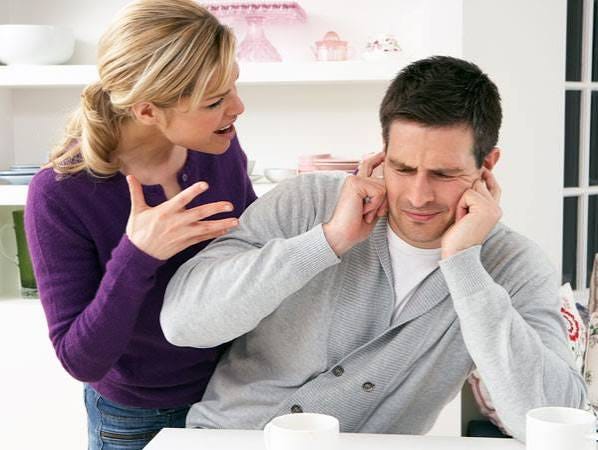
Contempt is fast, and it’s physical; it shows up in the micro-expression before the words catch up.
And pay attention to the ex-stories. A man who describes every former partner as crazy is telling you how he’ll one day describe you.
2. He literally cannot be wrong
Every relationship ruptures. That’s not the problem. The problem is a partner who has no repair function, because every rupture then stays open.
Gottman’s team found that in couples who lasted, ruptures got repaired, FAST.
That means someone capable of saying, “You’re right, that was me.”
And there’s a related finding that I think about constantly: a man’s willingness to accept influence from his partner, to actually let her opinion move him, was a strong predictor of whether the marriage survived.
Men who refused to be influenced had markedly higher divorce risk.
Wild, right???
The trait that kills this is defensiveness: the reflex to counter-blame, play victim, and reverse the direction of accountability so that somehow, every time, you end up being the one who apologizes.

Think of it like emotional debt.
Every unrepaired rupture is a small unpaid balance. On its own, no big deal.
But with a man who can’t take accountability, nothing ever gets paid down; it just compounds quietly in the background until the relationship is buried under interest neither of you can name.
What to Watch For
Every complaint you raise boomerangs. “Well, if you hadn’t…” You came in with a feeling and left having apologized.
He’s never genuinely wrong. Traffic, his ex, his boss, his childhood, the fault is always in orbit around him, never at the center.
How to Test It
Two moves.
First, when a small, real complaint comes up, the kind that doesn’t threaten the whole relationship, just name it, once, cleanly.
Then watch.
Can he sit in it for even three seconds and say, “Yeah, that was me”? Or does the counterattack fire before you’ve finished the sentence?
Second, ask him some version of: “What was your part in why your last relationship ended?”
A man with any self-awareness will name something real, even if it’s small.
A man who can’t name a single thing, who gives you a five-minute prosecution of his ex and zero seconds on himself, just answered the question.
In one sentence.
3. The intensity that arrives way too fast
This is the one your nervous system will fight me on.
Some of the most manipulative relational styles, the narcissistic end of the spectrum, especially don’t open cold. They open HOT.
Soulmate language in week two. “I’ve never felt this way about anyone.”
Future-faking like vivid talk of the life you’ll build before he knows your middle name.
Researchers call the opening move idealization, or love-bombing, and it’s followed, once you’re invested, by devaluation.
There’s a great line from the narcissism research: the chocolate cake model.
Partners of highly narcissistic people report especially high satisfaction at the start, then an especially steep drop.
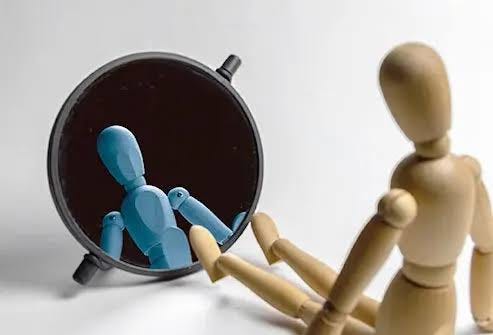
Strangers, in study after study, rate narcissists highly on first meeting and steadily lower the longer they’re exposed. (One honest caveat: newer data suggests the “crashes fast” story is a little overstated, the decline is for sure real, it just isn’t always a cliff. So think slope, not always a drop-off.)
So, remember, love is built on capacity, not potential.
Love-bombing sells you the potential, the highlight reel of who he could be at his absolute best.
But you’re going to live with his capacity, who he actually is, on average, on a Tuesday.
So, ask yourself: who is he on average, not at his best?
When a client first tells me about this stage, she almost always defends it before I’ve said a word against it.
“No, it was romantic, he just knew.”
The whirlwind is the part she protects hardest, because it felt like the best thing that had ever happened to her.
It takes a while to get to the quieter, truer version: it also felt like pressure…
What to Watch For
The pace feels disproportionate to how well he actually knows you. You feel swept up rather than steadily chosen.
Heavy future-talk, fast declarations, and subtle pressure to lock things down, exclusivity, labels, meeting his people, on his timeline, not a shared one.
How to Test It
Tap the brake. On purpose.
Say some version of “I’m really enjoying this, and I like to move a little slower,” and then watch what he does with your no.
A secure man relaxes; your pace is fine because his sense of you isn’t riding on it.

A man running the love-bomb play gets thrown, he sulks, pushes, or suddenly cools.
Slowing down is a stress test disguised as a boundary.
Whoever can’t tolerate your pace is telling you something about the whole relationship.
I’ve seen this work over and over with clients.
This one sentence gives you so much data, don’t underestimate it!
4. Jealousy wearing romance’s clothes
This one gets miscategorized as love more than any other.
AND because it’s the one where the usual advice, communicate, work on it, give it time, does NOT apply.
This is a hard stop. Not a project. Not a fixer-upper. An exit.
That’s because we’re talking about coercive control: a pattern of jealousy, monitoring, and slow isolation designed, consciously or not, to strip your autonomy.

It rarely arrives as control. It arrives as devotion.
“I just want you all to myself.”
“I don’t like how your friends treat you.”
“Send me your location, I worry.”
The research is sobering and consistent: this pattern of domination is a stronger predictor of serious harm than isolated blow-ups are, and it escalates over time.
What I hear in sessions or in my Becoming HER Community rarely starts by calling it controlling.
It’s:
“Intense.”
“Protective.”
“He just loves me a lot.”
“We’re really enmeshed, it’s kind of our thing.”
I’ve learned to go quiet and listen hard for those words, because underneath a lot of them is a woman calmly explaining away the slow disappearance of her own life.
If you’re reaching for one of those softer words right now, I’d gently ask you to notice that.
Remember, if love was chaotic when you were small, a leash can feel like a hug.
Surveillance can read as being cherished.
Being fenced in can feel, at first, like finally being wanted.
Your nervous system isn’t broken for confusing them; it learned to do so when you were a kid.
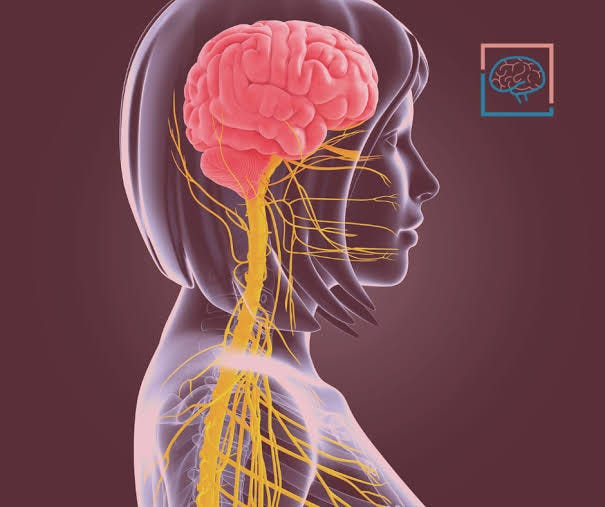
But we have to learn the difference now, because this is the category where the stakes are highest.
What to Watch For
Checking your phone, wanting your passwords, needing to know your whereabouts, framed as closeness or worry.
Slow discouragement of your friends and family. Sulking, coldness, or anger when you have a full, independent life.
A “no” from you being treated as a betrayal rather than information.
How to See It & What To Do
You don’t set up an experiment for this one; you just keep living your actual life and watch his reaction to it.
Keep the plans with your friends. Hold a small boundary. Have a full weekend that isn’t about him.
A safe man is glad you’re a whole person. A controlling one treats your autonomy as a threat to be managed.
And if you see this pattern clearly, the monitoring, the isolation, the intimidation, again, this is NOT a communicate-and-work-on-it situation.
These dynamics escalate.

This is a step-back-and-get-support situation, and there’s no shame in reaching for a trauma-informed therapist or a DV resource to help you think clearly and safely.
I’d rather be blunt here than gentle.
5. Anger at the World
Watch how a man treats the parts of the world that frustrate him, because that is the raw material of how he’ll one day treat you.
A large meta-analysis found that anger and hostility are meaningfully linked to intimate-partner aggression.
And there’s a mechanism underneath it called the hostile attribution bias: some people are wired to read neutral events as deliberate disrespect.
Yikes…
The slow driver isn’t slow; he’s disrespecting him. The waiter didn’t forget, he chose to.
When you combine a low threshold for anger with a brain that keeps finding enemies, you get someone whose fuse is always a little lit.

Think of anger like water. It’s always looking for the lowest, closest point to the pool.
Today, that’s a referee, a customer-service rep, a guy who cut him off.
But the closest point to a man, eventually, is the person who loves him.
Water finds its level.
So does contempt and rage.
What to Watch For
Road rage. Blow-ups at refs, staff, gate agents. Reactions that are two sizes too big for the frustration.
Punching walls, throwing things, slamming, any use of intimidation, even when it’s “not at you.” It’s a demonstration, and you’re the audience.
A running theme that people are always out to disrespect or slight him.
How to See It Early
You don’t manufacture this; you let real life do it.
Be around him when a plan falls apart, when he’s tired, when a stranger tells him no.
Stress doesn’t build character; it reveals it.
The version of him that shows up when things go wrong is the version you’d actually be marrying.
Everything before that is the trailer, dude.
6. He understands you perfectly and isn’t moved at all
This one is subtle, and it’s the reason a lot of smart, self-aware women stay confused for years.
Because it doesn’t look like coldness. It looks like understanding.
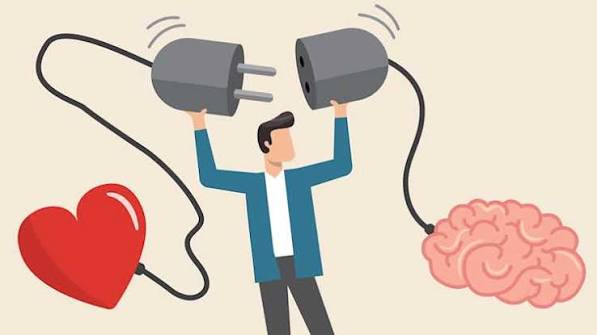
Here’s the piece most people don’t know: empathy isn’t one thing, it’s two.
Cognitive empathy is knowing what you feel, reading you, naming your emotions, and predicting your reactions.
Affective empathy is actually feeling with you, being moved enough that it changes what he does.
And these two can come completely apart.
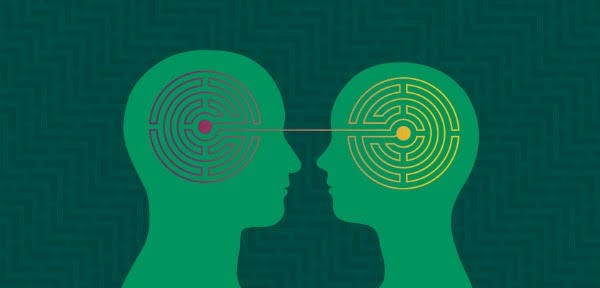
The research on the Dark Triad (Narcissism, Machiavellianism, Psychopathy) is wild here.
All of these traits are tied to deficits in affective empathy while leaving cognitive empathy fully intact.
In one study, men high in psychopathy could take another person’s perspective when told to, meaning they had the ability, but didn’t do it automatically, the way most of us can’t help but do.
As the researchers put it: the ability is there, the propensity isn’t.
Which is a chilling combination, because reading you accurately without feeling for you is exactly the toolkit for manipulation.
He can tell you exactly why you’re crying and feel nothing that makes him move toward you.
This is the one that clients actually argue with me about.
“But he GETS me, Cody, he understands me better than anyone ever has.”
Yeah. I know.
Being deeply understood and being genuinely cared for feel almost identical from the inside…
Right up until the day you need something inconvenient, and all that understanding is suddenly nowhere to be found.
Understanding was never the problem. It was that it never once moved him to act!
What to Watch For
He describes your feelings accurately, sometimes impressively so, but doesn’t seem changed by them.
His kindness has a pattern: it shows up when it earns him something, and evaporates when it would cost him something.
How to Test It
Let caring for you become inconvenient, not as a game, just don’t hide it when life gets messy.
Be sick on a day he had plans. Need something at a bad time. Have a hard night with no audience around to witness what a great partner he is.
Affective empathy shows up precisely when care is costly, and no one’s watching.
7. Who he is off-duty
Remember, charm is a choice, character is a leak.
This last one is really three small leaks bundled together, because they all measure the same thing: who he is when there’s nothing to gain.
Leak One: The Waiter
Watch how he treats people who can’t do a single thing for him.
The waiter. The rideshare driver. The cleaner. His assistant.
This one’s more folk wisdom than hard science, so hold it as a read, not a verdict.
But it lines up neatly with real constructs: low agreeableness and a sense of entitlement both predict worse relationships.
The tell is the switch, warmth to you, coldness to them.
Leak Two: Your Bids
Gottman had a beautiful, tiny word for the smallest unit of connection: a bid.
“Look at that dog.” “Whoa, check out this sky.”
A bid is a little reach for attention. And you can turn toward it (engage), away from it (ignore), or against it (snap).
In his newlywed research, the couples who were still together six years later had turned toward each other’s bids about 86% of the time.
The ones who divorced? Around 33%.
That’s the whole thing. Intimacy isn’t built in grand gestures, it’s built or starved one “look at that” at a time.

Which is also why you never want a load-bearing relationship: one where you’re the only one making bids, the only one holding the connection up.
If he lets you carry it now, in the easy season, notice that.
It doesn’t get lighter.
Leak Three: Reliability
Does he do what he says he’ll do, when he said he’d do it?
Boring, I know. But this is conscientiousness, and it’s one of the most underrated predictors of trust and commitment there is.
Small broken promises aren’t small. They’re a preview of the load-bearing walls of the whole relationship.
How to See All Three
You barely have to try; this is free data on every single date.
Watch the switch with the waiter. Toss out a few little bids and clock which direction he turns.
And keep light track of whether his actions and his words are the same shape.
None of this requires an interrogation.
It just requires you to watch off-duty him, not on-stage.
What No One Wants to Hear
Spotting the flags was never really the problem.
Smart women spot red flags all the time.
You’ve probably narrated a friend’s entire relationship arc from one brunch story.
The issue isn’t your eyes. It’s that the flags that hurt you the most are often the ones that feel the best.
I watch this every single week.
A client starts telling me about a guy, and three sentences in, I already know roughly how it ends, not because I’m clever, but because I’ve heard this exact story fifty times.
And here’s the wild part: so had she. She could diagnose her friends’ relationships in a heartbeat.
Her own ran on different rules. Because on her own, her nervous system got a vote and it wasn’t voting for the facts.
It was voting for the feeling.
If steadiness was never safe for you growing up, if love came with chaos, or conditions, or a catch, then your nervous system learned to read calm as boring and intensity as chemistry.

So the love-bomber feels electric, and the secure guy feels like a slow Tuesday.
That’s not intuition.
That’s an old alarm system, misfiring on purpose, doing exactly what it was built to do.
Hurt People, Hurt People
This is where I have to be fair to the other side too, because no one in this is a cartoon villain.
The avoidant guy who deactivates isn’t cold for sport; intimacy lights up everything he was never taught to hold.
The intense one is often running from the terror of being left.
Everyone here is trying to survive something.

Understanding that is what keeps you compassionate. It is not what keeps you safe.
You can hold empathy for where a man’s wound comes from and still decide his capacity can’t meet yours.
Capacity mismatch isn’t anyone’s fault.
But it IS still a reason to walk.
Guarded Isn’t the Goal
I don’t want to leave you scanning every man for defects.
That’s just a new way to stay guarded, and guarded isn’t the goal.
The goal is discernment, the ability to see clearly and then trust what you see, instead of talking yourself out of it because he made your heart race.
So watch the leaks, not the performance. Trust the off-duty character over the highlight reel.
And remember the line that outranks every red flag on this list: capacity, not chemistry, is what determines who stays.
You’ve got this.
And as always… Live Heroically 🧠
Ready to Go Beyond Reading?
Reading helps you understand yourself. Transformation comes from applying it.
If you’re ready to move beyond consuming content and start creating lasting change, join me inside my Becoming HER Community.
Inside, I will help you go from heartbreak to secure love in 63 days.
You’ll Have Access To:
A neuroscience-based breakup recovery system
Weekly live coaching with me
Accountability to help you actually implement what you’re learning
A community of women healing and growing together
If you’re ready to become emotionally available, develop secure attachment, and attract healthy potential partners, this is for you!
Supporting Research
Buehlman, K. T., Gottman, J. M., & Katz, L. F. (1992). How a couple views their past predicts their future: Predicting divorce from an oral history interview. Journal of Family Psychology, 5(3–4), 295–318.
Gottman, J. M., & Levenson, R. W. (1992). Marital processes predictive of later dissolution: Behavior, physiology, and health. Journal of Personality and Social Psychology, 63(2), 221–233.
Gottman, J. M., & Levenson, R. W. (2000). The timing of divorce: Predicting when a couple will divorce over a 14-year period. Journal of Marriage and Family, 62(3), 737–745.
Schrodt, P., Witt, P. L., & Shimkowski, J. R. (2014). A meta-analytical review of the demand/withdraw pattern of interaction and its associations with individual, relational, and communicative outcomes. Communication Monographs, 81(1), 28–58.
Paulhus, D. L., & Williams, K. M. (2002). The Dark Triad of personality: Narcissism, Machiavellianism, and psychopathy. Journal of Research in Personality, 36(6), 556–563.
Brunell, A. B., & Campbell, W. K. (2011). Narcissism and romantic relationships. In The Handbook of Narcissism and Narcissistic Personality Disorder. Wiley.
Back, M. D., et al. (2013). Narcissistic admiration and rivalry: Disentangling the bright and dark sides of narcissism. Journal of Personality and Social Psychology, 105(6), 1013–1037.
Drayton, L. A., Santos, L. R., & Baskin-Sommers, A. (2018). Psychopaths fail to automatically take the perspective of others. PNAS, 115(13), 3302–3307.
Wai, M., & Tiliopoulos, N. (2012). The affective and cognitive empathic nature of the dark triad of personality. Personality and Individual Differences, 52(7), 794–799.
Hazan, C., & Shaver, P. (1987). Romantic love conceptualized as an attachment process. Journal of Personality and Social Psychology, 52(3), 511–524.
Li, T., & Chan, D. K.-S. (2012). How anxious and avoidant attachment affect romantic relationship quality differently: A meta-analytic review. European Journal of Social Psychology, 42(4), 406–419.
Birkley, E. L., & Eckhardt, C. I. (2015). Anger, hostility, internalizing negative emotions, and intimate partner violence perpetration: A meta-analytic review. Clinical Psychology Review, 37, 40–56.
Stark, E. (2007). Coercive Control: How Men Entrap Women in Personal Life. Oxford University Press.
Finkel, E. J. (2014). The I³ model: Metatheory, theory, and evidence. Advances in Experimental Social Psychology, 49, 1–104.
Dew, J., Britt, S., & Huston, S. (2012). Examining the relationship between financial issues and divorce. Family Relations, 61(4), 615–628.
Cranford, J. A. (2014). DSM-IV alcohol dependence and marital dissolution: Evidence from the NESARC. Journal of Studies on Alcohol and Drugs, 75(3), 520–529.
Malouff, J. M., et al. (2010). The five-factor model of personality and relationship satisfaction of intimate partners: A meta-analysis. Journal of Research in Personality, 44(1), 124–127.
Frisco, M. L., & Williams, K. (2003). Perceived housework equity, marital happiness, and divorce in dual-earner households. Journal of Family Issues, 24(1), 51–73.
Stanley, S. M., Rhoades, G. K., & Markman, H. J. (2006). Sliding versus deciding: Inertia and the premarital cohabitation effect. Family Relations, 55(4), 499–509.
This article is educational in nature and not a substitute for therapy. If attachment wounds or relational trauma are impacting your well-being, working with a trauma therapist can help your nervous system relearn safety in connection.