
Why Healthy Men Don’t Feel Safe (Yet) 🧠
How trauma, attachment, neuroscience, and cultural narratives quietly shape who feels “right” to you. (10min Read)

TL;DR Summary:
Women with trauma histories often cannot name a man they respect—not because they’re “bitter,” but because their nervous system generalized threat for survival.
Your brain’s prediction system (RAS + schema networks) filters for what feels familiar, not what’s healthy.
Without at least one example of safe or competent masculinity, the nervous system often misreads healthy men as “boring,” “weak,” or “off.”
You’re not the problem—but your unhealed protective pattern may be choosing for you.
You don’t have to suddenly “like men.” You just need one counterexample to reopen your brain’s ability to perceive nuance instead of global threat.
Lemme Ask You a Question…
I’m coming in hot this week, ladies and gentlemen!
I want you to imagine a guy saying: “I can’t think of a single woman I genuinely respect or admire…”
Then they proceed to mention they’re struggling with dating.

You’d probably look at him like: Sir, YOU. Are. The. Problem.
(And honestly? You’d be right.)
“So, ladies, let me ask you something, gently, but directly…
How many men do you genuinely respect and admire?
Not tolerate. Not roll your eyes at. Not secretly think you could run laps around emotionally.
I mean respect and admire.
If you can’t think of a single one, do you really think that won’t shape your dating life?
And I wanna be clear, I’m asking this with love and with neuroscience.
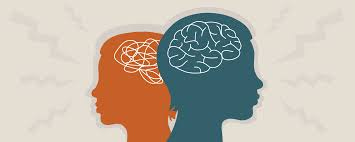
Not to shame you. Not to dismiss your trauma. Not to gaslight your very real experiences with very real men who caused very real harm.
But because this question reveals something far more important than “your opinion about men.”
It reveals your nervous system’s worldview.
And that is exactly what we’re gonna break down in today’s blog.
Buckle up and let’s dive in!
Why This Question Matters
I work with thousands of hyper-independent, heartbroken, done-with-the-bullshit women who often struggle with this question.
Generally, I get:
a blink
a swallow
a nervous laugh
or the “why does this feel like a trap?” face
Critics will say: “Women can’t name a man they respect because their experiences are valid. Men really DO harm women disproportionately.”

And… yes. Exactly. That’s the point.
They’re not struggling to answer because you’re irrational.
They’re struggling to answer because they’re accurate according to their history.
But here’s the part that even the critics miss:
A nervous system that cannot identify a safe man will not choose one.
Even when one is right in front of you.
This isn’t victim-blaming. This is neurobiology.

And oftentimes it’s this neurobiology that gets in the way of finding the healthy relationship you’re seeking.
How Trauma Globalizes an Entire Group Into a Threat Category
Let’s break this down simply.
When you’ve been harmed by a man, emotionally, physically, sexually, or relationally, your brain doesn’t file that experience under: “This one guy was unsafe.”
It creates a predictive model: “Men like this exist. I need to be alert.”
The brain builds categories, not case studies. Because categories keep you alive.
In trauma research, this is called threat generalization, a survival mechanism where the nervous system expands the definition of “danger” to reduce the chance of repeated harm.
Here’s what the science actually shows:
Trauma often leads to generalized threat perception toward the demographic involved.
Chronically unsafe relational environments increase hypervigilance toward that group.
Attachment injuries create global protective beliefs (“men don’t care,” “men leave,” “men aren’t safe”).
Cultural narratives and online echo chambers reinforce and reward these beliefs.
Bottom line? Most women do not broadly hate men. That’s not what the research shows.

What the research does show is that women with histories of harm, betrayal, coercion, or repeated disrespect often develop pockets of global distrust, not out of irrationality, but out of pattern recognition.
In fact, hostile attitudes toward men reliably increase in environments with:
Real threat
Repeated disappointment
Power imbalances
Chronic relational instability
It’s not “bitterness.”
It’s neurobiology doing what neurobiology does: “Patterns repeat. Stay vigilant.”

And yes, this response is adaptive. It protects you.
But every adaptation has a cost.
What Global Distrust Predicts (According to Research)
This part rarely gets talked about because it feels uncomfortable, but it’s important.
Global distrust of men is associated with:
Lower relationship satisfaction
Ongoing hypervigilance
Difficulty trusting even safe partners
Attraction to avoidant or unpredictable men
Emotional exhaustion
Self-sabotaging dating patterns
These are not moral failings. These are nervous system consequences.

Nothing about this makes you broken.
It means your system learned to survive, and now it needs help learning something different.
Which Brings Us to the Three Truths
This is not you being dramatic. This is your amygdala doing lightning-fast pattern prediction.
Which is why three things can be simultaneously true:
1. Men have harmed you.
That’s historical and valid.
2. Your brain adapted by treating “men” as a global threat category.
That’s neurological and protective.
3. But the adaptation that kept you safe isn’t the same one that helps you choose healthy love now.
That’s the part your nervous system needs support with.
All three realities matter.
Only the third one helps you build a secure, fulfilling relationship.
Women Distrusting Men ≠ Men Distrusting Women.
If at this moment you’re thinking, “But Cody, you’re ignoring the power dynamic between men and women.”
You’re right.
The logic that “A man can’t respect women → he’s the problem → therefore, a woman can’t respect men → she’s the problem,” is a classic false equivalence.
A man claiming to respect no women is saying he respects an entire social class often systematically oppressed, underpaid, and undervalued relative to him.
A woman claiming to respect no men is saying she respects no one from the dominant social class that is often the source of her direct emotional/physical trauma, as I’ve mentioned.
These two situations have very different power dynamics.
A man who says he respects no women is reenacting social dominance.
A woman who says she respects no men is reenacting survival coding.
And I get it, but I am not equating them ethically.
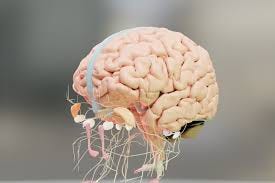
I’m comparing them neurologically.
Because, regardless of the power structure, the nervous system operates the same way:
Global distrust → global filtering → global relational outcomes.
So when my female clients say, “I honestly can’t think of a single man I respect,” that’s not evidence she’s irrational…
It’s evidence she has lived through some shit and built a worldview meant to keep her alive.
I get that. At a molecular level.
AND…
Here’s the part that might sting a bit…

Your beliefs shape your dating results.
Not because of manifestation, but because of neurology.
Your Brain’s “Search Engine” Is Trained by Trauma, Not Intention
Your Reticular Activating System (RAS) is like the bouncer at the nightclub in your skull.
Its job?
Filter out what contradicts your existing beliefs and highlight what confirms them.
If your internal belief, rooted in lived experience, is:
“Men are disappointing.”
“Men are unsafe.”
“Men are incompetent.”
“Men have betrayed me.”
“Men are immature.”
“Men are avoidant & abusive.”
“Men aren’t emotionally reliable.”
Then your RAS tunes out men who contradict that belief.
Not because you’re cynical. Because your brain thinks contradicting evidence = dangerously misleading data.

So:
A healthy man won’t feel “right.”
A reliable man won’t feel “trustworthy.”
A secure man won’t feel “masculine enough.”
A kind man may feel “unattractive.”
A stable man may feel “boring.”
And the only men who will feel familiar?
Are the ones who match the schema you learned from harm.
Not because you’re broken, but because your brain is protecting you the only way it knows how.
Your brain chooses the familiar, not the functional.
But, Cody, You’re Oversimplifying Trauma. It’s Not Just the RAS.”
Correct again.
This isn’t just RAS. It’s much deeper, sadly.
Trauma engages whole-brain networks:
Amygdala: threat detection
Insula: interoception + danger signals
Anterior cingulate: error detection
Medial prefrontal cortex: meaning-making
Hippocampus: stores relational patterns
Default Mode Network: builds self-to-other narratives
When your system has encoded “men = danger,” healthy men do not feel safe.
Not because they aren’t safe.
But because safety feels unfamiliar, and unfamiliarity feels threatening to a traumatized nervous system.

This is precisely why healing is not a mindset shift.
It’s a full mind, brain, and body-based rewiring process.
(This couldn’t be the reason I named my entire company Mind, Brain, Body Lab…)
So, when I ask my female clients, “Name one man you respect and admire,” and they can’t, it’s not because they hate men.
It’s because their entire relational system has never had a safe reference point.
And research backs this up: without positive relational models, your nervous system can’t recognize safety, even when it’s right in front of you.
This armor protects you… But it also prevents connection.
Your brain isn’t rejecting men.

Your brain is rejecting the risk of disappointment.
Okay, Cody, say I’m listening now… What on earth do I do about it?
Great question, fictitious reader in my head that yells at me while I write, let’s talk about it.
I call it the “One Man” practice.
The “One Man” Practice
Lemme just start with what I’m not asking you to do here.
I’m not asking you to suddenly adore men. I’m not asking you to bypass your trauma. I’m not asking you to pretend the harm didn’t happen.
I’m just gonna ask for something very small, but very neurologically important: Find one man, just one, you can respect in one domain.
Not a perfect man. Not a fantasy. Just a counterexample.

Because your nervous system needs evidence of variability before it can stop treating “men” as a monolithic threat.
And before you come at me, no, I don’t believe one single man is the cure.
But it is the first crack in an overgeneralized schema your nervous system created to keep you safe.
This process is not about “fixing trauma with one man you respect.”
It’s about starting the rewiring process with something psychologically manageable.
Because “trust men again” is too big. “Find multiple safe male figures” is too big.
But “identify one example that contradicts your global belief” is doable.
And research shows schema modification begins with small disconfirming experiences, not wholesale rewrites.

You know me, I’m all about action, and the smaller the step, the easier action becomes.
This is such a powerful action because the nervous system cannot differentiate safety when all relational data points are unsafe.
It needs variability before it can update the category.
You’re not trying to make men safe. You’re trying to make your threat detector more accurate.
That’s it.
Here’s how to start.
The 3 Step One Man Process
Step 1
Identify one man, any man, who demonstrates one admirable trait.
Not perfect. Not ideal. Just ONE counterexample to your global belief.
Step 2
Don’t force trust.
Don’t force softness. Just observe him without bracing.
Let your nervous system absorb the fact that variability exists.
Step 3
Over time, collect a handful of safe male examples.
Not for dating, for your nervous system’s relational database.
A new template requires multiple data points, not blind trust.
Examples might be:
“My boss handles conflict with integrity.”
“My friend’s husband parents well.”
“My brother is consistent.”
“My professor respected boundaries.”
“My coworker advocates for his team.”
It all starts with just one man who creates a crack in the all-or-nothing schema.
That crack becomes space. Space becomes flexibility. Flexibility becomes choice.
You Deserve the Love You Seek
You are not wrong for being guarded. You are not dramatic. You are not “too much.”
You are someone whose nervous system adapted beautifully to survive.
But if you want healthy love?
Your brain needs examples of healthy masculinity before it can recognize one in the wild.

Not to excuse men. Not to uplift patriarchy. Not to blame you. Not to erase systemic realities.
But because your healing matters. Your safety matters. Your future matters.
And your nervous system deserves more options than “unsafe or alone.”
It’s time to stop training your brain to expect the worst and then be shocked when the worst is all you find.
I hope this helps you start to shift this belief.
I believe in you, and until next time… Live Heroically 🧠
Want to Work With Me? Here Are a Few Ways I Can Help You
Apply to Becoming HER, it’s the 63-day neuroscience-backed reset that helps you finally feel calm, confident, and ready for real love again. Applications for the next small cohort are open — but not for long.
Check out my FREE webinar on The ONE Skill That Attracts Secure Love Fast. If you’re smart, attractive, successful, and self-aware, but love still feels like a minefield, this is for you!
Grab my new ebook: Exactly How to Become Emotionally Available: It’s a step-by-step guide for attracting and keeping the love you seek, built for the success but single among us!
Become a paid subscriber to the Mind, Brain, Body Lab Digest: You’ll get subscriber-only video posts, email replies, access to my entire blog archive, early access to new products, workshops & tools I create!
Supporting Research
Freyd, J. J. (1996). Betrayal trauma: The logic of forgetting childhood abuse. Harvard University Press.
Lanius, R., Vermetten, E., & Pain, C. (2010). The impact of trauma on the brain and body. In The impact of early life trauma on health and disease (pp. 23–34). Cambridge University Press.
Porges, S. W. (2011). The polyvagal theory: Neurophysiological foundations of emotions, attachment, communication, and self-regulation. W. W. Norton.
Sripada, R. K., et al. (2013). Neural dysregulation in PTSD: Evidence from functional MRI meta-analyses. Biological Psychiatry, 73(7), 582–590.
Bartholomew, K., & Horowitz, L. (1991). Attachment styles among young adults. Journal of Personality and Social Psychology, 61(2), 226–244.
Tajfel, H. (1974). Social identity and intergroup behavior. Social Science Information, 13(2), 65–93.
Correll, J., et al. (2002). The police officer’s dilemma: Using ethnicity to disambiguate threatening from non-threatening individuals. Journal of Personality and Social Psychology, 83(6), 1314–1329. (For threat generalization mechanisms.)
Liotti, G. (2004). Trauma, dissociation, and disorganized attachment. Psychotherapy: Theory, Research, Practice, Training, 41(4), 472–486.
Thank God, I have my Dad. 🧡🥰
The framing of this as neurobiology rather than moral failing is genuinely helpful. What's useful about the One Man practice is how small it starts, just identifying one counterexample to the global threat category instead of trying to rewire everything at once. The part about how a nervous system trained by trauma filters for what feels familar rather than what's healthy explains a lot about why secure people can feel boring or off. It's not about the person being boring, it's about safety feeling unfamilar to a system that learned danger as baseline.