
Why You Want To Feel Chosen 🧠
Why Your Nervous System Is Addicted to Being Picked (And What To Do About It) (8min Read)

TL;DR Summary:
You don’t want love — you want to feel chosen, and that distinction changes everything.
Being chosen isn’t just romantic; to your nervous system, it’s regulatory.
Intermittent reinforcement hijacks your dopamine system and makes instability feel like chemistry.
The men who make you feel most chosen the fastest are usually the least capable of sustaining it.
Ambitious women are especially vulnerable — you were conditioned to believe love is something you qualify for.
You can’t outthink this pattern. It’s not a mindset problem; it’s conditioning.
Healing means building safety from the inside out, so being chosen becomes a bonus, not a lifeline.
Let’s Be Honest About What’s Actually Happening
You don’t want love…
You want to feel chosen.
That line makes people defensive because it sounds accusatory.
It’s not. It’s neurological.
And I hear some version of this belief every single week from women in Becoming HER, from my clients on calls, from my comments, my DMs, or my email.

Smart women.
Self-aware women.
Women who have done the work, read the books, know their attachment style, and still cannot explain why they’re white-knuckling it for a man who keeps them in the maybe pile.
Yet, somewhere along the way, their brain learned:
Chosen = safe
Not chosen = invisible / rejected / unsafe
That pairing doesn’t come from nowhere.
It comes from early attachment conditioning.
Research on attachment theory shows that when safety, approval, or attunement is inconsistent in childhood, the nervous system becomes hyper-attuned to signals of acceptance and rejection.
Your brain starts scanning for cues of belonging the way other brains scan for physical threat.
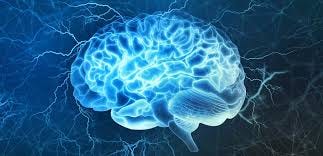
So, when someone chooses you?
It’s not just romantic.
It’s regulatory.
Today, we’re going to break down exactly why your nervous system is wired to chase this feeling and what’s actually happening in your brain when the spiral hits.
Then, of course, I’ll cover the 3 steps I’d suggest to start building the internal safety that makes being chosen a bonus instead of a lifeline.
Let’s dive in!
Why Being Chosen Feels Like a Drug
Let’s talk neurochemistry.
When someone expresses a strong interest in you, especially if there’s uncertainty, your brain releases:
Dopamine (reward anticipation)
Oxytocin (bonding)
Adrenaline (arousal + unpredictability)
Sometimes, even a cortisol spike (stress + excitement cocktail)
And here’s the part no one likes to hear: Uncertainty amplifies dopamine.
The brain’s reward system is most activated not by guaranteed rewards, but by intermittent ones.

This is called reward prediction error.
It’s the same system that fires during gambling, social media scrolling, and yes, waiting for someone to text you back.
If he’s hot and cold? If he pulls away and then comes back strong? If you don’t know where you stand?
Your dopamine system goes feral.
You don’t think, “This is unstable.”
You think, “This is compatibility.”
Uh, no ma’am… It’s intermittent reinforcement, the most addictive neurological mechanism ever created.
Your brain isn’t bonding.
It’s chasing the next hit.
And here’s where it gets layered: your amygdala, your brain’s threat-detection system, learned early on to associate being unselected with actual danger.
Rejection probably didn’t just feel bad as a kid. It felt like a threat to your survival, because emotionally, it was.

So now, when someone chooses you, you’re not just feeling flattered.
Your amygdala is lowering its guard.
Your nervous system is genuinely downregulating out of a threat state.
That’s why it feels so good.
That’s why you’ll tolerate so much to get it.
And that’s why the relief never lasts, because you’re using another person’s behavior to regulate a nervous system that needs to learn to regulate itself.
Here’s The Part You Don’t Want To Hear
Now let’s layer culture on top of neurobiology.
The women this hits hardest are usually:
High-achieving
Emotionally self-reliant
“Mature for their age”
The responsible one in the family
The one who didn’t get to be messy
You grew up earning approval.
Performance → Praise
Achievement → Affection
Composure → Safety
So your nervous system learned something subtle: “I relax when I’ve been validated.”
You weren’t given unconditional safety. You learned to manufacture it.
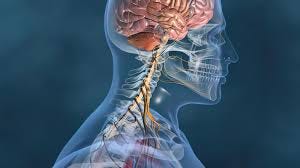
So now, when a man chooses you quickly and intensely, your body interprets it as: “Oh. I can finally exhale.”
Not because he’s safe.
But because someone externally confirmed your value.
That’s not romance.
That’s regulation through validation.
And ambitious women are particularly vulnerable to this because they are conditioned to believe love is something you qualify for.
It’s Not About Him…
The hardest thing about all of this is that it’s not even that you want him…
What you really want is the version of you that exists when someone validates you.
The softer you. The glowing you. The “I matter today” you. The “I’m finally enough” you.
That identity feels intoxicating.

Because it temporarily silences the background hum of: “Am I too much?” “Am I falling behind?” “Am I actually lovable?”
Being chosen shuts that noise off.
Temporarily.
And look, I get it. This makes complete sense, especially for ambitious, hyper-capable women.
You grew up earning everything. Approval. Attention. Love. Praise.
You weren’t just handed safety. You performed for it.
You got good grades for it. You stayed small for it. You made yourself easy, agreeable, and low-maintenance for it.
So now your nervous system is genuinely, biologically addicted to that moment when someone chooses you.

Because that moment? It feels like the one moment you can finally exhale.
Not because you trust him.
Because you don’t yet trust yourself without external confirmation.
The Cruel Twist
Here’s the part that really gets me.
The men who make you feel most “chosen” the fastest?
Statistically and psychologically, they’re often the least capable of long-term stability.
Why?
Because intensity is easy.
Consistency is not.
Love-bombing, intensity, instant chemistry, that feeling of “he gets me like no one ever has”… is NOT intimacy.

That’s your nervous system recognizing a familiar pain pattern and calling it home.
You confuse intensity with intimacy. Chemistry with compatibility. Being wanted with being valued.
Because your system isn’t scanning for love.
It’s scanning for relief.
And the emotionally unavailable, hot-and-cold, “potential”-driven man gives you that relief because the uncertainty keeps your dopamine high and your amygdala laser-focused on the one thing that will make it stop:
Him. Choosing. You.
The secure, steady, actually-shows-up guy?
He feels “boring” at first.
Not because he isn’t right for you, but because your nervous system doesn’t know what to do with consistent safety.

It’s not running the threat-response loop. It doesn’t feel like anything is at stake.
And your brain misreads that as a lack of chemistry.
Wild, right?
Intensity gives relief quickly.
Secure attachment feels slower. Quieter.
Almost boring to a dysregulated nervous system.
So What Do You Actually Want?
Bottomline?
You don’t want to feel chosen.
You want to feel safe inside yourself so that being chosen is a bonus... not a lifeline.
You want a nervous system that isn’t in a constant state of audition.
A brain that doesn’t need external validation to believe your own worth.
An internal system so regulated that when the right person shows up, you can receive them, instead of immediately escalating them to the role of your primary emotional regulation strategy.

That’s the goal.
And it’s completely achievable.
Here’s exactly where to start.
3 Steps To Start Choosing Yourself
Step 1: Catch The Craving Before It Spirals
The next time you feel that “I just want him to choose me” spiral starting, pause before you do anything.
Before you check his Instagram. Before you draft that text. Before you analyze the tone of his last message.
And ask yourself one question: “If he chose me today... what feeling would I be trying to outsource?”
Validation? Worthiness? Certainty? Stability? Visibility? Belonging?
Write down whatever comes up. Don’t judge it.
Because whatever your answer is? That’s not a him problem. That’s the work.
You’re not spiraling because he hasn’t texted back. You’re spiraling because some part of you still believes his response determines your value.
Step one is just catching that moment. Naming it.

“This is my nervous system looking for relief outside of me.”
That awareness alone starts to weaken the loop.
Step 2: Find The Part That Learned This
In IFS (Internal Family Systems), we’d call this a protector part, a part of you that took on a job early in life to keep you safe by making sure you were chosen, approved of, and validated.
This part isn’t your enemy. It was brilliant.
It figured out the formula: perform, earn, be chosen → be safe.
But it’s running 1995 software on a 2026 life, and it’s exhausted.
So sit with that part. Get curious about it.
When did you first learn that love had to be earned?
What happened in your family system when you weren’t chosen?
What did you decide about yourself in those moments?
You don’t have to have all the answers right away.

But the act of turning toward that part with compassion, instead of just trying to logic yourself out of the pattern, starts to loosen its grip.
Your nervous system doesn’t change because you understand it.
It changes because you meet it.
Step 3: Build Your Internal Source
This is the real work, and it’s not as mystical as it sounds.
Your brain generates feelings of worthiness the same way it generates everything else: through repeated experience.
Through evidence. Through the stories, your default mode network tells about who you are.
So you build the internal source by starting to be the person who chooses themselves.
Repeatedly. In small ways.
You keep the boundary even when you’re scared he’ll pull away.
You walk away from the situationship that’s been feeding you crumbs.
You speak your need out loud instead of performing like you don’t have one.
You sit with the discomfort of not checking his profile, and you survive it.
Each of those moments is a rep.

And every rep tells your nervous system: I don’t need him to choose me to know I’m worth choosing.
That’s how you stop handing people a job only you can do.
From the INSIDE, Out
When your body no longer interprets “not chosen” as danger.
When your self-worth doesn’t spike and crash based on male attention.
When someone is pulling away, it triggers curiosity instead of panic.
That’s secure attachment.

And it’s built internally, not negotiated externally.
You absolutely can outgrow this pattern.
But you cannot outthink it.
This isn’t a mindset. It’s conditioning.
The question was never “Why won’t he choose me?”
The real question is: “When did I stop choosing myself?”
And the answer to that one is always inside you.
You’ve got this.
And as always, until next time… Live Heroically 🧠
Want to Work With Me? Here Are a Few Ways I Can Help You
Apply to Becoming HER, it’s the 63-day neuroscience-backed reset that helps you finally feel calm, confident, and ready for real love again. Applications for the next small cohort are open — but not for long.
Check out my FREE webinar on The ONE Skill That Attracts Secure Love Fast. If you’re smart, attractive, successful, and self-aware, but love still feels like a minefield, this is for you!
Going through a breakup? Check out She Rises. It’s a post-breakup protocol based on neuroscience to help you regulate your nervous system in the days and weeks right after a breakup.
Become a paid subscriber to the Mind, Brain, Body Lab Digest: You’ll get subscriber-only video posts, email replies, access to my entire blog archive, early access to new products, workshops & tools I create!
Supporting Research
Bowlby, J. (1982). Attachment and Loss: Vol. 1. Basic Books.
Feldman, R. (2017). The neurobiology of human attachments. Trends in Cognitive Sciences, 21(2), 80–99.
Fisher, H. E., Brown, L. L., Aron, A., Strong, G., & Mashek, D. (2010). Reward, addiction, and emotion regulation systems associated with rejection in love. Journal of Neurophysiology, 104(1), 51–60.
Porges, S. W. (2011). The Polyvagal Theory. W. W. Norton.
Schwartz, R. C., & Sweezy, M. (2020). Internal Family Systems Therapy (2nd ed.). Guilford Press.
Schultz, W. (2016). Dopamine reward prediction-error signalling: A two-component response. Nature Reviews Neuroscience, 17(3), 183–195.
Skinner, B. F. (1938). The Behavior of Organisms: An Experimental Analysis. Appleton-Century-Crofts. (intermittent reinforcement)
This article is educational in nature and not a substitute for therapy. If attachment wounds or relational trauma are impacting your well-being, working with a trauma-informed therapist can help your nervous system relearn safety in connection.