

TL;DR Summary:
There’s a reason the smartest part of you shows up twenty minutes after the text is already sent. It has nothing to do with willpower.
Most of you are stuck in stage two of five. And you’ve been calling it failure.
One sentence, said out loud, alone in your kitchen, does more than it has any right to. There’s research on why.
There’s one question about your body that matters way more than “why did I do that?”
Another book won’t fix this. I’ll show you what will.
The last stage isn’t what you think. (No, it doesn’t mean you never text him back.)
Forty Seconds
It’s 11pm.
You’re in bed, face mask on, finally winding down. Your phone lights up.
“hey stranger”
It’s him. The one who ended it outta nowhere.
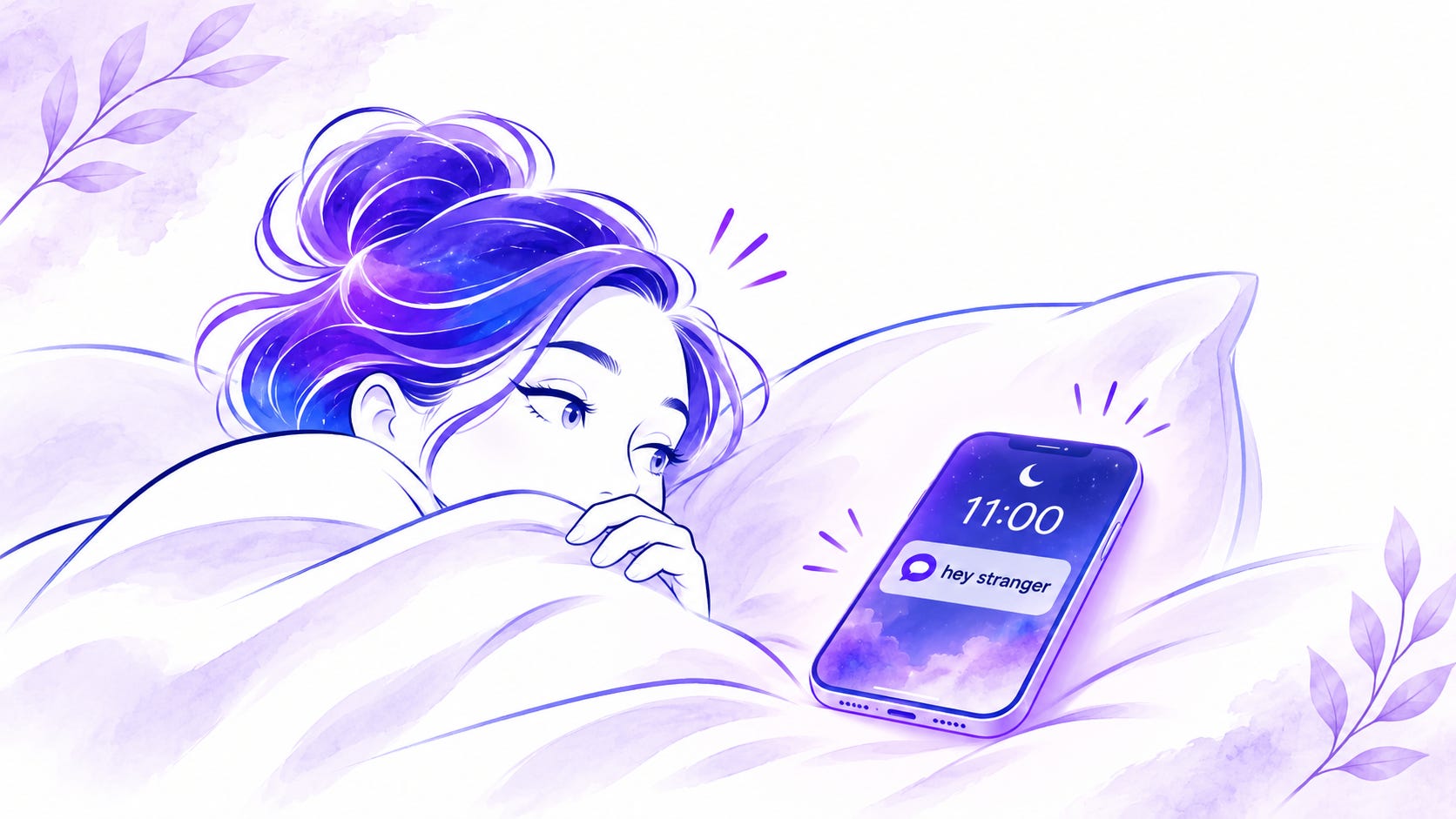
Three months of no contact. Three months of crying in the car, deleting the photos, and telling your therapist you’re “honestly kinda over it.”
And you reply in forty seconds.
Not a paragraph. Not yet. Just “haha hey!! how are you?”
Twenty minutes later you’re staring at the ceiling going… why??? Why did I do that? I KNOW better.
And you do. That’s what makes it so maddening.
It’s not just the text, either. I bet…
You swore you wouldn’t double text, then sent the follow-up paragraph anyway after being left on read.
You told yourself you were done checking his Instagram, and somehow ended up on his story at 1am. Again.
You said “no, it’s fine!” when it was very much not fine.
You promised yourself no more situationships, then said “I’m cool keeping it casual” the second he hinted that’s all he had.
You felt a tiny bit of distance and sent three over-explaining texts to fix a problem he hadn’t even noticed yet.
Different moments. Same shape.
There’s a version of you that knows exactly what you want to do. And there’s a version of you that does something else, right when it counts.
That’s not a knowledge problem; it’s a timing problem!
The part of you that knows better is real. It’s smart. It’s read every book on your nightstand.
It just keeps clocking in AFTER the damage is done.
Knowing why is the part you already finished. You got an A in it, lol. It’s not the part that’s missing.
So today we’re covering what’s actually happening in your brain during those forty seconds, the five stages between “I’m just like this” and actually choosing different!
Let’s dive in!
The Alarm & The Narrator
Let’s talk some neuroscience first.
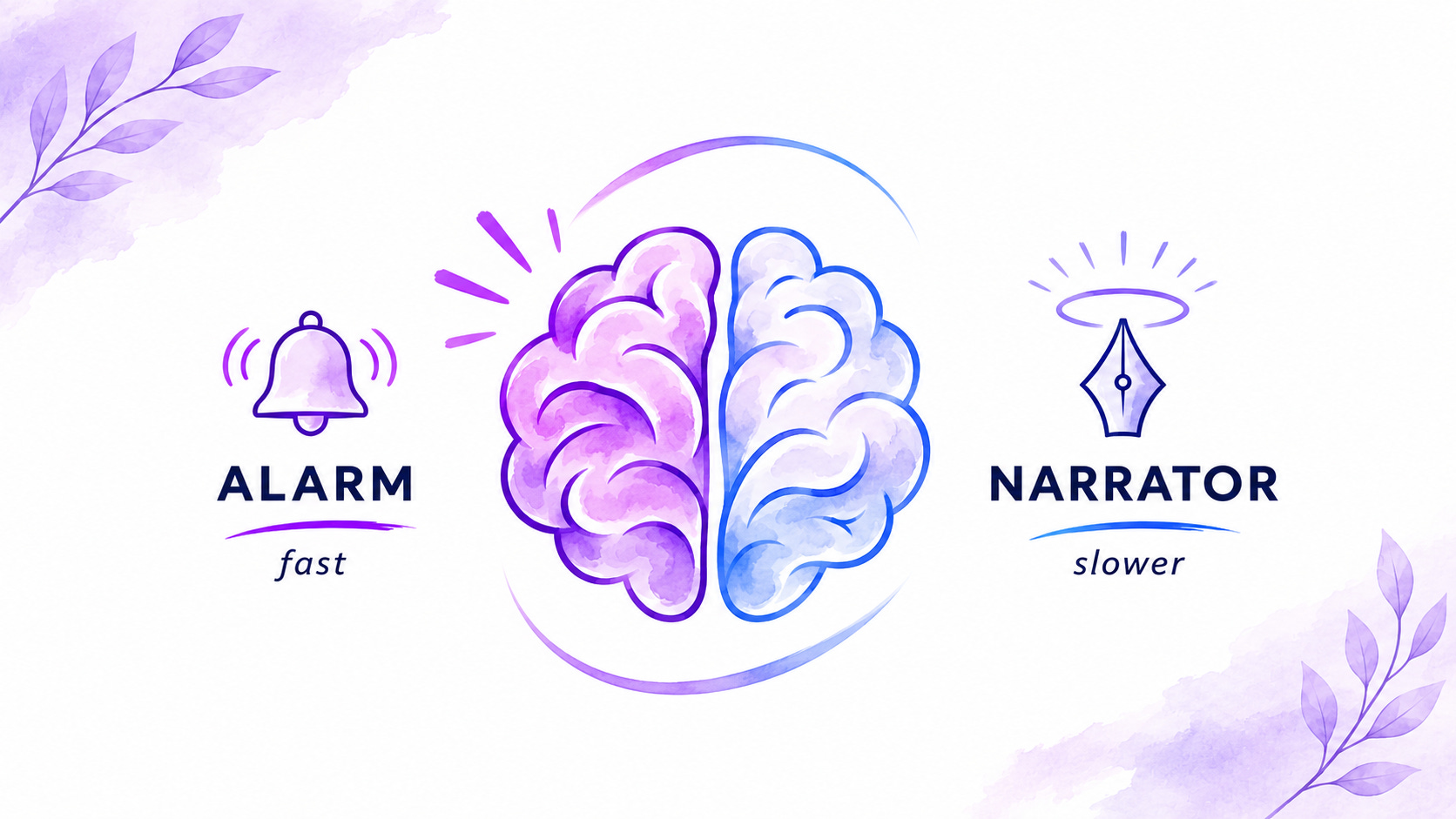
In that 11pm moment, your brain is running two very different systems.
The first is the Alarm. That’s your threat detection: the amygdala and the stress circuitry wired into your body.
It’s FAST. It fires in a fraction of a second, way faster than deliberate thought.
The second is the Narrator. That’s your prefrontal cortex. Planning, perspective, impulse control, and every attachment theory book you’ve ever highlighted.
The Narrator is brilliant. It’s also slower.
Neuroscientist Jeff Hawkins has a nice shorthand for where these two live: the old brain and the new brain.
The new brain is your neocortex, the wrinkly outer layer, and that’s where the Narrator does its work.
The old brain is basically everything underneath it, which is where a lot of the Alarm’s machinery sits.
Now for the cruel part.
When the Alarm fires hard, your system floods with stress chemistry. Research out of Amy Arnsten’s lab at Yale shows that this surge actually weakens prefrontal function.
So the Narrator doesn’t just lose the race.
It gets turned DOWN.
The part of your brain that knows better is partly offline in the exact moment you need it most.
Then the stress chemistry settles. The Narrator clocks back in, scrolls up, sees “haha hey!! how are you?” and goes…
“girl.”
That’s not stupidity. That’s a brain doing exactly what a brain under threat does.
And it’s why reading one more book hasn’t fixed this.
More insight trains the Narrator. But the Narrator was never the problem. It’s just late.
You can’t out-read a timing problem. You gotta train the timing.
To do this, first you need to know the 5 stages you’re going through, then work backwards.
Let’s break it down.
The 5 Stages of Choice
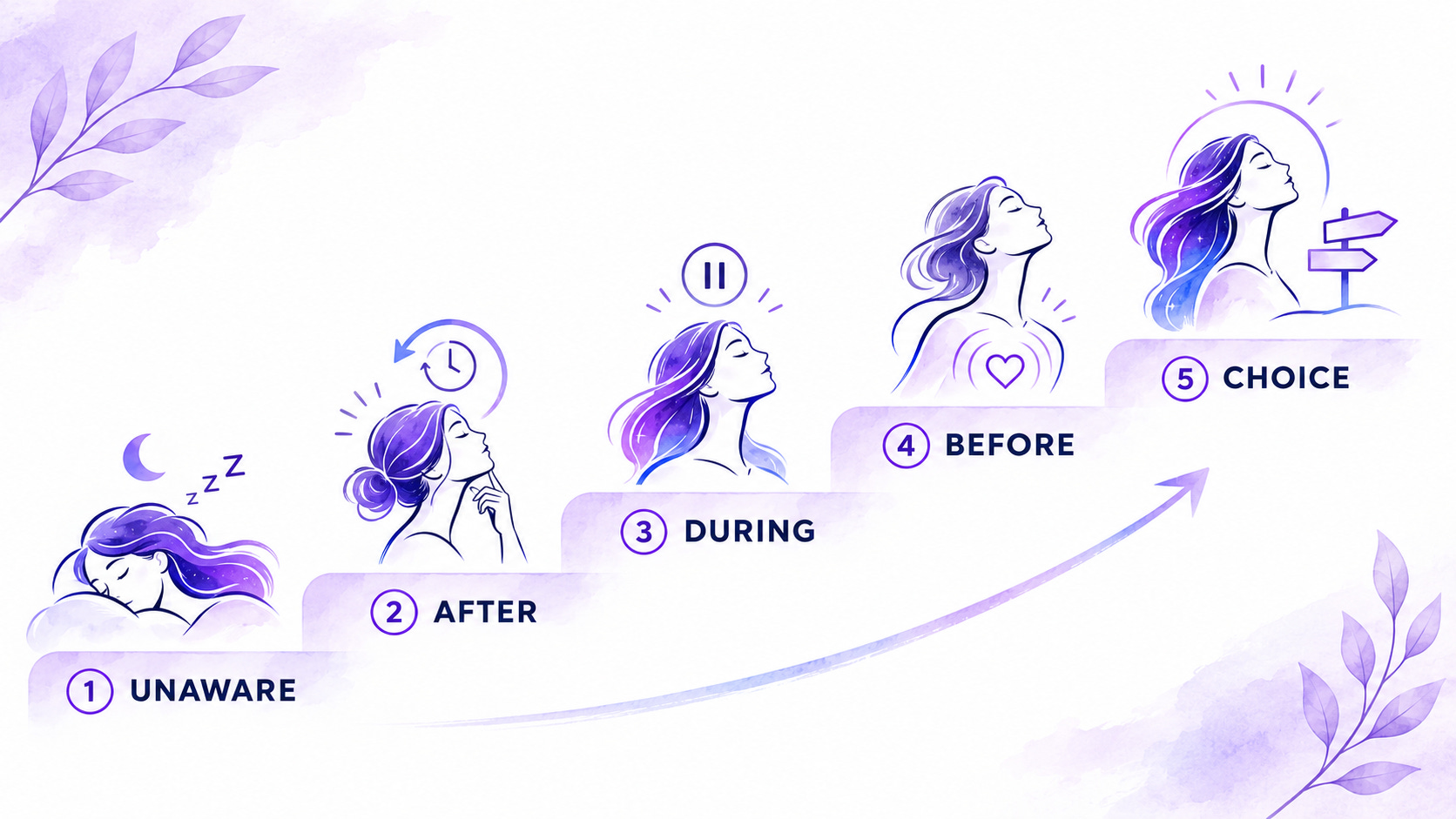
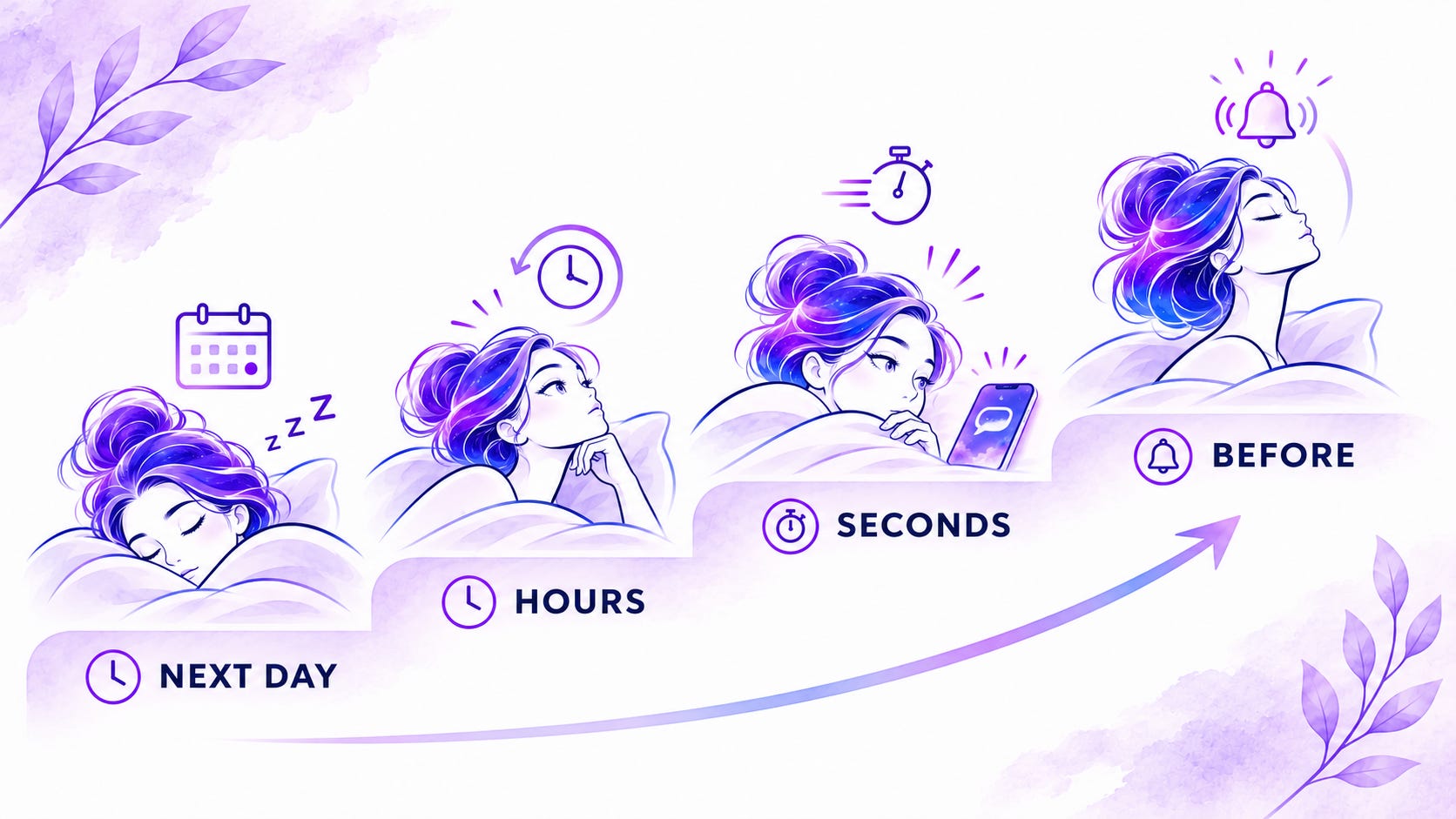
Here’s the progression I watch women move through, over and over, from “this is just who I am” to actually choosing:
UNAWARE: You do it, and you call it your personality.
AFTER: You do it, then you notice. Hours later, maybe the next morning.
DURING: You catch yourself mid-act. Thumb over send. “Oh. I’m doing the thing.”
BEFORE: You feel it coming before you act.
CHOICE: Same trigger, same pull. But now there’s room to decide.
To be clear, this is my framework, built from years of client sessions and the research on how habits get caught and changed.
No study tests these exact five stages, so hold it as a map, not a law.
Here’s how it works: it’s very simple; you’ve gotta move through it backwards.
Every time you catch it AFTER, your brain collects the data it needs to catch it a little earlier next time.
After teaches During. During teaches Before. Before makes room for Choice.
I call the gap between doing the thing and catching it your return time. Every stage shrinks it. Never, then hours, then seconds, then before it even happens.
The skill was never “never react”; it’s returning sooner.
To show you what each stage looks like from the inside, let’s take that “hey stranger” text through all five stages so you can see what’s going on in your mind, brain, and body!
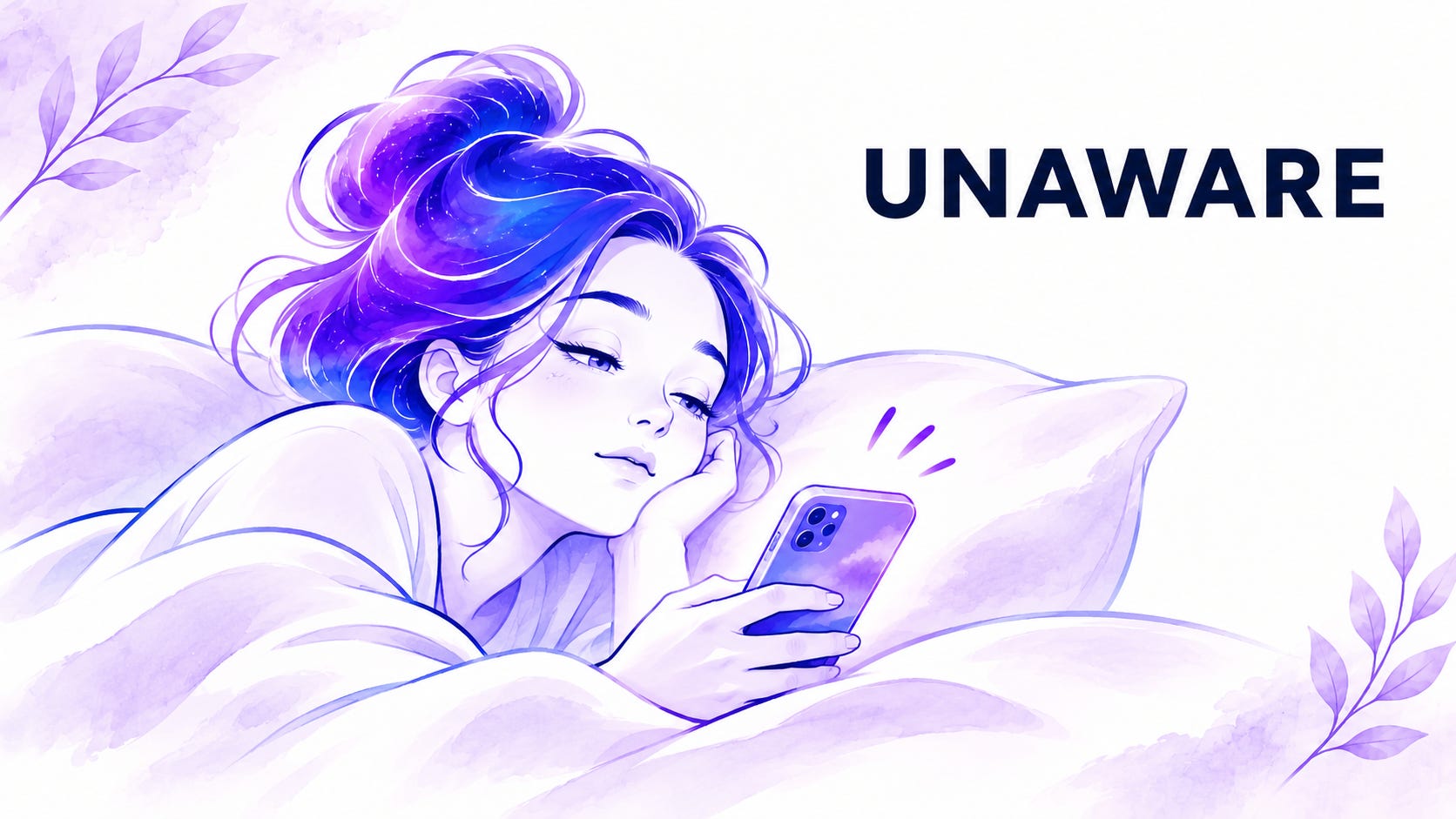
Stage 1, UNAWARE: “I’m just like this.”
At this stage you don’t experience the pattern as a pattern.
You experience it as you.
My clients here reply in forty seconds and don’t even register it as a choice. Ask her about it the next day, and she’ll shrug: “I’m just a friendly person.”
These are the phrases I hear for Unaware all the time:
“I’m just a texter.”
“I’m not a game player.”
“I just wanted closure.” (For the fourth time.)
Every one of those can be true.
And every one can also be a pattern that’s been using your personality as a hiding spot.
What’s Going On Inside
Repeat something enough, and it becomes a habit. Habits are triggered by cues in your environment and run pretty automatically, even after your goals have changed.
The cue here is his name on your screen at 11pm. The response launches before anyone checks with the Narrator.
In IFS terms, a Part has blended with you so completely that its strategy feels like your identity.
The Part that grabs the phone isn’t “a Part of you” yet.
It’s just… you.
And you can’t change a pattern you think is your personality. So the job here isn’t to stop. It’s to SEE it.
The Tool: The Last Three
Tonight, write down the last three times you did the thing. Then for each one, answer:
What happened right before?
Where were you, what time was it, and how tired were you?
What did you tell yourself while you were doing it?
Can’t remember three? Borrow some eyes.
Ask the friend who’s watched your last three relationships, “What’s the thing I always do?”
She knows. She’s known for years. (She’s been waiting for you to ask, lol.)
Once you see the same shape three times, it stops being “just who I am” and starts being a pattern.
Congrats. You’re officially in stage two.
Speaking of which…
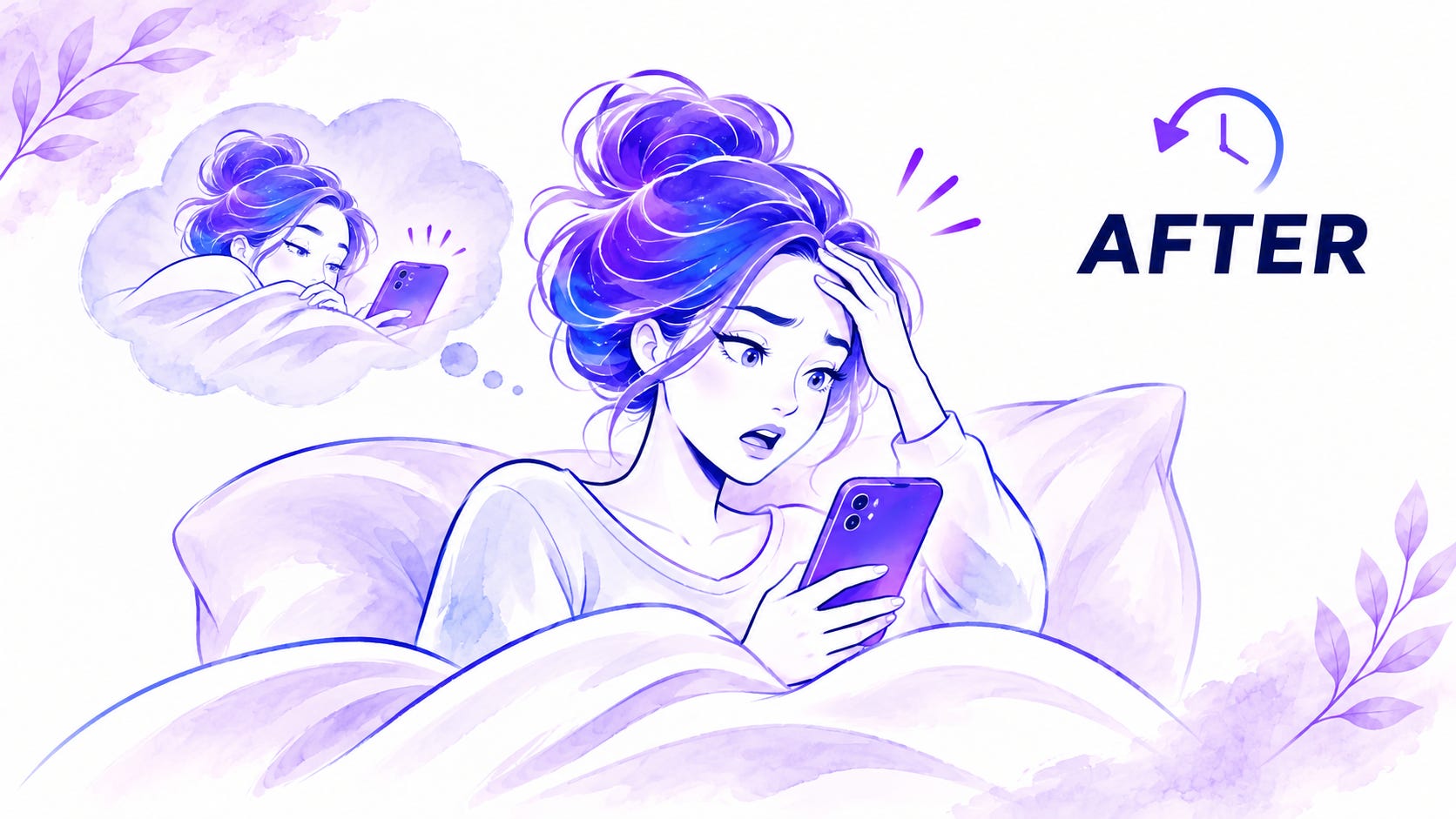
Stage 2, AFTER: “…girl.”
This is where most of ya’ll are right now.
And I know you treat it like failure… But you gotta remember, AFTER is stage two of five!
You’re not behind. You’re on the map.
Back to our pretend situation. Next morning, coffee in hand, you open the thread. “haha hey!! how are you?”
Your stomach drops.
Then comes the spiral about the spiral. “Three months, gone. I’m so pathetic. I’m never gonna get over him.”
What’s Going On Inside
The stress chemistry has cleared, the Narrator is back online, and now it can actually see.
That’s good news! The catch is real.
But another Part usually shows up right behind it. The Critic. Its job is to make sure this never happens again, and its only tool is shame.
Problem is, shame doesn’t help you catch it sooner.
In a set of experiments by Dr. Juliana Breines and Serena Chen, people who responded to a recent mistake with self-compassion were MORE motivated to make amends and avoid repeating it. In one study, the self-compassion group even studied longer after failing a test.
Self-compassion isn’t letting yourself off the hook.
It’s what keeps you looking at the hook long enough to learn something :)
Meditation has known about this “catch moment” for a long time, and it trains this exact move.
Research has even mapped the cycle: your mind wanders, you notice it wandered, you bring it back, you focus.
That noticing moment is the rep, and it’s a real thing ANY brain can do!
AND nobody in the meditation space thinks “I noticed my mind wandered” and equates that to failing; it means they’re learning by doing.
They’re getting the reps!
Same here. “I noticed after” is a rep, not a verdict on your worth.
The Tool: The Rewind
Next time you catch it after, don’t spiral. Rewind the tape and ask three questions:
What did I do? “I replied in forty seconds.”
What was I feeling/thinking right before? “Lonely. Kinda like I wasn’t enough, and him texting was proof that maybe I was.”
What was the FIRST thing in my body? “Chest got tight. Face got hot. Phone was already in my hand before I’d decided anything.”
Number three is the one that matters.
That’s your first domino. Write it down somewhere you’ll actually see it.
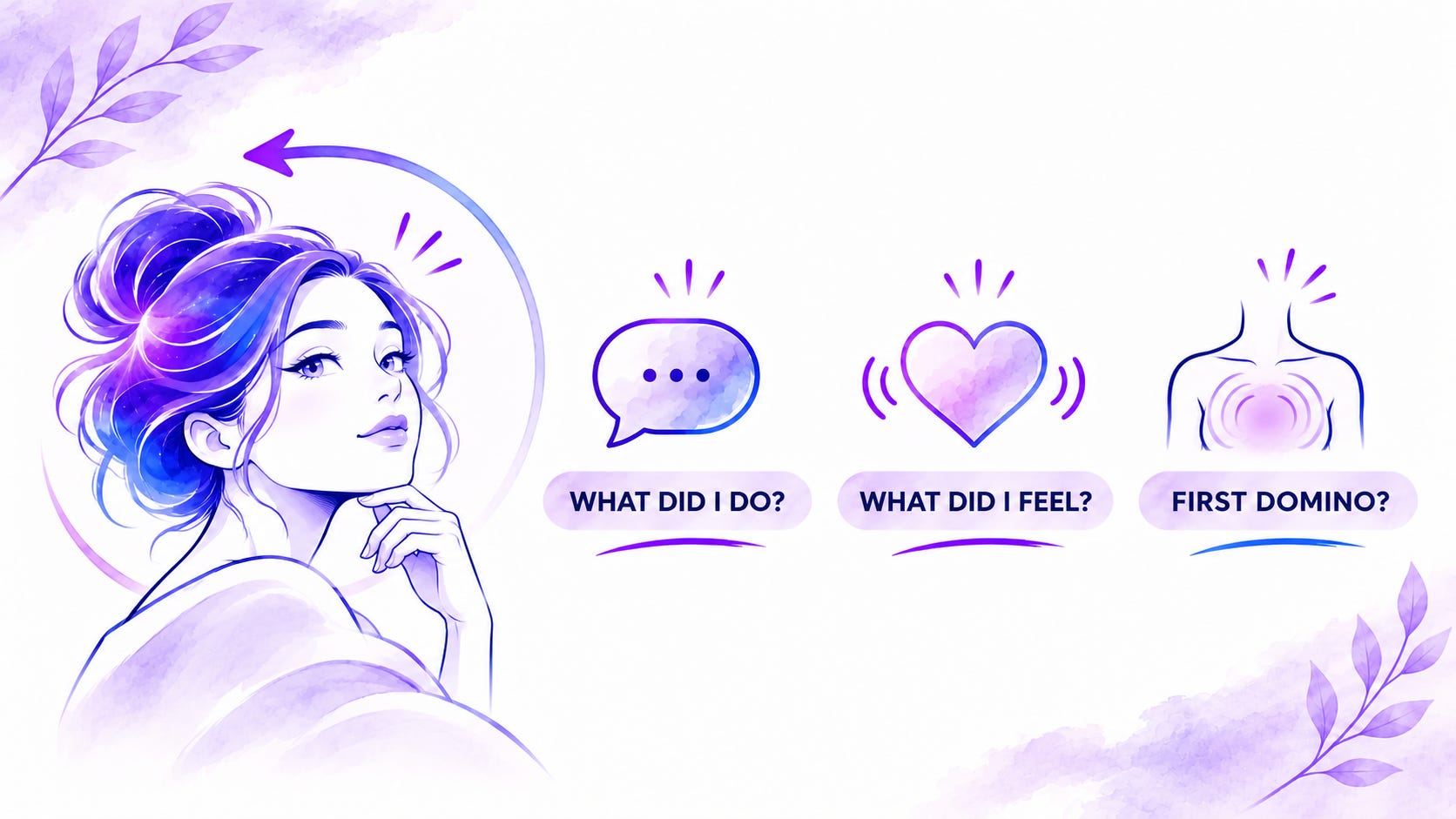
Do this every single time, and the “after” starts creeping closer to the moment itself!
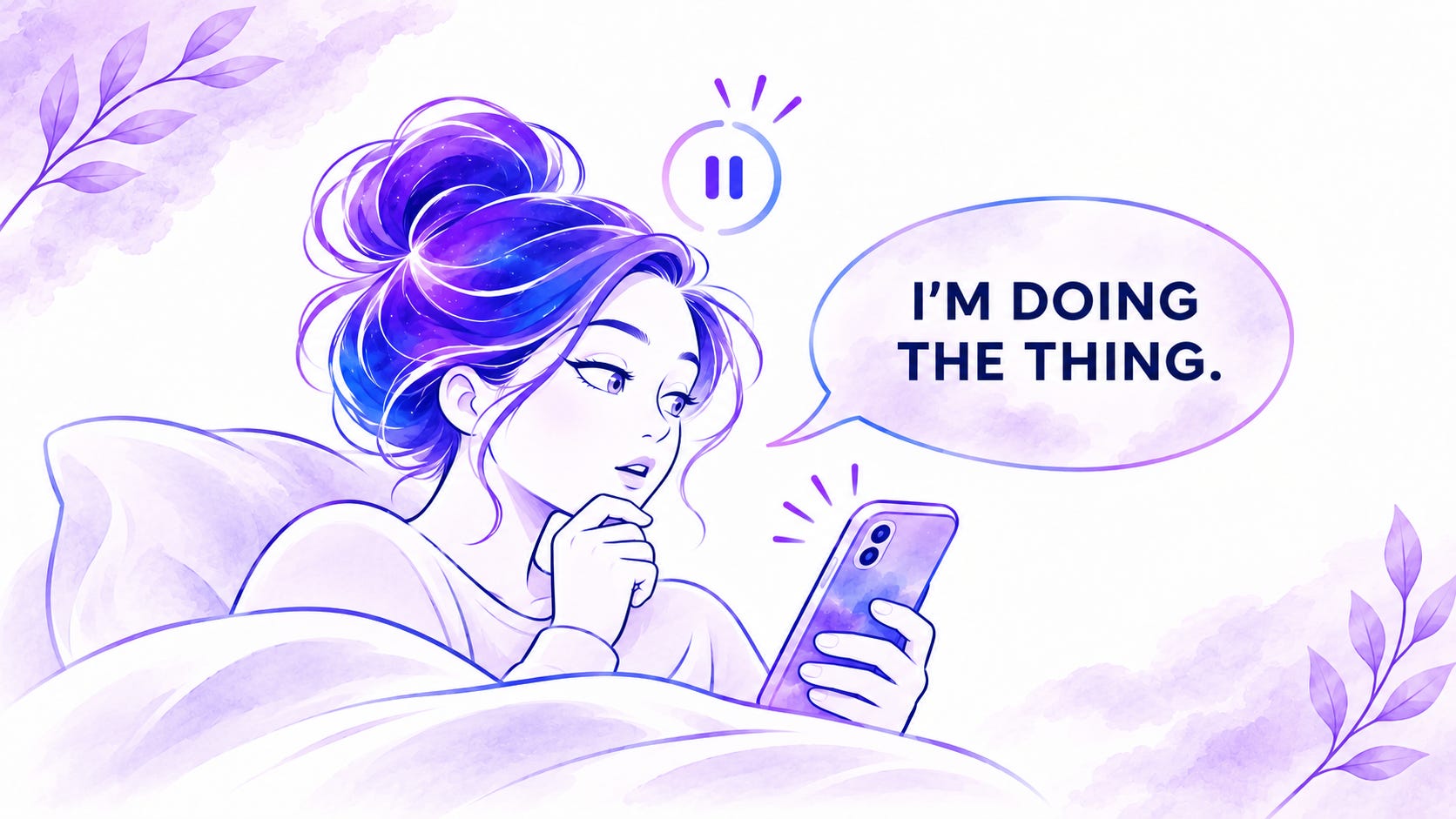
Stage 3, DURING: “Oh shit. I’m doing the thing...”
This one feels kinda weird, like getting caught by yourself.
It’s two weeks later, and he sends a voice memo. You’re mid-reply, thumb literally hovering over send on a three-paragraph “honestly I’ve been doing a lot of reflecting…”
And it hits you. “Oh. I’m doing the thing.”
Maybe you still send it.
Which is fine, seriously, that’s not the rep at this point.
Catching it in the moment is.
You caught it LIVE, with the Alarm still blaring.
That’s a huge jump from catching it over coffee the next morning.
What’s Going On Inside
The Narrator is coming online while the Alarm is still loud. It’s not winning yet, but it’s in the room.
And naming what’s happening helps more than you’d expect. In Dr. Matthew Lieberman’s affect labeling research, putting feelings into words turned down the amygdala’s response and turned up activity in part of the prefrontal cortex.
This is where the phrase “Name It to Tame It” comes from!
It’s a form of emotion regulation that works even though most people don’t predict it will.
It’s almost TOO easy, so we think it won’t work, but it does!
This is why naming your Parts is so powerful: it not only names it, it also de-identifies you with it.
If it’s a PART of you, it’s not ALL of you.
Which is important, because now you have more agency to do something about it!
Name It, Then Change One Thing
When you catch it mid-act:
Say it out loud: “I’m doing the thing.” Not in your head. Out loud. Yes, alone in your apartment. You’ll feel insane. Do it anyway. Bonus points if you say, “A Part of me is doing the thing.”
Then change ONE thing. Not everything. Wait 90 seconds before you hit send, or cut the message in half. Just one thing, even if it’s small.
That’s it. You’re not trying to win the moment yet.
You’re proving the Narrator can get a hand on the wheel while the Alarm is still going off.
And every “I’m doing the thing” makes the next one show up a little earlier.
Stage 4, BEFORE: “There’s my first domino.”
Now you feel it coming before the phone is even in your hand.
A month in, Friday night, you see he posted a story. Your chest tightens. Your face gets hot.
And before you open a single thing, you clock it. “There’s my first domino.”
Remember writing that down in the Rewind from Stage 2? This is where it pays off.
You gave your brain a tripwire: a body signal that means the Alarm is about to grab the wheel.
This is the same move habit reversal training has used since the 70s.
Part of the treatment is awareness training, which means learning to spot the early warning signs that show up BEFORE the habit, not just the habit itself.
Then you lock it in with an if-then plan. A meta-analysis of 94 studies found that “if X happens, then I’ll do Y” plans had a medium-to-large effect on people actually following through!
Why does that work? The decision is already made before the Alarm goes off. So the Narrator doesn’t have to win an argument in real time. It just follows the script.
Here’s the script I give clients.
I call it The Tripwire:
“If my chest tightens and the phone is in my hand, then I say ‘there’s my first domino,’ take one long, slow exhale, and put the phone face down for ten minutes.”
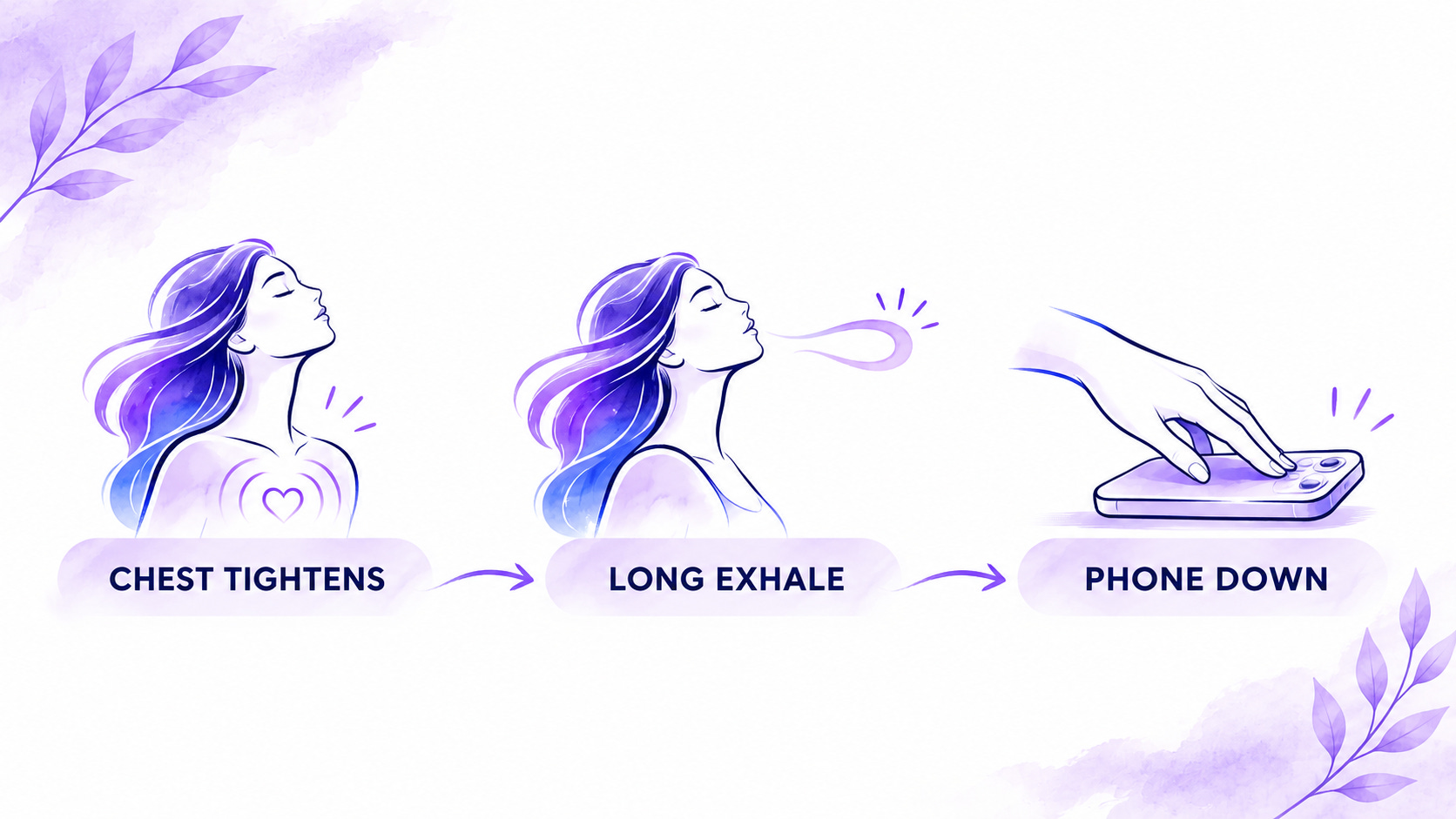
Why the exhale? Breathing patterns that stretch out the exhale have some of the best evidence for bringing arousal down.
One exhale in the moment is a smaller dose than what research suggests, but we’re not using it for the breathing benefits here, it’s the PAUSE!
So, think of it as a direct line to the body side of the Alarm, not a cure.
Why ten minutes? Honestly, that’s my number, not a study’s. It’s long enough for the first wave to crest, and short enough that you’ll actually do it.
That’s the whole move. You just went from AFTER to BEFORE.
Now, let’s bring some choice back into the equation!
Stage 5, CHOICE: “You don’t pick up the phone.”
Same trigger. Same four hours of wanting to. Same tight chest.
But now there’s room.
Two months later: “hey stranger… been thinking about you.”
Your chest tightens. And instead of fighting it or obeying it, you turns toward it.
“A Part of me really wants to send a paragraph right now. She’s allowed to want that, AND she doesn’t get the phone.”
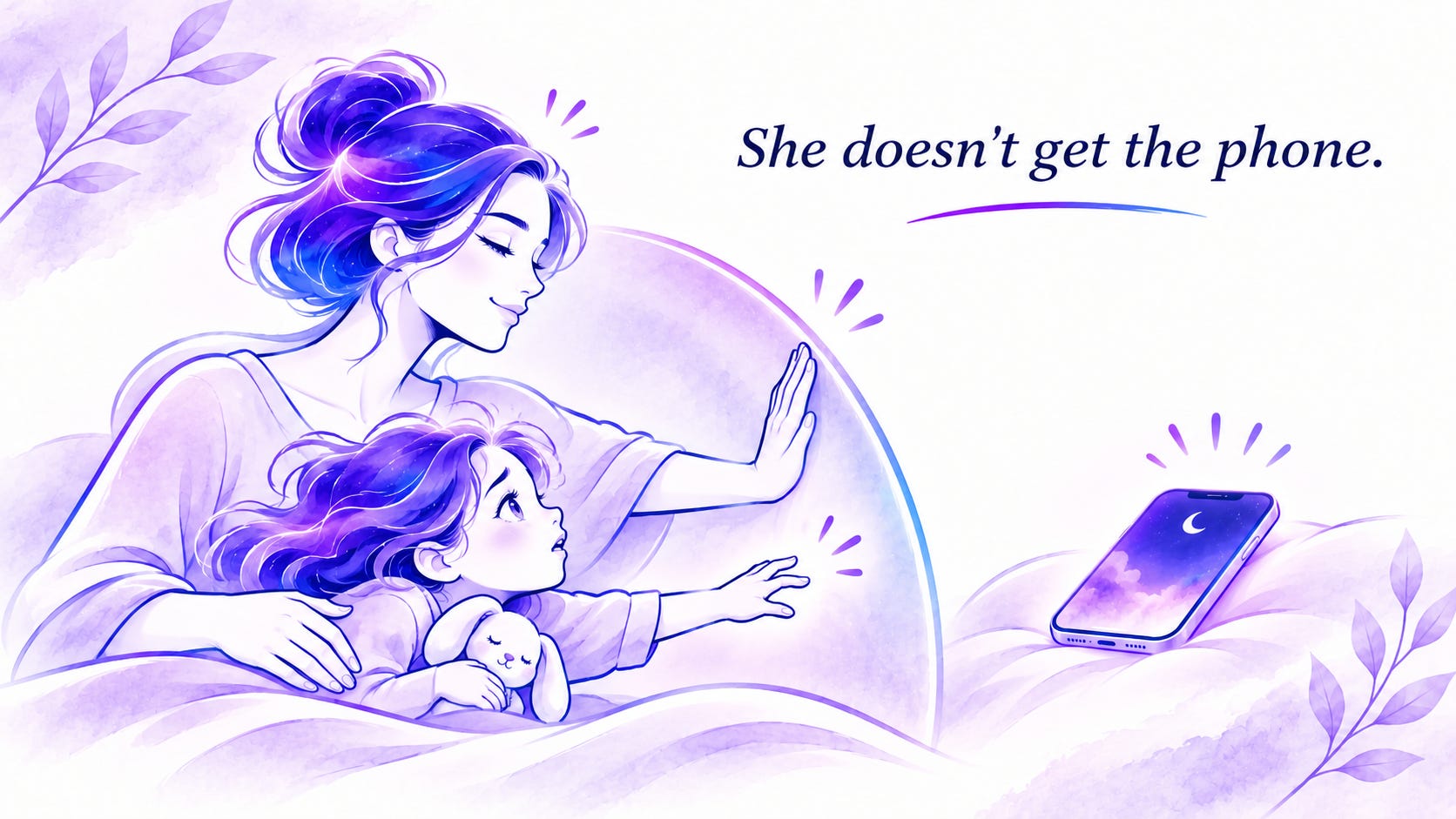
This is what Internal Family Systems calls unblending, and honestly it’s my favorite moment in this whole process.
In stage one, the Part WAS you. At CHOICE, it’s a Part of you.
Real, loud, and not in charge. That’s what IFS calls Self-leadership.
And that Part isn’t your enemy. It’s probably young, and it’s probably scared. So instead of shoving it away, get curious.
Ask it:
“What are you afraid will happen if I don’t reply?”
“What are you hoping he’ll say?”
“How old do you feel right now?”
Then, from your adult Self: “I get why you want this. I can hold the loneliness tonight. You don’t have to fix it through him.”
There’s a mindfulness skill called urge surfing that does the same thing from a different angle.
In a study with smokers, brief urge-surfing instructions didn’t make cravings any weaker. But the people who got them smoked fewer cigarettes over the following week.
The urge stayed. The response changed.
That’s CHOICE.

And this part is important, so I’m gonna be really clear.
Choice doesn’t mean you never text him back.
It might mean replying tomorrow at noon, on purpose, with a boundary: “I’m not open to reconnecting, but I hope you’re doing well.”
It might mean not replying at all.
It might even mean, after real reflection, an actual conversation.
The phrases I hear when a Part is dressing itself up as Choice: “We’re friends now.” “I’m just being mature about it.”
Check who’s holding the phone before you believe either one.
The difference isn’t the outcome. It’s who’s deciding. At UNAWARE, the Part decided.
At CHOICE, you do.
And no, the Alarm doesn’t stop going off. Please, God, don’t wait for that day.
The pull still shows up.
What changes is the gap between the pull and what you do with it.
Find Your Stage
Ok, so where are YOU on this? Probably more than one place…
Wild, I know, but you can be at CHOICE with your mom and UNAWARE with your ex.
Totally normal. Your stage depends on the trigger, not on you as a person.
Here are a few of the triggers I see most:
The ex texts (or likes your story, which is somehow worse)
Getting left on read
His Instagram, late at night
The “so what are we?” conversation
A partner going quiet or asking for space
Your family’s opinions about your love life
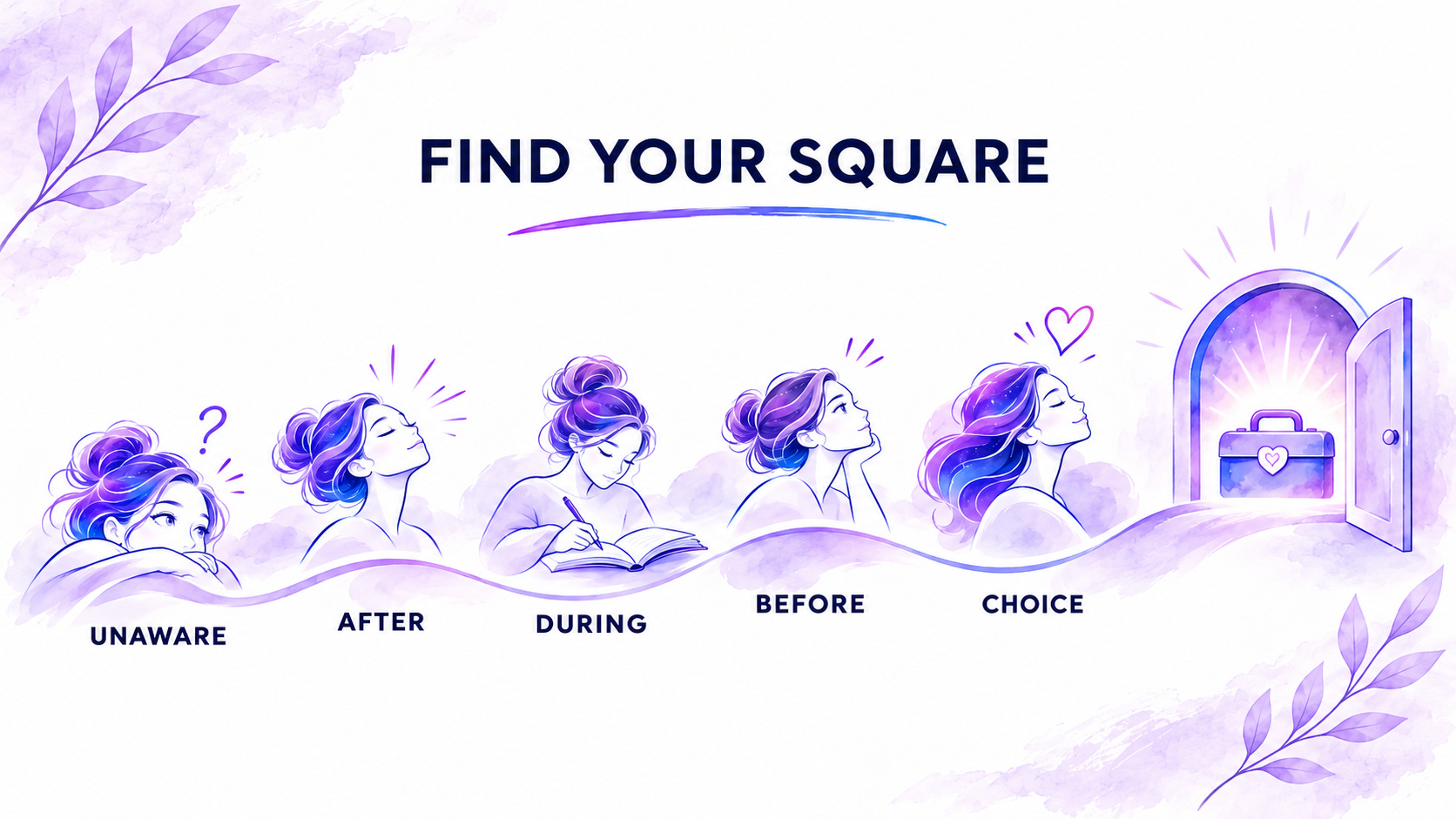
Pick ONE. Then ask yourself three questions:
When did I last do the thing in this situation?
When did I notice? Never, after, during, or before?
What’s the first thing that happens in my body?
Your answer to number two is your stage.
Once you know your stage, you can do something about it; just go back to the tool in that stage above!
One trigger. One move. That’s it.
Noticing Is the Doorway
The goal was never to stop reacting.
It’s to come back sooner. Days, then hours, then seconds, then before.

So, with love: “I noticed after” can’t be your forever address. Noticing is the doorway. It’s not the house.
Next time you catch it after, don’t spiral about the spiral. Rewind the tape, find your first domino, and write it down.
You don’t need to know better. You already do.
You just need to get there sooner.
You’ve got this.
And as always, until next time…
Live Heroically 🧠
Wrecked to Regulated in 63 Days
Start Here: She Rises Community.
Inside is a 63-day program of the exact things I did myself to go from wrecked to regulated using neuroscience.
Plus, You’ll Have Access To:
A 63-day program to go from wrecked to regulated
Live coaching calls with me every week
A team of IFS practitioners
Private workshops and masterclasses with therapists and scientists
1-on-1 sessions
A room full of women doing this beside you
If you’re ready to become emotionally available, develop secure attachment, and attract healthy potential partners, this is for you!
The first 7 days are free. Join below!
Leave a Comment
Which step are you stuck on? Lemme know below, and I’ll help you out!
Supporting Research
Arnsten, A. F. T. (2009). Stress signalling pathways that impair prefrontal cortex structure and function. Nature Reviews Neuroscience, 10(6), 410-422.
Pessoa, L., & Adolphs, R. (2010). Emotion processing and the amygdala: From a ‘low road’ to ‘many roads’ of evaluating biological significance. Nature Reviews Neuroscience, 11(11), 773-783.
Hawkins, J. (2021). A Thousand Brains: A New Theory of Intelligence. Basic Books.
Cesario, J., Johnson, D. J., & Eisthen, H. L. (2020). Your brain is not an onion with a tiny reptile inside. Current Directions in Psychological Science, 29(3), 255-260.
Wood, W., & Rünger, D. (2016). Psychology of habit. Annual Review of Psychology, 67, 289-314.
Azrin, N. H., & Nunn, R. G. (1973). Habit-reversal: A method of eliminating nervous habits and tics. Behaviour Research and Therapy, 11(4), 619-628.
Gollwitzer, P. M., & Sheeran, P. (2006). Implementation intentions and goal achievement: A meta-analysis of effects and processes. Advances in Experimental Social Psychology, 38, 69-119.
Hasenkamp, W., Wilson-Mendenhall, C. D., Duncan, E., & Barsalou, L. W. (2012). Mind wandering and attention during focused meditation: A fine-grained temporal analysis of fluctuating cognitive states. NeuroImage, 59(1), 750-760.
Lieberman, M. D., Eisenberger, N. I., Crockett, M. J., Tom, S. M., Pfeifer, J. H., & Way, B. M. (2007). Putting feelings into words: Affect labeling disrupts amygdala activity in response to affective stimuli. Psychological Science, 18(5), 421-428.
Torre, J. B., & Lieberman, M. D. (2018). Putting feelings into words: Affect labeling as implicit emotion regulation. Emotion Review, 10(2), 116-124.
Breines, J. G., & Chen, S. (2012). Self-compassion increases self-improvement motivation. Personality and Social Psychology Bulletin, 38(9), 1133-1143.
Bowen, S., & Marlatt, A. (2009). Surfing the urge: Brief mindfulness-based intervention for college student smokers. Psychology of Addictive Behaviors, 23(4), 666-671.
Balban, M. Y., Neri, E., Kogon, M. M., Weed, L., Nouriani, B., Jo, B., Holl, G., Zeitzer, J. M., Spiegel, D., & Huberman, A. D. (2023). Brief structured respiration practices enhance mood and reduce physiological arousal. Cell Reports Medicine, 4(1), 100895.
Schwartz, R. C., & Sweezy, M. (2020). Internal Family Systems Therapy (2nd ed.). Guilford Press.
This article is educational in nature and not a substitute for therapy. If attachment wounds or relational trauma are impacting your well-being, working with a trauma therapist can help your nervous system relearn safety in connection.