
You Were Taught to Be Useful, Not Lovable 🧠
Why the most capable woman in the room is so often the loneliest one in the bed.

TL;DR Summary:
Your problem was never that you give too much. It’s why you give — and the engine underneath it is quietly running your love life.
Somewhere early, you learned love wasn’t a given. It was a payout. So you’ve been clocking in to earn it ever since.
You built a successful life and a lonely one with the same tool — and until you look at the tool, you’ll keep getting both results.
There are five Parts your nervous system built to protect you from ever feeling un-needed. They saved you then. They’re the problem now.
Here’s the fear you’ve been misidentifying your whole life — and why getting it wrong keeps you stuck in the same cycle.
Underneath every one of these Parts is one buried belief that’s been running the show since childhood. We’re going to name it today.
The fix isn’t performing better. It’s learning — in your body, not your head — that you can clock out and the love stays.
Useful vs. Lovable
Your problem was never that you give too much.
Your problem is the why behind your giving.
The qualities that make you a powerhouse at work- the reliability, the over-delivery, the “I’ll handle it,” the never-needing- those exact qualities are quietly sabotaging your love life.
Not because they’re bad. Because of the engine running underneath them.
You didn’t build a successful life and a lonely one by accident.
You built them with the same tool.

And until we look at the tool, you’re going to keep getting the same two results: the corner office and the empty apartment.
So let me say the thing the little girl who learned to be easy was never told: You were taught to be useful, not lovable.
Luckily, this isn’t a life sentence!
Your nervous system has the power to grow, shift, and change your whole life.
So, today, we’re breaking down how you got here, and what to do about it.
Let’s dive in!
How Did We Get Here?
That one’s easy.
We have built an entire dating culture around the resume.
I’ve seen it over and over in my client work.
A high-achieving woman walks into dating like a job interview.

Here’s what I bring to the table:
I’m low-maintenance. I’m supportive. I’m independent. I’ll never be a burden. I’ll remember his mom’s birthday, I’ll fix the thing before he knows it’s broken, I’ll be the safe place he can fall apart in.
That’s a value proposition, though... Not a person.
And the culture cheers for it.
“Be a high-value woman.” “Bring something to the table.” “Don’t be needy.”
We’ve taken a trauma adaptation and rebranded it as empowerment.
We slapped a girlboss filter on a worthiness wound and called it standards.
Here’s what I watch happen with client after client, and imma say this gently: the more impressive the woman, the more terrified she usually is of being seen with nothing in her hands.
She can run a company. She cannot let a man hold her while she cries for no productive reason.
She can negotiate a raise. She cannot say “I need you” without immediately offering three things to balance the scale.
She has six figures, a mortgage, a passport full of stamps, and a quiet, persistent dread that if she ever stopped doing, there’d be no reason for anyone to stay.
That’s not a confidence problem.
That’s a nervous system doing its job exactly the way it was trained to.
Let’s Talk About Childhood
Think back to what actually got rewarded when you were small.
Not your existence. Your output.
The good grades. Being the easy one. The responsible one. The kid who didn’t need much and helped a lot. The one the adults could “count on.”
You didn’t get applause for being. You got it for doing.

Now, your brain, a brilliant little prediction machine, is running one question on a loop: what keeps me safe and connected to the big people I depend on for survival?
When the answer it learns is “performing, helping, achieving, not being a problem,” it doesn’t shrug that off.
It builds around it.
In IFS terms, your system does something genius and heartbreaking at the same time.
There's a part of you that just wants, wants to be held, wants to be delighted in, wants to matter without doing a single thing to deserve it.
The little one who wanted to be loved just for existing.
And early on, that part learned a hard lesson: wanting got her nothing. Sometimes it even got her treated like a burden.
So your system did the only protective thing it could: it buried her. Exiled her. Tucked her so far down you forgot she was ever there."
And in her place, your psyche promotes a whole management team.
Proactive protectors whose entire job is to make sure you never again feel the pain of being un-needed, un-helpful, un-earned.

That team did not disband when you grew up. It got promoted. It’s running your relationships right now.
Let me introduce you to the five employees of the month. 🙃
The 5 Parts That Built Your Success & Are Quietly Running Your Love Life
Part #1: The Overachiever
How she formed: This is the original. As a kid, she cracked the code early: love is something you bill for. Every gold star, every “you’re so mature for your age,” every time being impressive made the temperature in the room go up — that was a deposit. She learned love is earned income, never a gift. So she started clocking in, and she never clocked out.
How she shows up now: The Overachiever is why you lead with your resume on a first date. Why your love language looks like “acts of service” but is really acts of proof. Why you can’t just sit beside someone — you have to be contributing, adding, earning your chair. She’s the part that turns “I like you” into “let me show you why you should.”
The pattern she creates: This is what I call emotional capitalism, over-functioning in love to earn the safety that’s supposed to be freely given. And emotional capitalism builds load-bearing relationships: ones that only stay standing because you’re holding up every wall. You don’t end up with a partner. You end up with a dependent. And then you wonder why you’re exhausted, and he’s “so chill.”
Part #2: The Strong One
How she formed: Somewhere early, your needs were inconvenient, maybe out loud, maybe just in the air of the house. So this part drew a conclusion: the safest kid is the one who needs nothing. She became the responsible one. The one who could handle it. The one the adults never had to worry about. Needing things got her overlooked at best, treated like a burden at worst. So she stopped.
How she shows up now: She’s the strong friend. The one everyone leans on and no one checks on. “I’m fine.” “Don’t worry about me.” “I’ve got it.” She’ll carry everyone else’s breakdown and would rather die than have one of her own in front of you. Independence isn’t a preference for her; it’s armor.

The pattern she creates: Here’s the quiet tragedy. The Strong One makes it impossible for anyone to love the real you, because she never lets the real you be seen. He can’t choose the woman who’s tired and scared and needs reassurance if you only ever hand him the bulletproof edition. And she’ll let you carry a capacity mismatch for years, silently hauling a partner who genuinely can’t meet you, because naming the gap would mean needing something, and needing is the one thing she swore off a long time ago.
You don’t get rejected. You get overlooked. By design.
Your own design, dude.
Sit with that one. :/
Part #3: The Fixer
How she formed: This is the hypervigilant one. As a kid, she learned to scan the room, read the mood before the door opened, smooth the thing over, solve the problem before it became one. Her safety came from staying three steps ahead of everyone else’s needs.
How she shows up now: She fixes his thing before he knows it’s broken. Remembers his mom’s birthday better than he does. Clocks his bad day from one text and quietly reorganizes her whole evening around it. She mistakes managing his emotions for loving him. And from the inside, they feel identical.
The pattern she creates: This is borrowed capacity in its purest form, showing up miles past your actual relational bandwidth to meet a need he didn’t even voice. It feels like generosity. It’s a withdrawal you can’t afford. And borrowed capacity always comes due: the unpaid balance compounds into emotional debt, all those tiny ruptures where you gave and weren’t met. Your conscious mind forgives them. Your amygdala keeps the receipts.

That’s how you can be the most giving woman alive and still be quietly seething by month eight.
The debt didn’t vanish. It just stopped being something you’d say out loud.
Part #4: The Perfectionist
How she formed: This one learned a subtle, brutal rule: flaws are exits. A mistake, a mess, a need that’s “too much”, any of it could be the thing that finally makes someone leave. So she decided to remove the option. If there’s nothing wrong with you, no one has a reason to go. She didn’t aim for great. She aimed for unleaveable.
How she shows up now: She’s the one who can’t let him see the apartment messy, the face undone, the cry that isn’t pretty. She curates. She manages how she’s perceived like it’s a full-time job (it is). She’d rather cancel than show up as anything less than the highlight reel. “Effortless” and “chill” on the outside; white-knuckle control underneath.

The pattern she creates: Here’s the cruel irony — intimacy is built out of the exact stuff she’s hiding. Closeness lives in the mess, the unfiltered, the seen-at-your-worst-and-held-anyway. So the Perfectionist hands a partner a flawless image, then quietly aches because he’s bonding with the image, not with her. He never gets to choose the real woman, because she never let him meet her. And the surveillance is exhausting; there’s no rest in a love you keep auditioning for from behind glass.
You can be adored and still feel unseen. That’s the tell.
Part #5: The Critic
How she formed: Every system with an Overachiever needs someone supervising her. Enter the Critic, the internalized voice of “do more, be better, don’t slip, don’t be a problem.” The performance review that never closes for the day. She kept you sharp. She also never once let you feel like you’d done enough.
How she shows up now: Stay with me, because this is the most counterintuitive part in the whole lineup. The Critic is why even good love feels unstable to you. When a relationship is genuinely safe, calm, consistent, no fire to put out, most people exhale. You get anxious. Because calm gives the Critic nothing to grade, and a part that’s only ever felt safe while being assessed reads “no assessment” as “I’ve lost track of whether I’m still earning my place here.”

The pattern she creates: You misread peace as danger. The spike, the chase, the “does he actually like me,” the intensity (that’s phasic dopamine, the hit), feels like love, because it feels like a high-stakes test you might pass. Steady, calm, oxytocin-and-serotonin safety feels flat, suspicious, unearned. So you bail on the good ones and call it intuition.
What All 5 Are Protecting
Notice something? All five of these Parts have a different job, five different costumes.
But they all report to the same boss. They are all standing guard over one little person.
Underneath all five is the Exile, the little girl who decided, way too young to know better, that she was only worth what she could give.
That without the usefulness, there’d be no reason for anyone to stay.
And that’s why your fear in love has never quite added up. You’ve been naming the wrong fear.
You think you’re afraid he’ll stop loving you.
You’re not. You’re afraid he’ll stop needing you.
And you’ve never once been sure there was anything beneath the usefulness for him to stay for.
Because being needed is the only version of being wanted you've ever trusted.
Read that again.
That right there, that’s the wound. Not a flaw. Not neediness. Not “too much.”
A worthiness wound, built by a brilliant little kid who did the only math available to her and got the safest answer she could find.

Both things are true at once, and I need you to hold both: those Parts saved you. They got you the safety, the achievement, the life.
AND they are now the exact thing standing between you and being loved for nothing in particular.
You don’t fire them. You don’t shame them.
You thank them, and you finally introduce them to the one they’ve been protecting.
Sounds great, Cody, but HOW do I do this?
So glad you asked.
Time to get practical, baby!
The Off-the-Clock Protocol
You’ve been clocking in for love your whole life.
The work isn’t to perform better. It’s to learn, in your nervous system, that you can clock out and the love stays.
Here’s the process.
Step 1: Catch the Clock-In
You can’t change a reflex you can’t see. So before anything else, you build awareness of the reach.
The reach is that micro-moment where you feel a flicker of being un-useful, a lull in conversation, a partner who’s content and asking nothing of you, a gift you can’t immediately repay, and you instantly scramble to produce. Offer to help. Change the subject to him. Get busy.
For one week, just notice it. Don’t stop it. Name it silently: “There’s the clock-in.”
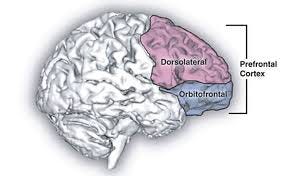
That’s it. You’re teaching your prefrontal cortex to catch the Manager in the act before she runs the whole show on autopilot.
Awareness first. Always.
That’s how behavior change works.
Step 2: Meet the Parts (Don’t Fire Them)
Now we go in with IFS!
Find her in your body. Sense, don’t analyze. Where does the urge-to-be-useful live? Tight chest? Buzzing hands? A forward-lean in your whole torso? Go to the sensation.
Notice how you feel toward her. If you feel annoyed, frustrated, “ugh, this part again”, that’s another part blended. Ask it to soften and step back, just enough that a little curiosity comes online. We need you, your Self, present for this.
Unblend. Say it, internally or out loud: “This is a part of me. It is not all of me.” You are not these Parts. You’re the one who can finally turn and look at her. IFS calls this your Self.
Get curious, not corrective. Ask her: What are you afraid would happen if you stopped? What are you protecting me from? How old do you think I am? Then, and this is the part everyone rushes, actually wait for the answer. Don’t supply it. Let her tell you.
Nine times out of ten, she’ll say some version of: If you stop being useful, they’ll see there’s nothing there, and they’ll leave.

And now you know exactly who she’s been guarding.
Step 3: Find the One She’s Protecting
Ask the Producer for permission to meet the little one underneath. The Exile. The kid who decided she was only worth what she could provide.
This part needs you to come as Self, calm, curious, compassionate, not as another manager trying to “fix” her.
You’re not there to argue her out of the belief. You’re there to be with her in it, the way no one was back then. To let her feel, maybe for the first time, an adult presence that isn’t keeping score.
If this gets big, that's okay. Take a breath.
This is tender, sacred stuff, and you don't have to do the deepest version alone; that's literally what a trauma therapist is there for.
Speaking of which…
Warning: This is deep trauma work; I do not recommend going to these deeper wounds alone or without support from someone trained in IFS. This can be dangerous work if you don’t know what you’re doing, so proceed with caution, please!
Step 4: Run a Receiving Rep
Now the behavioral piece, because insight without reps doesn’t rewire anything.
A Receiving Rep is simple and miserable at first: you let someone give you something, and you do not immediately repay it.
You take the compliment without deflecting. You let him plan the date and you just… show up. You accept the help, and you sit in the squirmy, debt-piling-up feeling without discharging it.
That squirm? That’s your window of tolerance being gently stretched.
Your nervous system is screaming “unpaid balance!” and you’re teaching it, rep by rep, that the balance never comes due.

That receiving is not borrowing. That you are not, in fact, freeloading by existing.
These reps are small. They’re boring. They’re deeply unsexy.
And they are exactly how worth-without-output gets built.
Not hype. Not reassurance.
Reps!!
On the Other Side of This
Imagine a love where you can be ordinary.
Where you can have a bad week and contribute nothing and still feel like you belong in the room.
Where “low-maintenance” stops being your sales pitch and “I need you” stops feeling like a confession you have to atone for.
The right person isn’t hiring. He’s not keeping you on staff for what you provide. There is no resume to submit, no probation period, no quarterly review where you find out if you’ve earned your spot for another three months.

You were never supposed to audition for this.
And the day you stop handing people your resume is the day you finally find out who actually wanted you, not the output, not the usefulness, not the value proposition.
You.
You get to show up with empty hands and still be the one he chooses.
You’ve got this.
And as always… Live Heroically 🧠
Want to Work With Me? Here Are a Few Ways I Can Help You
Becoming HER is a 63-Day program that heals heartbreak & prepares you for modern dating, using Neuroscience & Internal Family Systems. (If you’re seeing this, one of our cohorts is open currently!)
Going through a breakup? Check out She Rises. It’s a post-breakup protocol based on neuroscience to help you regulate your nervous system in the days and weeks right after a breakup.
Grab my new ebook: Exactly How to Become Emotionally Available: It’s a step-by-step guide for attracting and keeping the love you seek, built for the success but single among us!
Become a paid subscriber to the Mind, Brain, Body Lab Digest: You’ll get subscriber-only posts, email replies, access to my entire blog archive, early access to new products, workshops & tools I create!
Supporting Research
Crocker, J., & Wolfe, C. T. (2001). Contingencies of self-worth. Psychological Review, 108(3), 593–623.
Rogers, C. R. (1961). On Becoming a Person: A Therapist’s View of Psychotherapy. Houghton Mifflin. (Conditional vs. unconditional positive regard.)
Assor, A., Roth, G., & Deci, E. L. (2004). The emotional costs of parents’ conditional regard. Journal of Personality, 72(1), 47–88.
Bowlby, J. (1988). A Secure Base: Parent-Child Attachment and Healthy Human Development. Basic Books.
Mikulincer, M., & Shaver, P. R. (2016). Attachment in Adulthood: Structure, Dynamics, and Change (2nd ed.). Guilford Press.
Schore, A. N. (2003). Affect Regulation and the Repair of the Self. W. W. Norton.
Porges, S. W. (2011). The Polyvagal Theory. W. W. Norton.
Craig, A. D. (2009). How do you feel — now? The anterior insula and human awareness. Nature Reviews Neuroscience, 10(1), 59–70.
Schwartz, R. C., & Sweezy, M. (2020). Internal Family Systems Therapy (2nd ed.). Guilford Press.
Ecker, B., Ticic, R., & Hulley, L. (2012). Unlocking the Emotional Brain: Eliminating Symptoms at Their Roots Using Memory Reconsolidation. Routledge.
This article is educational in nature and not a substitute for therapy. If attachment wounds or relational trauma are impacting your well-being, working with a trauma therapist can help your nervous system relearn safety in connection.